Where to Stay in Rome: Best Neighbourhoods (Without Choosing the Wrong One)
Choosing where to stay in Rome can feel deceptively simple.
The city looks compact on a map. Landmarks appear close together. It can seem like almost anywhere will work.
But once you arrive, the differences between neighbourhoods become clear.
Some areas feel dense and constantly moving. Others are quieter, more residential. Some make it easy to walk everywhere. Others require more planning.
Where you stay doesn’t just affect convenience — it shapes how Rome feels.

The Challenge: Rome Isn’t Experienced Evenly
It’s easy to assume Rome can be approached as a single, walkable whole.
And in some ways, it can.
But the experience changes significantly depending on where you base yourself.
Staying near major landmarks can feel immersive at first, but exhausting over time. Staying further out can feel calmer, but disconnected.
There isn’t a single “best” area.
There is only the area that matches how you want to move through the city.
Centro Storico — Close to Everything, Always Busy
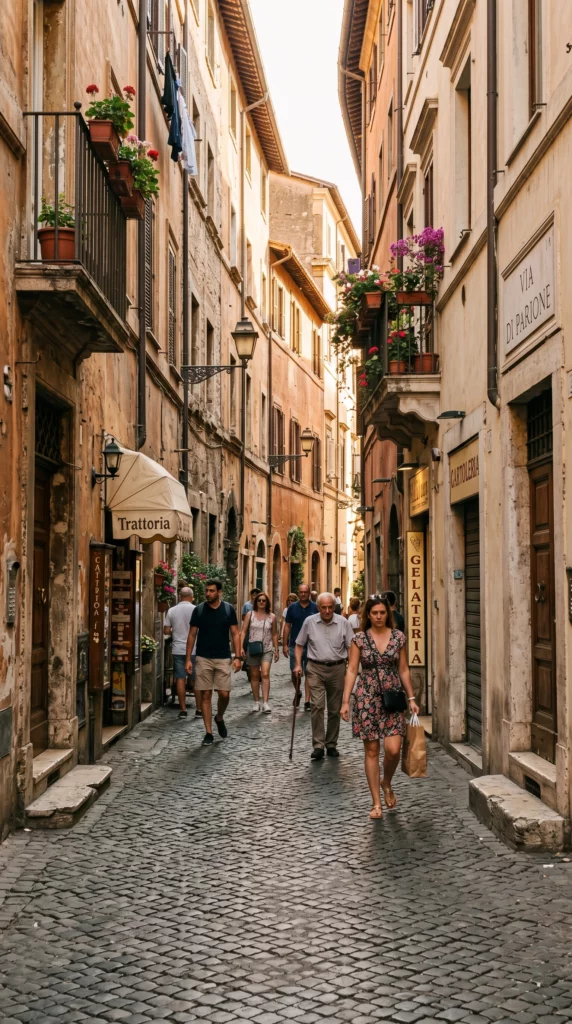
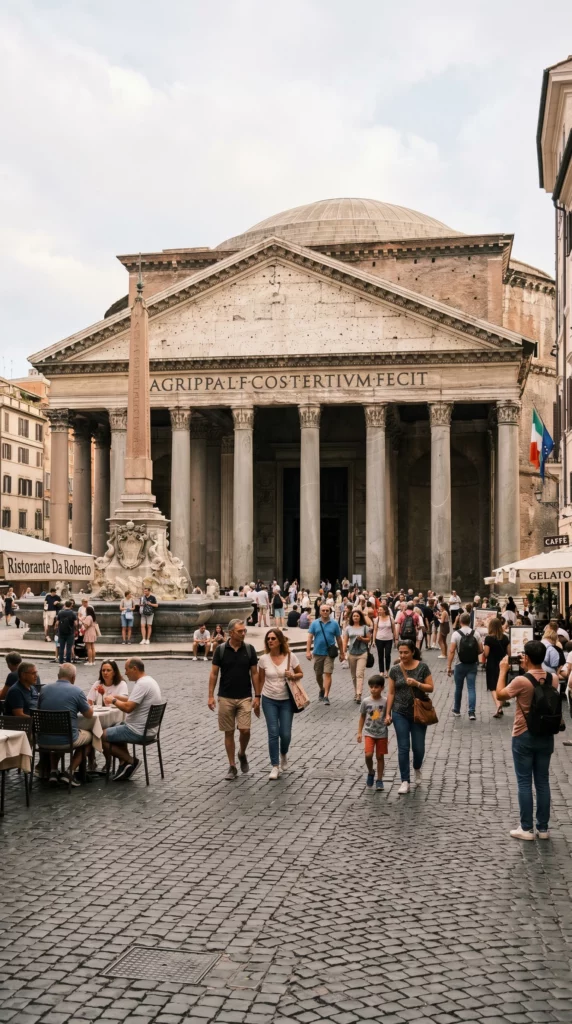
The historic centre places you within walking distance of many of Rome’s most recognisable landmarks.
From here, you can easily reach places like the Pantheon, Piazza Navona, and the Trevi Fountain.
But that proximity comes with density.
The streets are narrow and often crowded. Movement can feel constant, particularly during the middle of the day.
Staying here works well if your priority is being close to everything.
But it helps to expect a higher level of activity, and less space to step away from it.
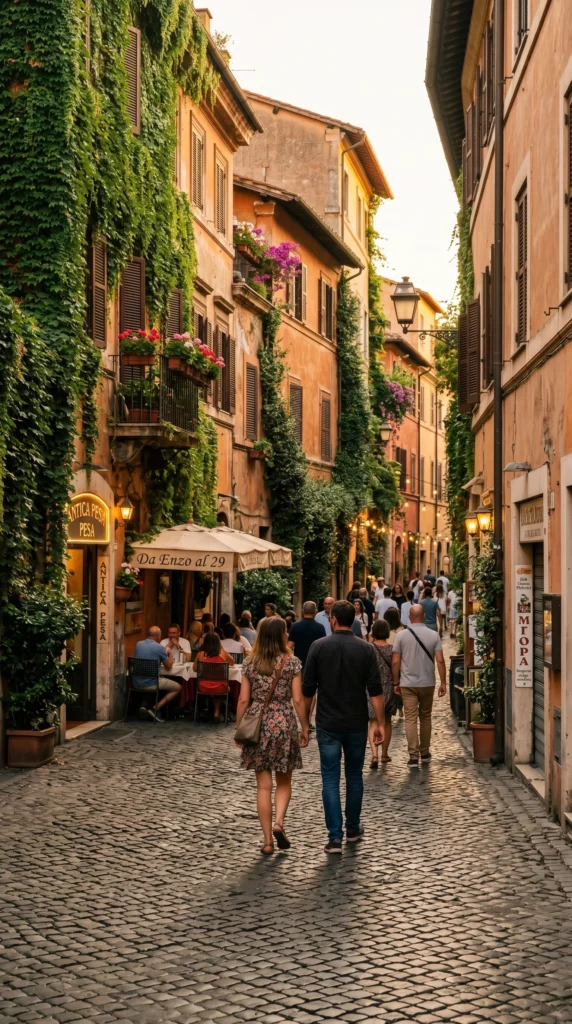
Trastevere — Atmosphere and Evenings
Across the river, Trastevere offers a different rhythm.
The streets are narrower, more local in feel, and the atmosphere shifts as the day progresses. In the evening, the area becomes more social, with restaurants and small squares filling gradually.
It is well positioned, but slightly removed from the busiest parts of the historic centre.
Staying here suits travellers who value atmosphere and don’t mind a little extra walking during the day.
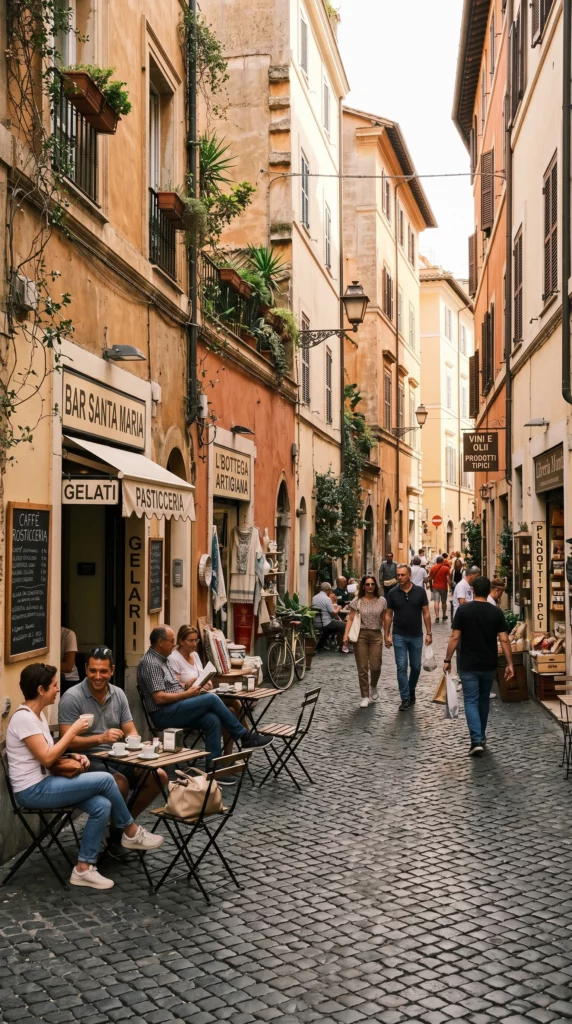
Monti — Smaller Scale, Central Location
Near the Colosseum, Monti sits between major landmarks and quieter residential streets.
It feels smaller in scale than the historic centre, with a mix of local shops, cafés, and open spaces.
Movement from Monti is relatively easy. You can walk toward ancient sites or move further into the city without needing to rely heavily on transport.
It offers a balance between access and breathing room.
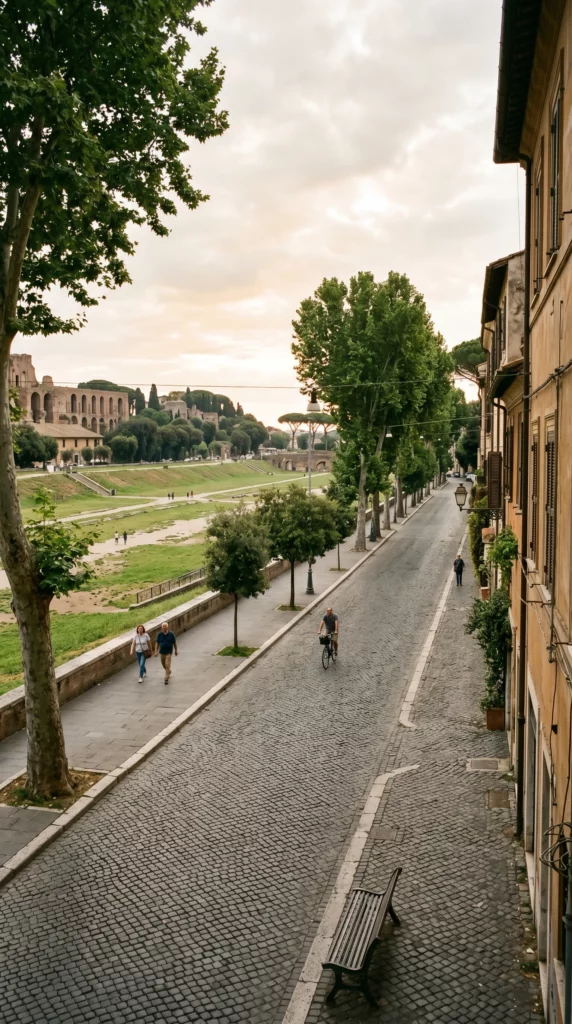
Aventine / Circo Massimo — Quiet and Well Positioned
This area sits slightly outside the busiest zones, but remains well connected.
It wasn’t chosen for convenience alone, but for the balance it offered. The area felt noticeably calmer than the historic centre, yet everything remained within walking distance. Streets are wider, and the pace slows.
It’s not the most obvious choice — but it is one of the most balanced.
This is where I stayed on my own visit, in a small B&B near Circus Maximus.
Mornings were quieter. Evenings felt more spacious. And moving back into the busier parts of the city felt intentional, rather than constant.
It changed the pace of the entire trip
If you’re curious, I stayed at Vecchia Roma Resort.
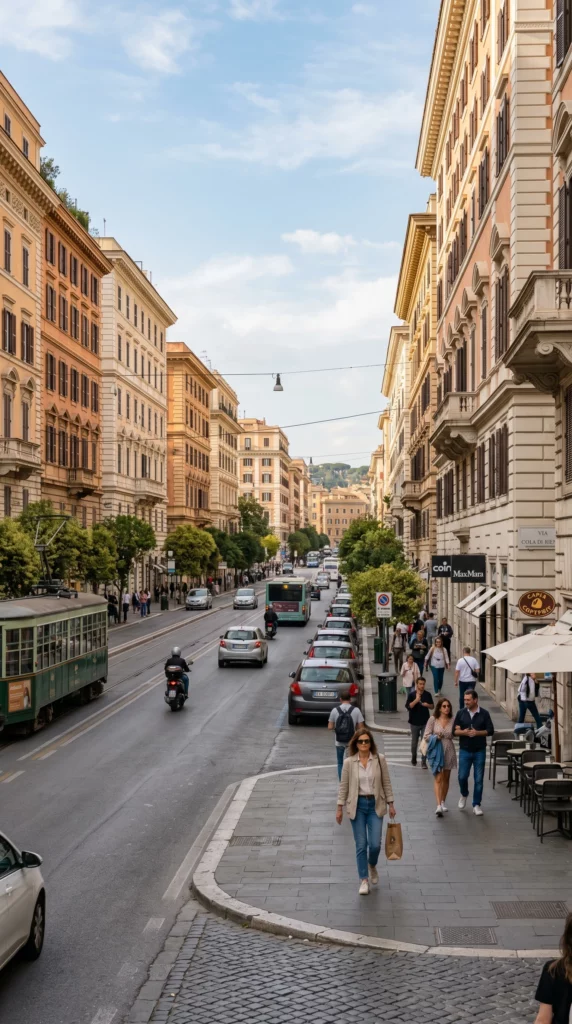
Prati — Structured and Less Touristic
Located near the Vatican, Prati feels more organised and less chaotic than other central areas.
The streets are wider, and the layout is more structured. It can feel more residential, even though it remains close to major sites.
It’s a good option if you want a quieter base without being far from key areas.
Matching Location to Movement
Choosing where to stay in Rome is less about finding the “best neighbourhood” and more about understanding how you want to move.
If you want to walk constantly and be surrounded by landmarks, central areas make sense.
If you prefer to step in and out of that intensity, slightly removed neighbourhoods offer a better balance.
Rome rewards slower movement.
Where you stay should support that.
Rome Is Not a City You Need to Conquer
There can be a tendency to try to position yourself perfectly — to minimise walking, maximise access, and cover as much as possible.
But Rome isn’t a city that needs to be optimised in that way.
It is better approached gradually.
Choosing the right neighbourhood doesn’t mean finding the most central location.
It means choosing a place that allows you to experience the city at a pace that feels sustainable.
TLDR
- Centro Storico offers proximity but comes with crowds
- Trastevere provides atmosphere, especially in the evenings
- Monti balances location and scale
- Aventine / Circo Massimo offers calm with good access
- Prati is structured and less hectic
- Choose based on how you want to move, not just where things are
FAQ
What is the best area to stay in Rome?
There isn’t one best area. It depends on your pace. Centro Storico is central, while areas like Monti or Aventine offer more balance.
Is it better to stay in Trastevere or the historic centre?
Trastevere offers more atmosphere and quieter mornings, while the historic centre provides immediate access to landmarks.
Is Rome walkable from all neighbourhoods?
Many central areas are walkable, but distances and crowds can affect how easy it feels.
Should I stay near the Colosseum?
Areas like Monti provide access to the Colosseum while offering a slightly calmer environment.
Is Prati a good place to stay in Rome?
Yes. It is quieter and more structured, while still being close to the Vatican and central Rome.