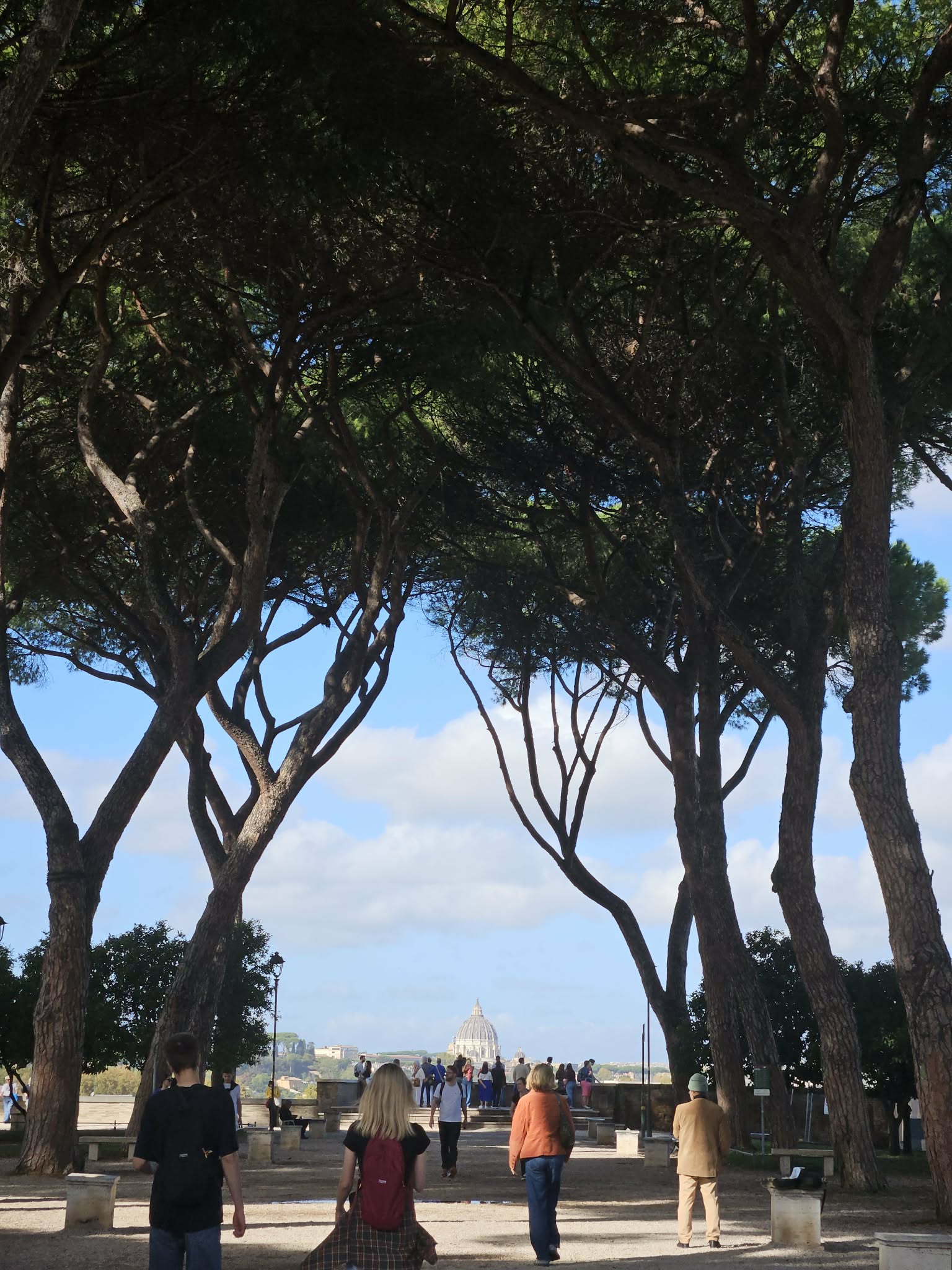
Solo Walking Routes Rome: Exploring the City on Foot
Rome doesn’t always make sense when you try to move through it quickly.
Streets narrow without warning. Landmarks appear before you realise you were looking for them. What looks close on a map often isn’t, and what feels far away can take only a few minutes on foot.
Walking slows those contradictions down.
For solo travellers, that shift matters. Without needing to follow a plan or match someone else’s pace, you begin to notice how the city actually connects – not just geographically, but atmospherically.
These routes are not designed to be completed.
They are designed to be experienced.

Pantheon to Campo de’ Fiori
This is one of the most intuitive walks in Rome.
It begins with density and gradually opens into movement.
Start near the Pantheon, where the streets feel enclosed and textured. From there, let the route unfold naturally toward Piazza Navona, allowing yourself to slow as the space opens.
The transition from narrow streets into wide piazzas is one of Rome’s defining rhythms.
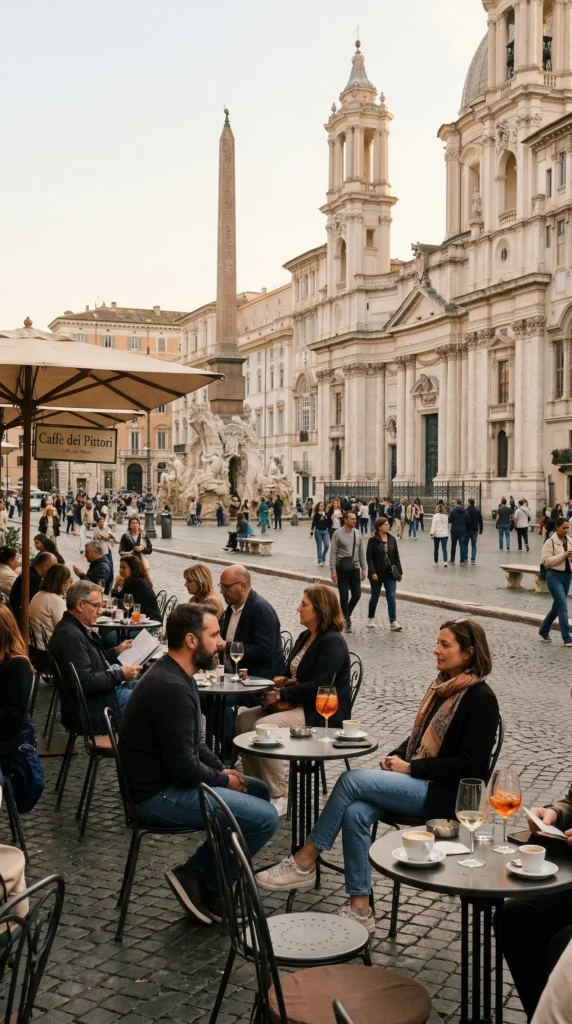
From Piazza Navona, continue toward Campo de’ Fiori. The route becomes less formal, more local. Market stalls, small shops, and everyday activity replace monumental focus.
This walk works best without urgency.
Pause at a café. Sit longer than you planned.
Rome rarely rewards efficiency.
Capitoline Hill to the Jewish Ghetto
This route begins with perspective.
From Capitoline Hill, the view across the Roman Forum creates a sense of scale – not just of the city, but of time.
From there, descend toward the Jewish Ghetto.
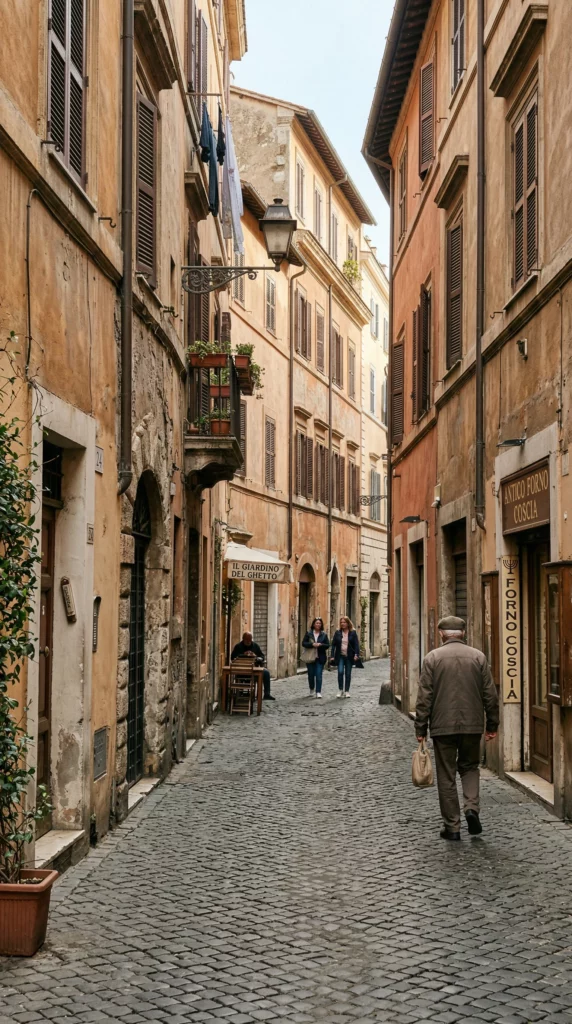
The shift is immediate but subtle. The streets become quieter. The atmosphere changes from monumental to lived-in.
This area carries deep historical weight, but it does not present itself loudly.
Walking alone here allows space to notice detail – stonework, signage, the absence of crowds in certain streets just moments away from busier routes.
It is a reminder that Rome is layered not only in history, but in pace.

Trastevere Without a Destination
Trastevere is often described as one of Rome’s most atmospheric neighbourhoods.
But its character is best understood without a fixed route.
Cross the river and begin walking without a clear endpoint. Let turns be instinctive rather than planned.
Some streets will feel busy. Others will be unexpectedly quiet.
Laundry hangs between buildings. Light shifts quickly between shaded alleys and open corners. Small squares appear without warning.
Trastevere can feel different depending on how you enter it.
Crossing the river from the direction of the Jewish Ghetto, the atmosphere tends to feel more immediate – busier streets, restaurants, and a sense of movement that carries across the bridge.
Entering from the direction of Testaccio can feel noticeably quieter. Streets become more residential, with schools, local activity, and a slower rhythm that sits just beneath the more familiar image of the neighbourhood.
Neither version is more “authentic” than the other.
But noticing the shift changes how you move through it.
Walking alone here allows you to follow curiosity rather than direction.
Getting slightly lost in Trastevere is not a mistake.
It is part of the experience.
Aventine Hill and the Orange Garden
This is a quieter route, often missed by travellers moving between major landmarks.
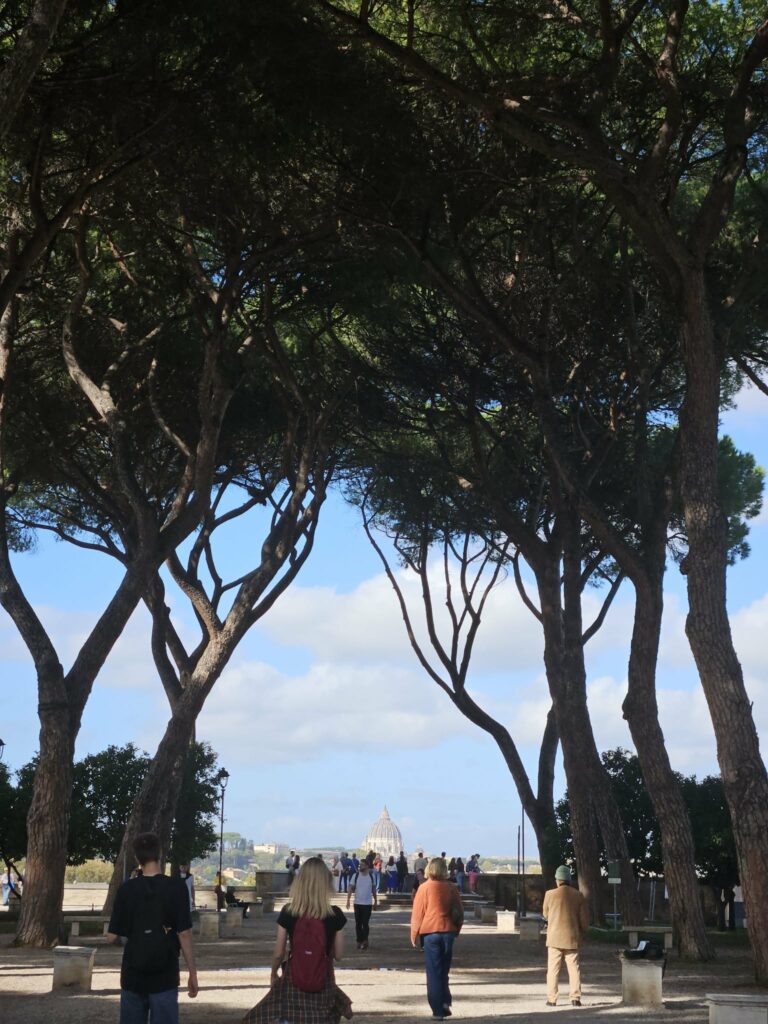
Make your way toward Aventine Hill, where the pace of the city slows noticeably.
The climb is gentle, and the reward is not just the view from the Orange Garden, but the calm that surrounds it.
This part of Rome feels more residential, more spacious.
There is also the well-known Maltese keyhole nearby – a perfectly framed view of St Peter’s Basilica through a small, deliberate opening.
It’s one of those moments where Rome briefly leans into the kind of experience that feels almost designed for a photograph.
I once joined the line.
After nearly an hour, I reached the front, stepped up, and — in an attempt not to hold up the queue, feeling all the eyes drilling into my back – I rushed the moment slightly and forgot to let the camera focus properly.
The view was still worth it.
It’s a small moment, but one that captures how easily intention shifts when a place becomes something to capture rather than experience.
But the experience is a quiet reminder that even in a city built for observation, it’s easy to slip into capturing rather than noticing.
The garden itself, just a few steps away, asks for the opposite.
Sit for a while. Look out across the city. Notice how distant the noise feels compared to the centre.
Walking here offers a different version of Rome – one that is less about movement and more about pause.
How to Walk Rome Solo
Walking Rome alone does not require a strict plan.
But a few simple approaches can make the experience feel more natural:
- Start early, before the streets fully fill
- Choose one area at a time rather than crossing the city repeatedly
- Allow for pauses – cafés, piazzas, shaded benches
- Sit often, even if only for a few minutes
- Let routes change without needing to “correct” them
Solo walking is not about covering distance.
It is about allowing the city to reveal itself gradually.
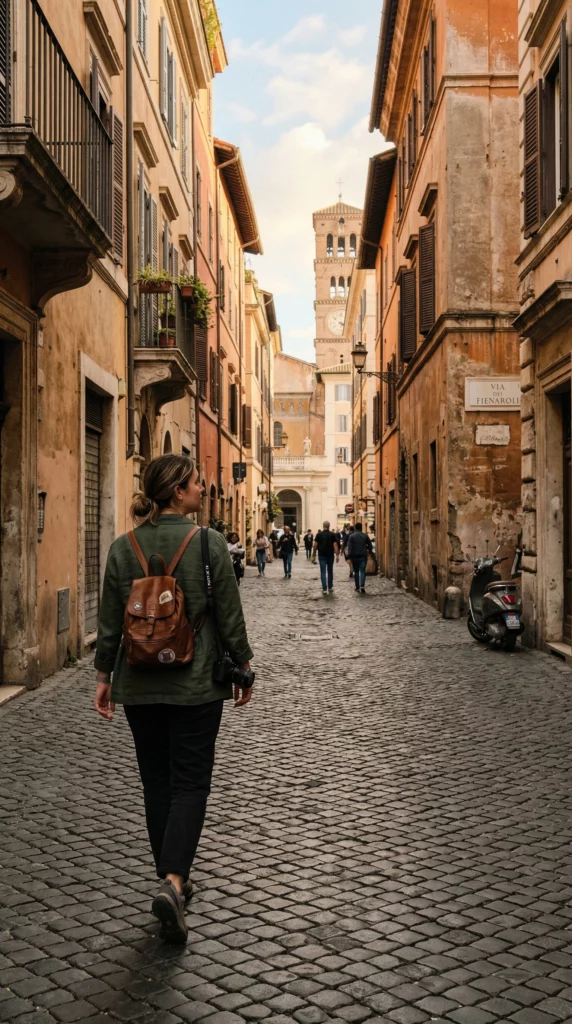
Rome Is Meant to Be Walked Slowly
Rome resists being rushed.
The more you try to move efficiently, the more the city feels overwhelming.
Walking slows everything down.
It allows for observation, adjustment, and small moments that would otherwise be missed.
For solo travellers, this pace creates confidence.
You begin to recognise streets. You understand how areas connect. You move without second-guessing.
Rome becomes less of a place to navigate, and more of a place to inhabit – even briefly.
TLDR
Rome is best experienced on foot, especially when travelling solo.
These walking routes focus on:
- gradual movement between neighbourhoods
- natural pauses in piazzas and cafés
- observation rather than efficiency
- flexibility over fixed itineraries
Walking alone in Rome allows the city to unfold at its intended pace.
Frequently Asked Questions
Is Rome a walkable city for solo travellers?
Yes. Most major sites are concentrated within the historic centre, making walking one of the easiest ways to move through the city.
Are these walking routes suitable for first-time visitors?
Yes. These routes follow natural connections between major areas while allowing flexibility to pause or adjust.
Is it safe to walk around Rome alone?
In central districts, walking is generally comfortable with normal urban awareness, especially during daylight and early evening.
How much should I plan walking routes in Rome?
Light planning helps, but over-structuring can reduce the experience. Allow space for spontaneous movement and pauses.
What is the best time of day to walk in Rome?
Early morning and late afternoon offer the most comfortable pace, with fewer crowds and softer light.