

Why I Start Planning Trips With A Wish List First
I used to think trip planning had to start with the practical side right away.
Budget.
Time.
Flights.
Logistics.
Those things matter of course but after a while I noticed that when I began with the limits I would kind of lose what actually got me excited about travelling somewhere in the first place.
Now I usually try to start with a travel wish list before I narrow it all down.
Not because I expect to do everything.
But because it helps me understand:
- what I’m genuinely excited about
- what kind of trip I actually want
- and which experiences continue to matter even after reality starts changing the plan
Starting bigger seems to make the realistic part easier later on.

1. I Start By Letting Myself Plan The Impossible Version
When I first start thinking about a trip, I usually let myself imagine the version where I do absolutely everything.
Every city.
Every museum.
Every day trip.
Every destination that remotely interests me.
For a while, I stop worrying too much about:
- budget
- annual leave
- pacing
- or whether everything fits neatly together
That probably sounds counterproductive.
But I’ve found it actually helps reveal what I’m most emotionally drawn toward before practical compromises begin.
Excitement can tell you a lot.

2. The Wish List Helps Me Identify What I’m Actually Excited About
One thing I’ve noticed over time is that some places quietly disappear from my planning naturally once I start narrowing things down.
Others remain important no matter how much I reduce the itinerary.
That difference matters.
Sometimes I initially think I “should” include something because:
- it’s famous
- it’s nearby
- or it feels logical geographically
But when I start simplifying the trip, those places are often the first things removed.
Meanwhile, other destinations continue surviving every round of cuts.
That usually tells me what I genuinely care about most.
3. A Travel Wish List Sometimes Reveal Better Future Trips
One thing I didn’t expect when I started planning this way was how often wish lists reveal completely different travel possibilities.
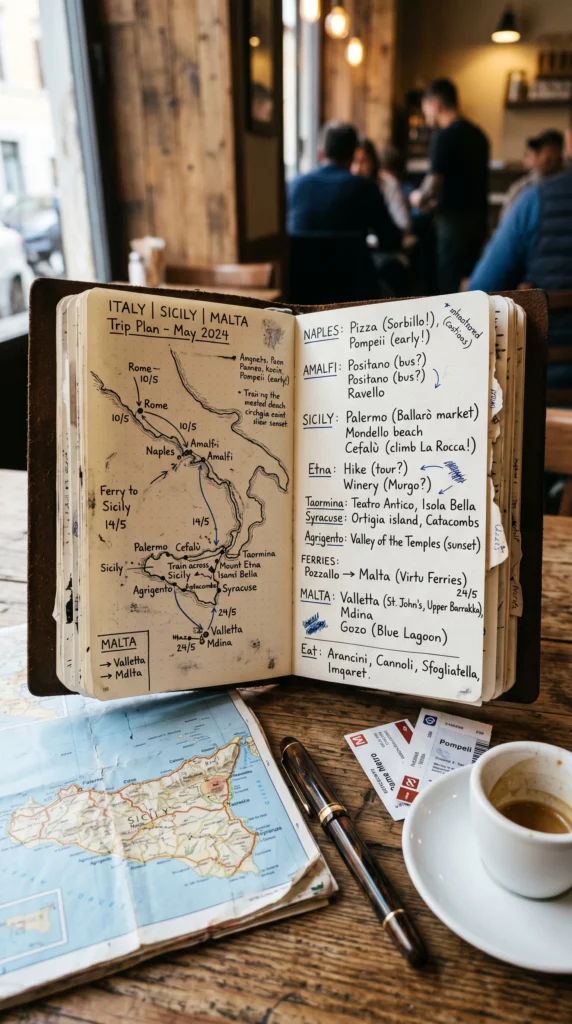
When I was planning my Italy trip, I originally included Sicily as part of the itinerary.
On paper, it made sense.
But once I started looking realistically at:
- pacing
- budget
- movement
- and available time
…it became one of the sections I removed.
Oddly enough, removing it actually improved the long-term planning.
Because while researching Sicily, I realised how naturally it could pair with Malta in the future — another place that has been sitting on my travel wish list for years.
Instead of trying to force everything into one overloaded trip, the wish list helped reveal a completely separate future journey that probably makes far more sense on its own.
That shifted how I think about “cutting” destinations entirely.
Sometimes you’re not removing an experience forever.
You’re just moving it into a trip where it fits more naturally later.
4. It Stops Me Building Trips Entirely Around Logistics
One thing I try to avoid now is allowing logistics to completely dictate the emotional shape of a trip.
Flights matter.
Transport matters.
Budgets matter.
But if I start planning entirely around convenience too early, trips can slowly become collections of efficient decisions rather than experiences I’m genuinely excited about.
The wish list helps protect against that a little.
It reminds me:
- what originally inspired the trip
- which places emotionally interest me most
- and what type of travel experience I’m actually trying to create
That perspective becomes incredibly useful once practical planning begins later.

5. Wish Lists Help Me Compare Different Types Of Trips
Sometimes the wish list stage also reveals that I’m actually choosing between completely different styles of travel.
For example:
- faster movement vs slower travel
- major cities vs smaller regional experiences
- comfort vs duration
- independent travel vs guided structure
Without the wish list phase, it’s easy to assume all travel decisions are simply logistical.
In reality, many of them are really decisions about:
- energy
- pacing
- priorities
- and what kind of experience you want emotionally
Seeing all the possibilities together helps clarify those trade-offs much earlier.

6. I Usually Pull Back More Than I Expect
One thing experience has taught me is that I almost always overestimate how much I can comfortably fit into a trip.
Especially early in the planning process.
At first, everything feels possible.
Then reality slowly enters the conversation:
- transport times
- exhaustion
- budgeting
- decision fatigue
- slower travel days
- unexpected changes
Now I expect that process to happen.
Instead of seeing it as failure, I see it as refinement.
The early wish list gives me room to gradually shape the trip into something more realistic without immediately feeling restricted from the beginning.

7. The Wish List Makes Trips Feel Motivating Before They’re Final
Sometimes trips can feel very abstract in the early planning stages.
Especially before anything is officially booked.
The wish list helps bridge that gap for me.
Even before flights or accommodation are confirmed, the process starts creating:
- excitement
- momentum
- curiosity
- and emotional connection to the trip itself
That motivation matters.
Because long-term travel planning can sometimes feel overwhelming if everything becomes spreadsheets, logistics, and pricing too early.
The wish list keeps some imagination alive inside the process.
Good Travel Planning Usually Starts Before The Final Decisions
I think one of the biggest mistakes I used to make was assuming good trip planning meant immediately narrowing everything down as quickly as possible.
Now I think the opposite is often true.
Giving yourself room to explore possibilities first can actually lead to:
- calmer decisions
- clearer priorities
- better pacing
- and trips that feel more emotionally aligned with what you genuinely want
For me, the wish list stage isn’t about building fantasy itineraries.
It’s about understanding the kind of trip I’m truly excited to take before practical planning starts shaping it into reality.

TLDR
- I start trip planning by imagining the broadest possible version first
- Wish lists help reveal what I’m genuinely excited about
- Some destinations naturally survive every round of cuts
- Wish lists sometimes reveal better future trips instead
- Planning emotionally first helps avoid over-prioritising logistics
- I almost always pull plans back more than expected later
- Wish lists keep travel planning motivating before trips are finalised
FAQ
Why start trip planning with a wish list?
Wish lists help identify what experiences and destinations genuinely matter most before practical limitations start narrowing options.
Do wish lists make travel planning unrealistic?
Not necessarily. They can actually help create more realistic trips later by clarifying priorities early.
How do wish lists help with travel planning?
They reveal emotional priorities, pacing preferences, and possible future trips that may fit better separately.
Should you plan every destination into one trip?
Usually not. Overloading trips often creates stress and exhaustion instead of better experiences.
Why is flexibility important when planning trips?
Flexibility allows trips to evolve naturally around pacing, energy levels, budgeting, and unexpected discoveries.