How to Enjoy a Slow Day Alone in Rome (Without Feeling Like You’re Wasting Time)
Rome doesn’t always reward urgency.
But slowing down here can feel uncomfortable at first.
When you’re travelling alone – especially on a first visit – it’s easy to feel like you should be doing more. Seeing more. Moving faster.
A slow day can feel like something you need to justify.
It isn’t.
In a city like Rome, slowing down is not wasted time.
It’s often when the city makes the most sense.
The Feeling of “Not Doing Enough”
It’s a common tension.
You sit down at a café longer than planned. You choose to wander instead of ticking off another landmark. You pause in a piazza without a clear reason.
And part of you wonders if you should be somewhere else.
Rome creates that feeling easily. There is always something nearby that feels important, something that could be next.
But trying to move through the city efficiently often makes it feel more overwhelming, not less.
A slow day interrupts that pattern.
Morning — Let the City Open First
Start earlier than you need to.
Not to see more, but to see differently.
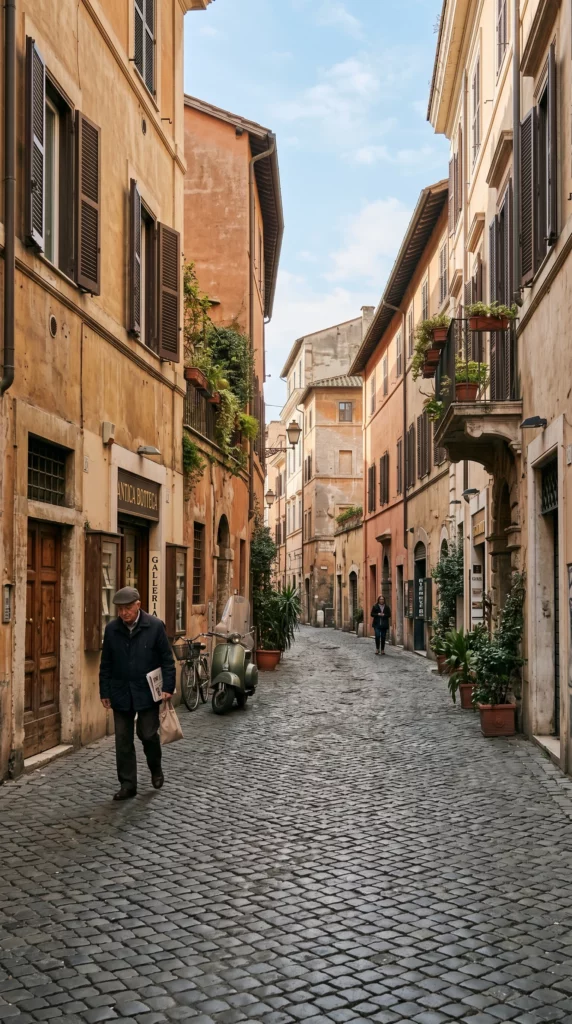
Rome in the early morning feels quieter, softer, less defined by movement. Streets that will later feel crowded are still settling into the day.
Walk without a strict route.
Let the direction come from what you notice rather than what you planned.
A coffee standing at a bar, a quiet street near the Pantheon, a short detour that wasn’t intentional — these are small moments, but they set the tone.
The day doesn’t need to begin with structure.

Midday — Pause Without a Purpose
This is often the hardest part.
By midday, the city is fully active. Movement increases, and the instinct to keep going becomes stronger.
Instead, stop.
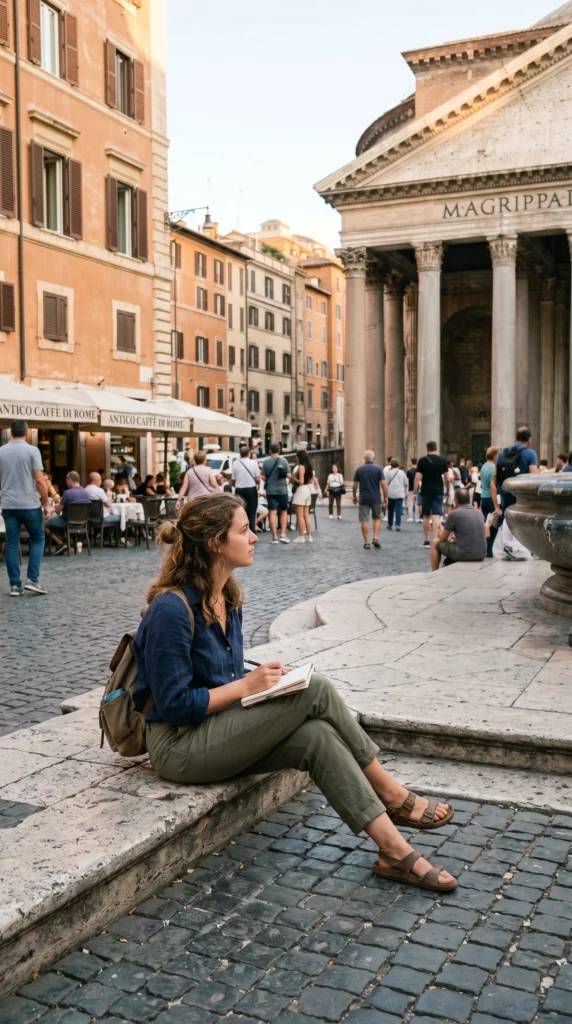
Choose a place – a café, a shaded piazza, a quiet bench – and sit longer than feels necessary.
Watch how people move. Notice how the space changes over time.
This is where solo travel becomes different.
You’re not filling time.
You’re allowing it.
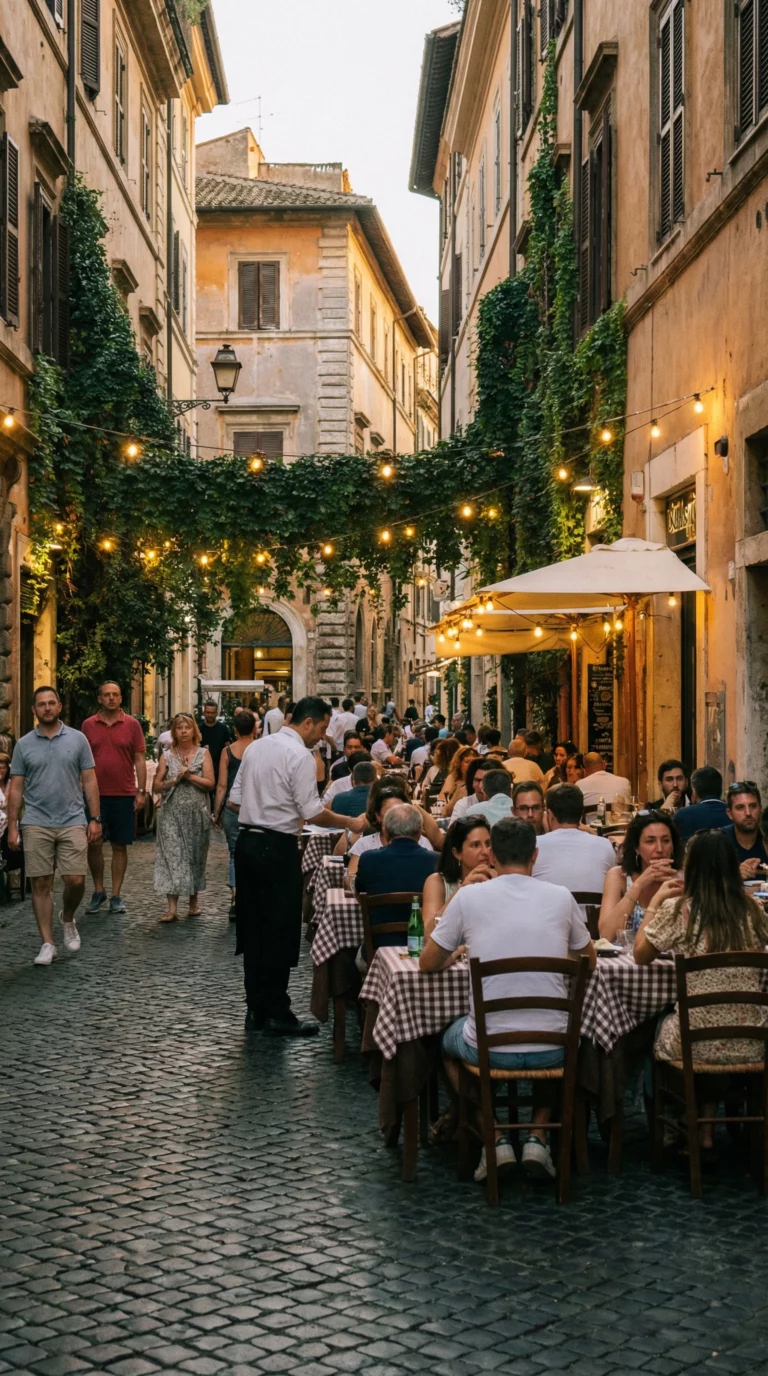
Lunch doesn’t need to be efficient. It can be extended. It can be quiet.
There is no schedule to return to.
Afternoon – Move Without Direction
The middle of the day is when Rome can feel most intense.
Heat builds. Streets fill. The pace quickens.
Rather than trying to compete with that, shift your approach.
Choose one area and stay within it.
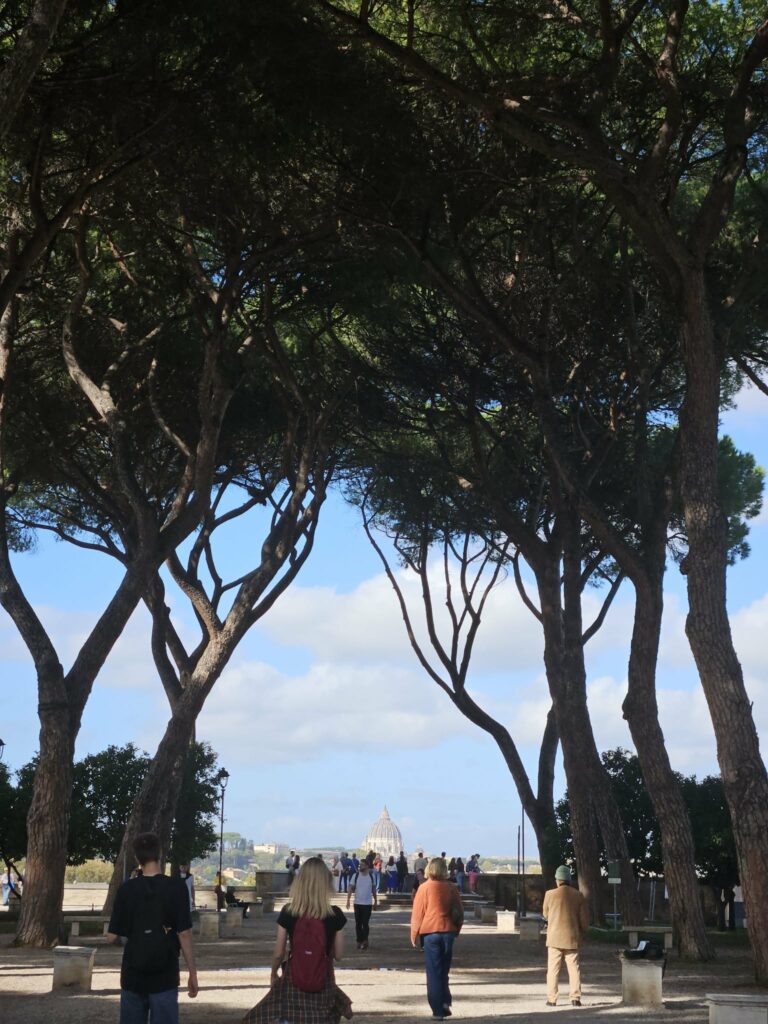
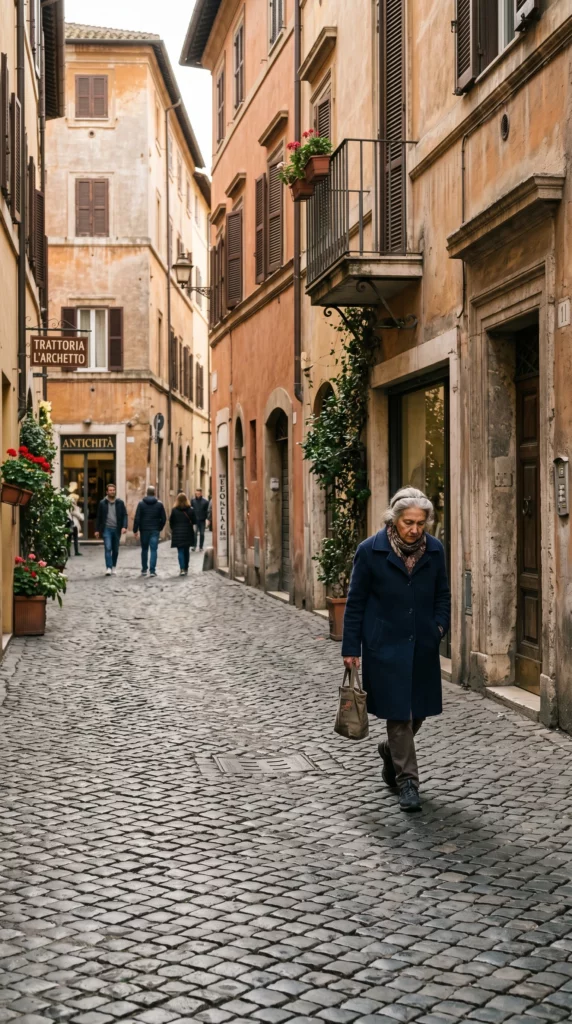
Walk slowly. Turn when something catches your attention. Step into a church not because it’s on a list, but because it’s there.
This is where the city starts to feel less like a map and more like a place.
You’re no longer navigating.
You’re moving.
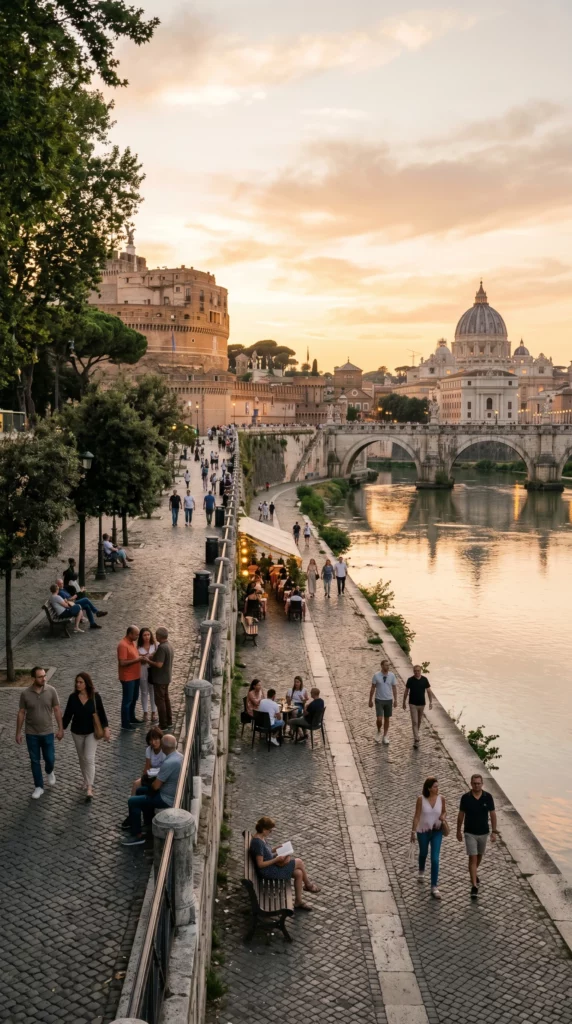
Evening – Let the Day Settle
As the day shifts into evening, Rome changes again.
Light softens. Movement slows slightly. Spaces that felt busy begin to open.
This is not the moment to rush toward a final experience.
It’s the moment to let the day settle.
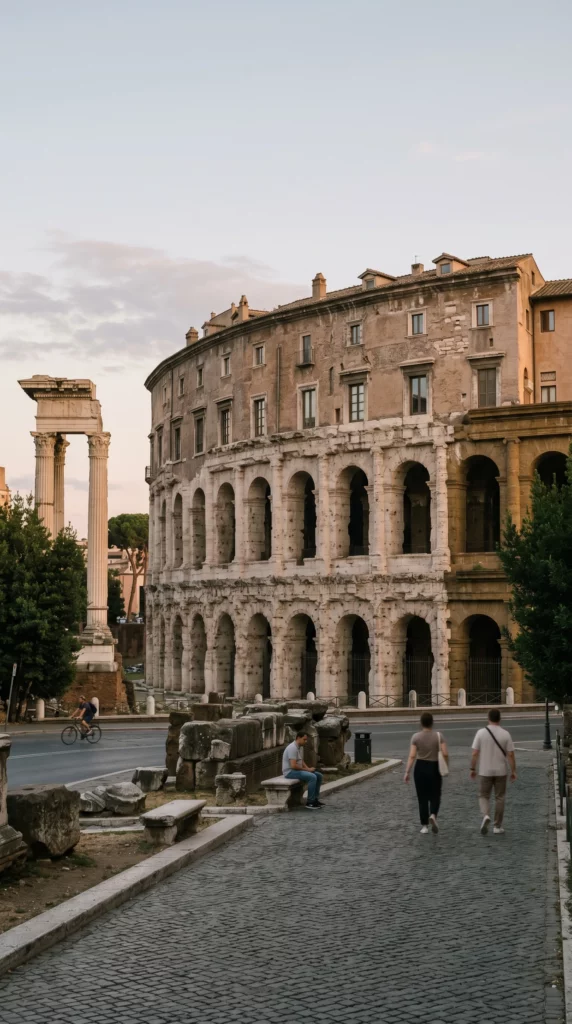
Towards the end of one trip, after returning to Rome for a final week, I went out in the early evening without a plan.
Walking without direction led me to the Theatre of Marcellus, and then along the path toward the Portico of Octavia – places I hadn’t planned to visit and hadn’t actively sought out.
It was close to closing for the night. Only a handful of people were around. The space felt quiet, almost paused.
I returned later with a group and saw the same area again.
But that first encounter – unplanned, unstructured, and slightly unexpected – stayed with me more clearly. It felt less like something I had visited, and more like something I had come across.
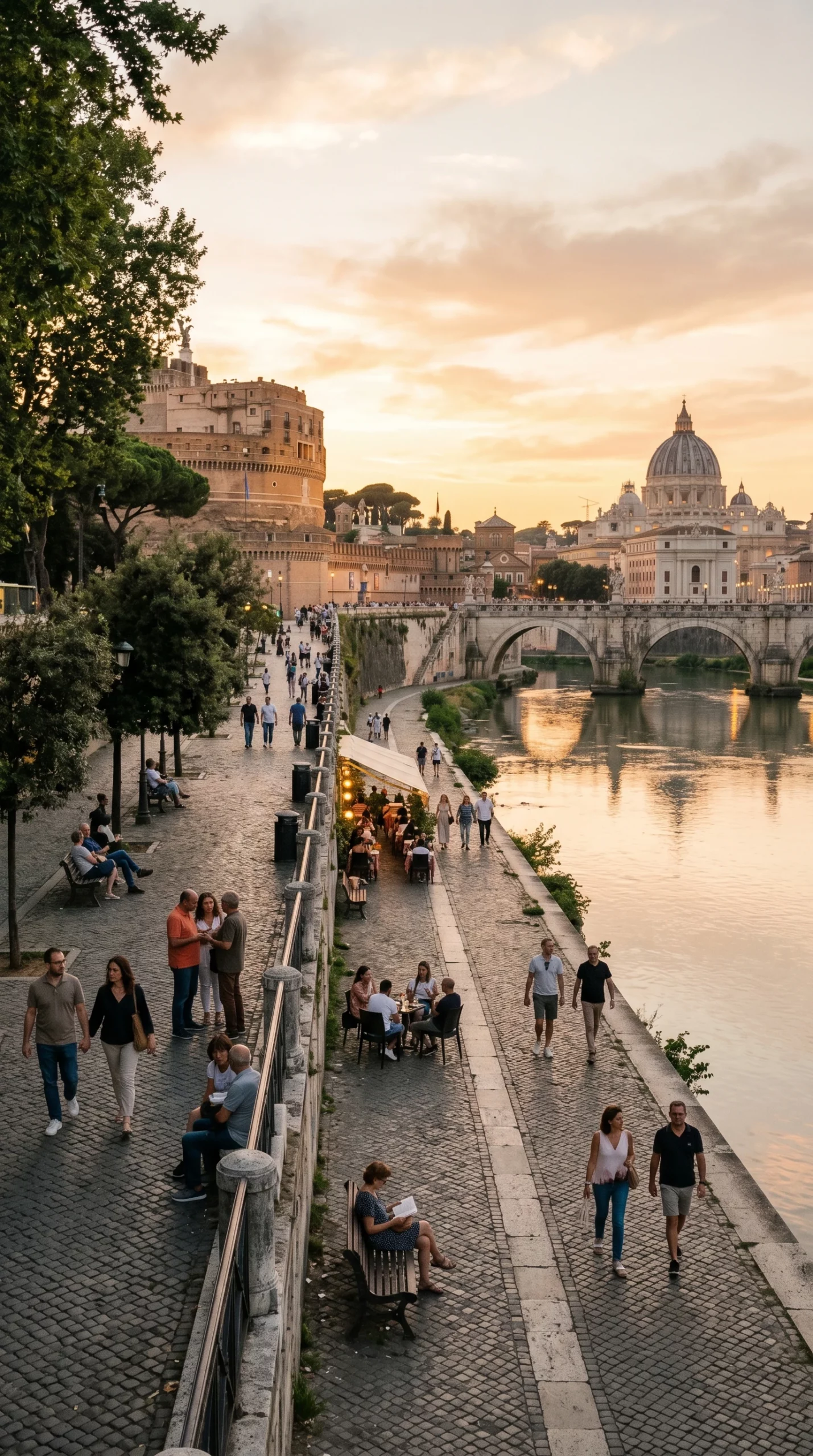
An aperitivo, a walk along the river, or simply sitting in a piazza as the atmosphere shifts – these are quiet endings that don’t need to be structured.
You don’t need to “finish” the day.
You just need to be in it.
Why Slowing Down Feels Difficult
Part of the discomfort comes from expectation.
Travel is often framed as something to maximise. More sights, more experiences, more efficiency.
Slowing down can feel like you’re stepping outside that expectation.
But in a city like Rome, the value isn’t always in what you see.
It’s in how you experience it.
A single street noticed properly can stay with you longer than a list of landmarks passed quickly.
Solo Time Changes the Experience
When you’re alone, there is no external pace.
No one else deciding when to move on. No shared itinerary to follow.
That freedom can feel uncertain at first.
But it also creates space.
Space to pause, to sit, to wander without needing to explain why.
A slow day becomes easier when you stop trying to measure it.
A Slow Day Is Not a Lost Day
It’s easy to look back and wonder what you could have done instead.
Another museum. Another landmark. Another part of the city.
But a slow day often gives you something less visible.
Familiarity.
You begin to recognise streets. You understand how areas connect. The city feels less overwhelming the next day.
You’re not starting again.
You’re continuing.
TLDR
A slow day alone in Rome isn’t wasted time – it’s how the city is best experienced.
- Early mornings offer a quieter perspective
- Midday pauses create space to observe
- Afternoons work best when you stay local
- Evenings are for settling, not rushing
Slowing down reduces overwhelm and builds familiarity with the city.
Frequently Asked Questions
Is it worth taking a slow day in Rome?
Yes. Slowing down allows you to experience the city more fully and reduces the feeling of overwhelm.
What should I do on a slow day in Rome?
Walk, sit, observe, and move without a strict plan. Focus on one area rather than covering the entire city.
Will I miss out if I slow down?
You may see fewer landmarks, but you’ll often have a deeper and more memorable experience.
Is Rome a good city for solo slow travel?
Yes. Its walkable structure, public spaces, and layered neighbourhoods make it ideal for slower exploration.
When is the best time to slow down in Rome?
Any time — but early mornings and late afternoons offer the most comfortable pace.