
Experiencing Istanbul Alone: A Guide to Cultural Awareness
Istanbul can feel unfamiliar before you even arrive.
The call to prayer echoes across the city. Mosques define the skyline. Daily rhythms don’t always align with what many travellers are used to.
For solo travellers, that unfamiliarity can create hesitation – not because the city is unwelcoming, but because its cues are different.
Experiencing Istanbul alone becomes easier when those cues are understood.
Respect, in this context, is not about following strict rules.
It is about noticing how the city moves – and adjusting your presence within it.

Entering Mosques With Awareness
Mosques are not simply landmarks.
They are active places of worship, with a rhythm that continues regardless of visitors.
Entering respectfully begins before you step inside.
Shoes are removed. Voices lower. Movement slows.
Dress matters here – shoulders and knees covered, and for women, a head covering is often required.
A simple solution is to carry a scarf with you. Keeping one tied to a bag or tucked away makes it easy to adapt if you find yourself near a mosque unexpectedly.
But beyond these visible expectations, there is a quieter adjustment.
Pause before entering. Notice how others move. Follow the flow rather than leading it.
When you are travelling alone, this becomes easier. You are not navigating group dynamics – just your own awareness.
Dress and Public Presence
Istanbul is not uniform.
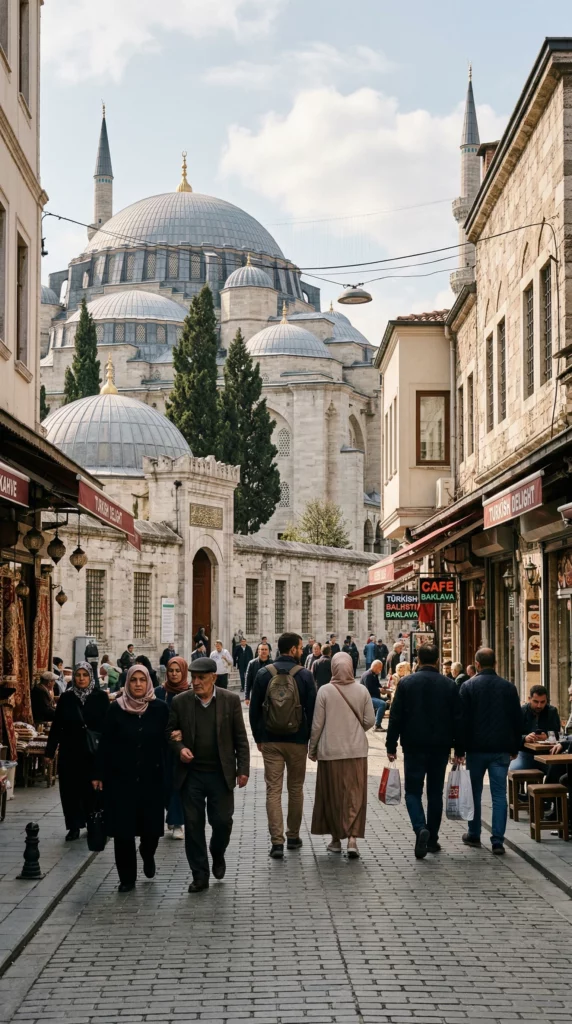
In some areas, dress feels modern and relaxed. In others, it is more conservative.
Rather than trying to define the city with a single expectation, it helps to respond to context.
In central districts, most travellers blend in easily.
Near mosques and in quieter neighbourhoods, a more modest approach feels appropriate.
This is not about restriction.
It is about reading the environment and adjusting subtly.
The result is not only respect, but comfort.
Tea Culture and Small Interactions
Tea is woven into daily life in Istanbul.
It appears in small glasses, offered in shops, served in cafés, and shared in moments that don’t feel transactional.
For solo travellers, these small interactions can feel uncertain at first.
Is this expected?
Should you accept?
Is there an obligation?
Often, there isn’t.
Tea can simply be a gesture — a pause in conversation, an opening rather than a commitment.
Once you settle into it, these moments become one of the more memorable parts of the city.
Apple tea, in particular, seems to appear often — and it’s easy to start looking forward to those small pauses.
If you linger at the end of a meal, it’s not uncommon to be offered tea, and sometimes something small alongside it.

What matters is recognising that interaction here is not always transactional.
It is social.
Markets, Bazaars, and Movement
Places like the Grand Bazaar or Spice Market can feel intense when experienced alone.
The density of movement, the calls from shopkeepers, the constant flow of people — it can be overwhelming if approached with urgency.
The first time I entered the Grand Bazaar, on a rainy day, the crowd felt immediate and heavy. I didn’t stay long.
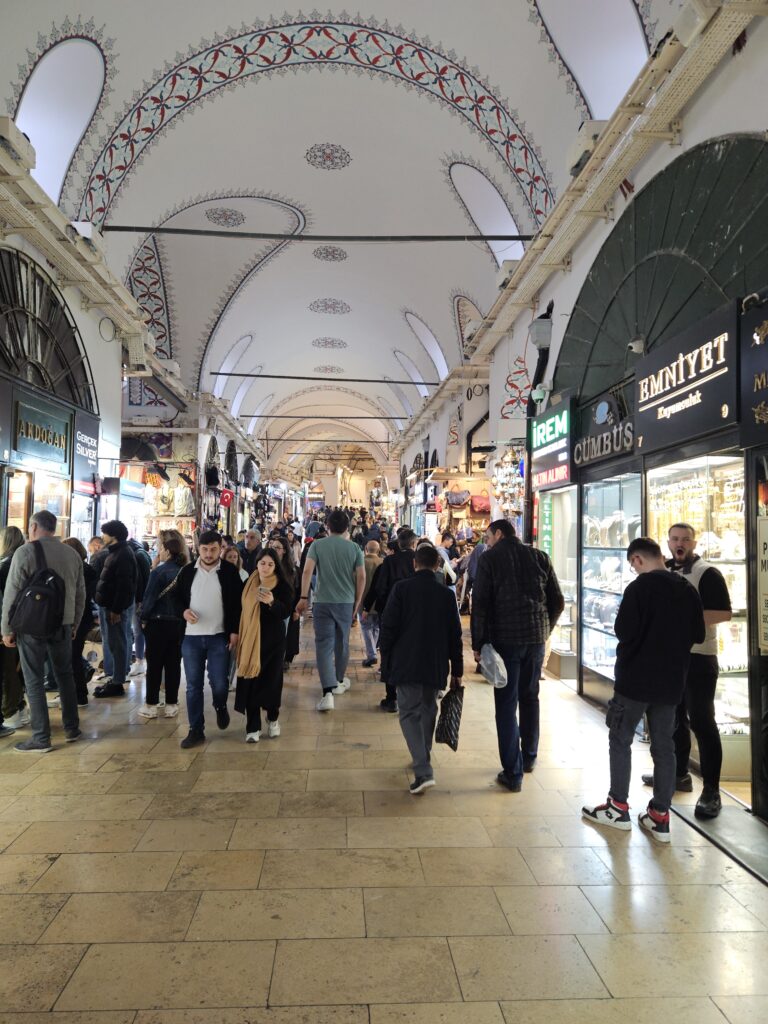
Returning early in the day changed the experience completely.
The space felt more navigable, less crowded, and easier to observe.
On one visit, I was gently guided into a carpet shop, offered tea, and left to watch another couple negotiate over a rug.
When I explained I wasn’t looking to spend much, I was offered a much smaller option – which I politely declined before moving on.
These interactions are part of the experience, but they are not obligations.
Walking slowly changes how these spaces feel.
Engagement becomes a choice, not a requirement.
A simple “no, thank you” is enough.

Moving Through the City
Istanbul is busy, but it is rarely static.
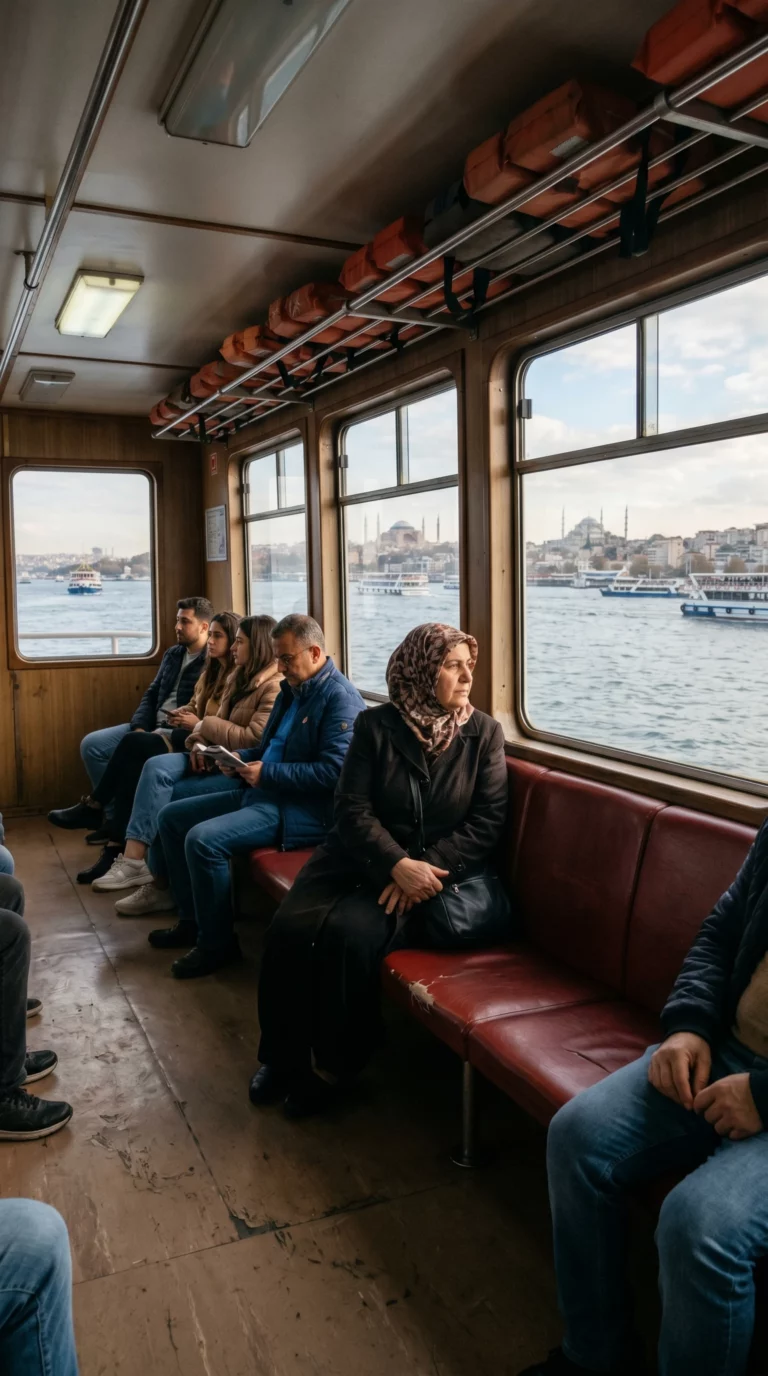
Ferries cross the Bosphorus. Trams move through the historic centre. Streets fill and empty in waves.
As a solo traveller, movement becomes easier when you align with that flow rather than trying to control it.
Stand where others stand. Walk where others walk.
In busier areas like Sultanahmet, it’s also common to be approached — sometimes quite directly.
Confidence helps here, even if it’s something you are still building.
Walking with purpose, keeping a steady pace, and avoiding long pauses in crowded areas reduces most unwanted interactions.
If you do need to stop and reorient, stepping into a café or a quieter space allows you to reset without drawing attention.
Most interactions are brief.
And most of the time, a clear and firm “no” is respected.
Respect Creates Comfort
Experiencing Istanbul alone is not about knowing everything in advance.
It is about observing, adjusting, and allowing the city to guide your behaviour.
Small shifts — lowering your voice, adjusting your pace, dressing with awareness — change how you experience the space.
They also change how the space responds to you.
Respect does not restrict movement.
It smooths it.
And in a city as layered as Istanbul, that makes all the difference.
TLDR
Experiencing Istanbul alone becomes easier through cultural awareness and observation.
- Mosques require modest dress and quiet behaviour
- Carrying a scarf makes adapting easier
- Tea culture reflects social interaction, not obligation
- Markets feel structured when approached calmly
- Confidence and pacing reduce unwanted interactions
Respect creates comfort – and confidence.
Frequently Asked Questions
Do I need to dress conservatively in Istanbul?
Not everywhere, but modest dress is expected in mosques and appreciated in quieter neighbourhoods.
Is it okay to visit mosques alone?
Yes. Visitors are welcome outside of prayer times. Follow posted guidelines and observe how others behave.
Do I have to accept tea when offered?
No. Tea is often offered as a gesture. Accepting or declining politely is completely acceptable.
How should I respond to shopkeepers in markets?
A polite acknowledgement or “no, thank you” is enough. You are not obligated to engage.
Is Istanbul overwhelming for solo travellers?
It can feel busy at first, but observing the city’s rhythm makes movement more intuitive over time.
Explore Further
|
Taking the Ferry Alone in Istanbul |