Markets of Mexico City: Where the City Feeds Itself
Infrastructure, Density, and the Reality of Daily Food Systems

Introduction: A System, Not an Attraction
Markets in Mexico City are often described as places to visit.
But they are not designed for visitors.
They are systems — built to feed a city at scale.
The first time I walked into one, I expected something navigable. Something loosely structured. Something I could move through and understand quickly.
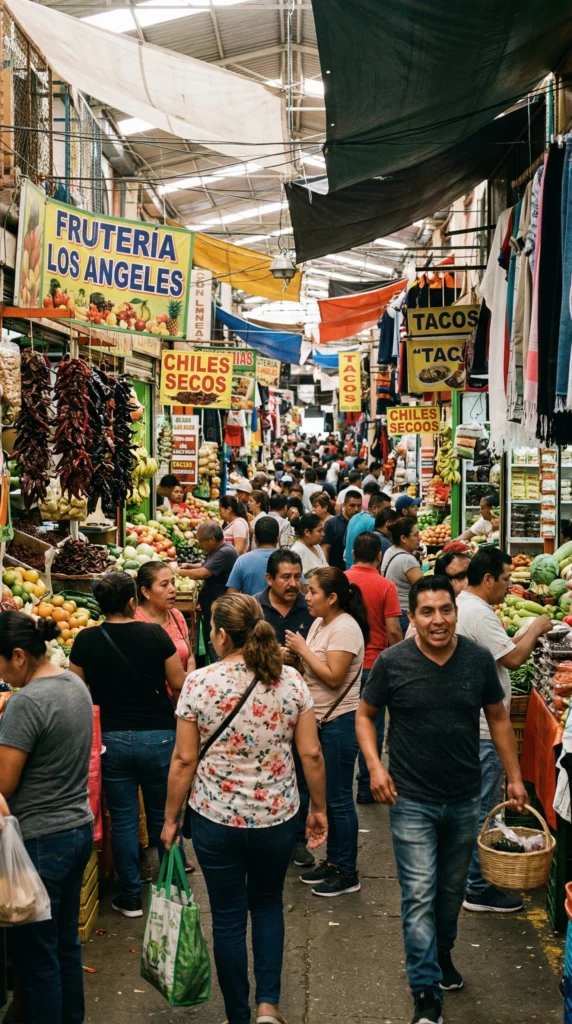
Instead, I found movement. Density. Repetition. Entire sections dedicated to a single category of food. Vendors working with rhythm rather than presentation.
It became clear quickly that I wasn’t entering an attraction.
I was stepping into infrastructure.
1. Markets as Infrastructure
Mexico City’s markets function as supply chains.
Food moves through them constantly — from regional farms, distribution networks, and surrounding states into neighbourhoods across the city.
Markets like La Merced operate at a scale that feels closer to logistics than leisure. Produce, meat, dried goods, spices — all organised not for browsing, but for distribution.
The purpose is not discovery.
It is continuity.
This is how the city feeds itself — daily, repeatedly, without pause.

2. Indigenous Foundations Still Visible
Beneath the scale and movement, older structures remain.
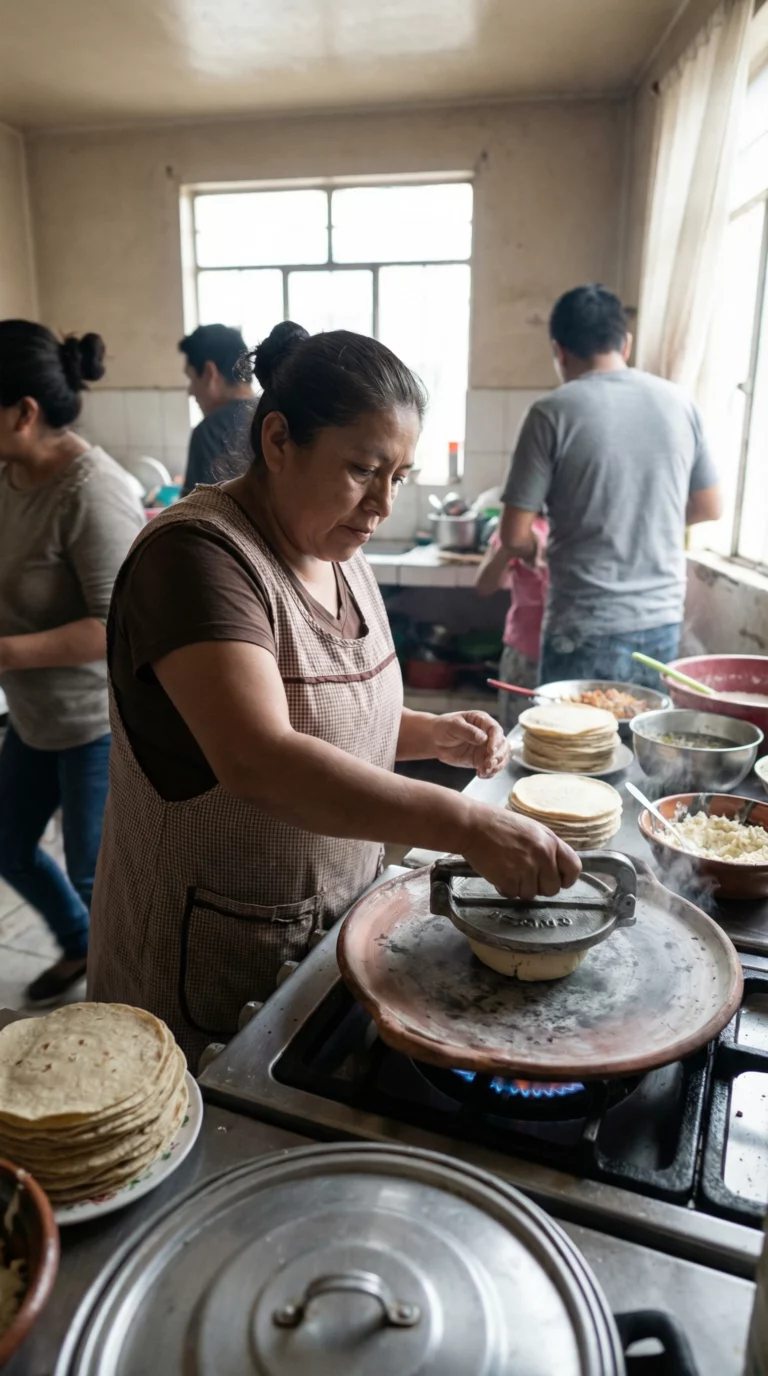
Maize, beans, and chiles are everywhere — not as preserved tradition, but as active, daily ingredients. Tortillas are still made fresh. Dried chiles appear in dozens of varieties. Preparation methods reflect systems that existed long before colonisation.
These are not cultural displays.
They are working foundations.
Mexico City food culture, even at its largest scale, still rests on Indigenous agricultural continuity.

3. Formal Markets and Tianguis
Not all markets in Mexico City look the same.
Permanent markets — large, enclosed, and structured — operate daily. They are fixed points in the city’s food system.
Alongside them, tianguis — temporary street markets — appear on specific days, then disappear again. Streets fill with vendors, then return to normal by evening.
The rhythm changes, but the function does not.
Both forms serve the same purpose: distribution, access, and daily provision.
Understanding Mexico City markets means recognising this dual structure — fixed and fluid, permanent and temporary.
4. Labour, Repetition, and Daily Rhythm
Markets are sustained by repetition.
Vendors arrive early. Tasks repeat. Produce is unpacked, arranged, sold, replaced. The same motions carried out across long hours.
There is little separation between work and environment.
These are not spaces designed for observation. They are spaces defined by labour.
That rhythm becomes visible the longer you stay.
Not dramatic. Not staged.
Just continuous.

5. Not Designed for Visitors
Markets in Mexico City are often recommended as experiences.
But they are not curated.
In places like Mercado de San Juan, this becomes especially clear.
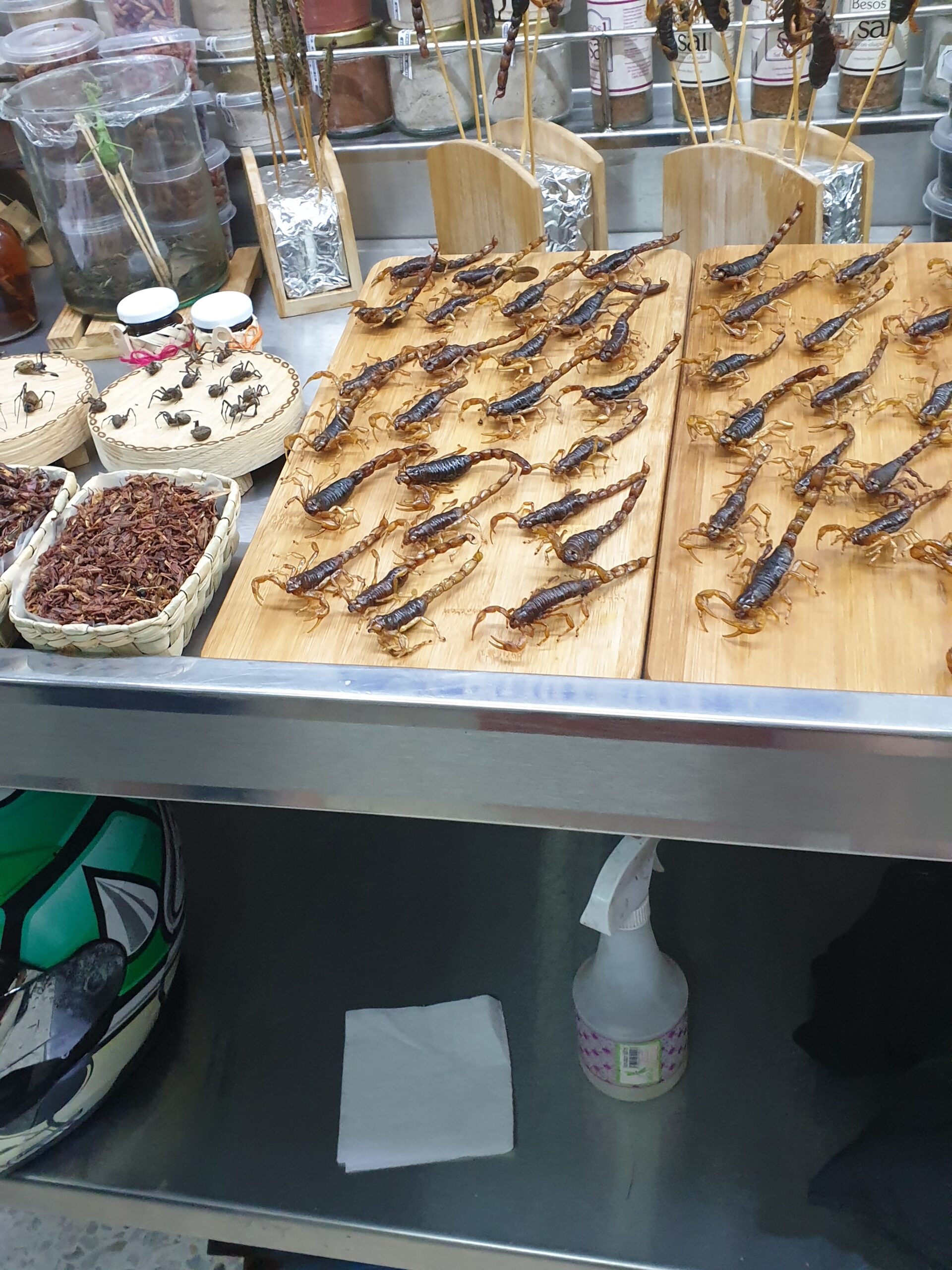
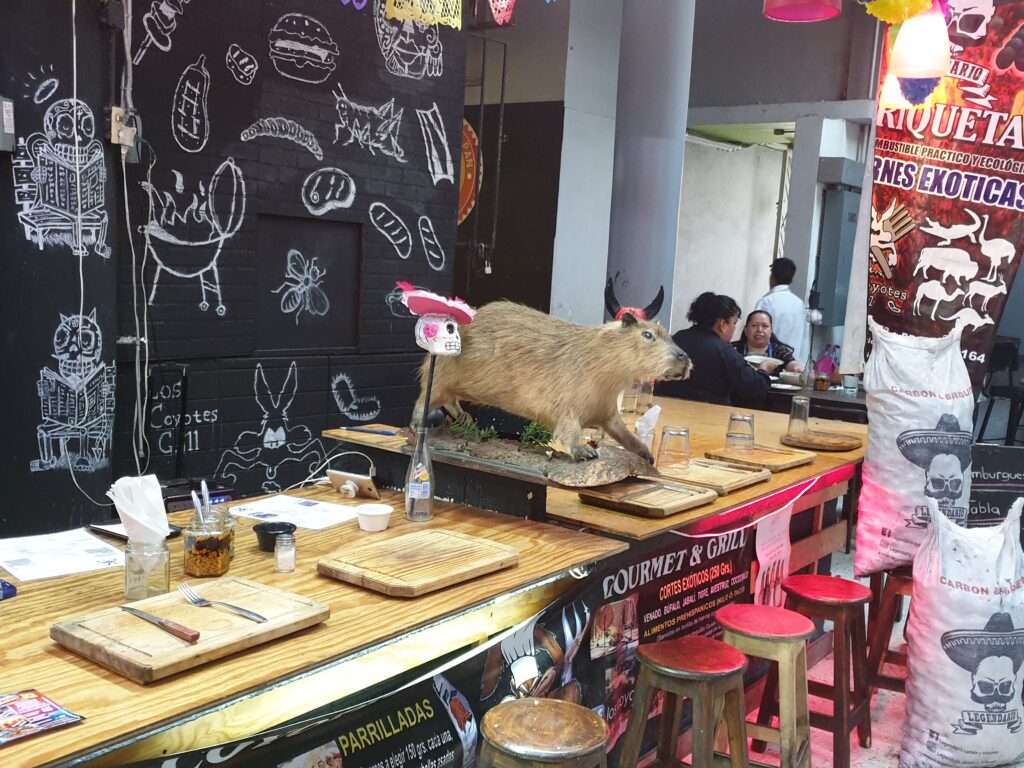
There are stalls dedicated to ingredients that don’t appear in most everyday kitchens — cuts of meat, unfamiliar animals, foods prepared in ways that can feel confronting if you’re not used to them.
I remember walking through and realising very quickly that I was out of my comfort zone. As someone who tends toward familiar food, it wasn’t curiosity that came first — it was hesitation.
But that reaction was part of the point.
These markets reflect the full range of what a city eats — not just what it chooses to present. They are not simplified, not filtered, and not adjusted for expectation.
They are complete.
Reflection: Understanding Through Systems
Markets reveal a different side of a city.
Not monuments. Not curated culture.
Systems.
They show how food moves, how people work, how daily life is sustained at scale.
To walk through them is not simply to observe what is sold.
It is to understand how a city functions — continuously, and often invisibly.
And that understanding sits deeper than any checklist of places to visit.
TLDR
Mexico City markets reflect:
- Infrastructure — systems that feed the city daily
- Indigenous Continuity — maize, beans, and chiles still central
- Dual Structure — permanent markets and temporary tianguis
- Labour — repetition and daily work sustain the system
- Unfiltered Reality — markets are not curated for visitors
They are not attractions — they are how the city works.
FAQ
What are the main markets in Mexico City?
Major markets include La Merced, Mercado Medellín, and many neighbourhood markets, alongside temporary tianguis held throughout the city.
What is a tianguis?
A tianguis is a temporary street market that appears on specific days, offering fresh produce, food, and household goods.
Are Mexico City markets good for visitors?
They can be, but they are not designed as attractions. They function as working food systems rather than curated experiences.
What foods are common in Mexico City markets?
Maize, beans, chiles, fresh produce, meats, and prepared foods like tortillas and street snacks are commonly found.
Why are markets important in Mexico City?
They are essential to the city’s food distribution, supporting daily life and reflecting its cultural and economic systems.