Walking Through Balat: A Neighbourhood Where Istanbul’s Layers Still Meet
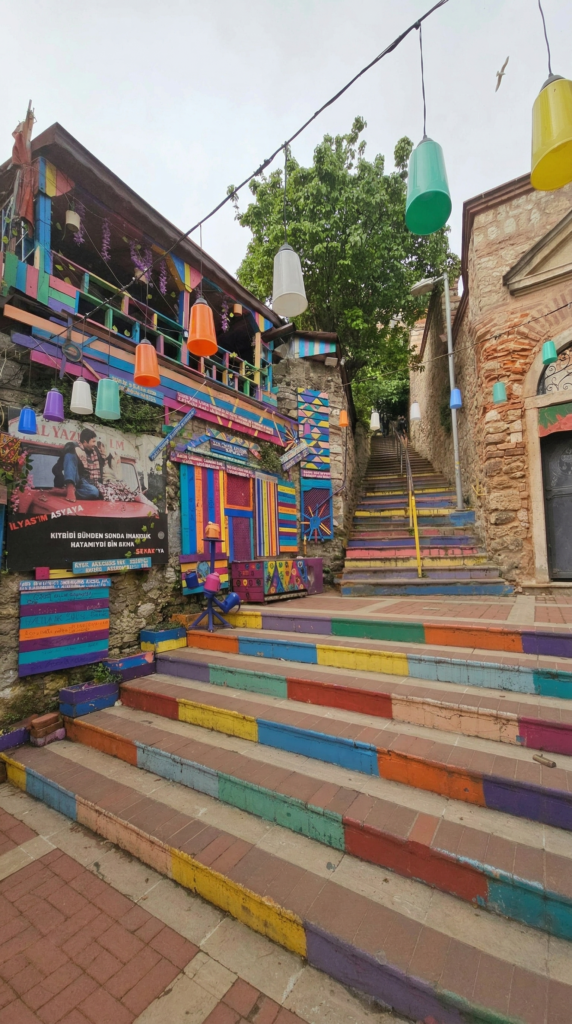
I came to Balat because of a staircase.
Like most people, I had seen the photos — the brightly painted steps, the colourful houses, the kind of place that seems designed to be photographed.
So I went looking for that exact spot.
I reached the stairs early, before the walking tours arrived and before anyone had set up tripods.
For a few minutes, the street was quiet.
I walked up slowly, past the painted steps and narrow houses, with no one else around.
And in that moment, it didn’t feel like a photo location.
It felt like a neighbourhood.
The Street That Made Balat Famous
The coloured stairs are what bring most people to Balat.
They’re bright, unmistakable, and instantly recognisable.
But they’re also where many people stop.
Photos are taken. Angles are adjusted. And then the visit ends.
Standing there early in the morning, it was easier to see them differently.
Without the crowd, without the waiting, without the sense that you were standing in line for a photo.
Just a set of steps in a lived-in street.
That shift — from “photo spot” to “part of the neighbourhood” — happens quickly here, if you let it.
Walking Beyond the Stairs
Once you leave the staircase behind, Balat changes almost immediately.
The streets narrow.
The pace slows.
The colour is still there, but it feels less curated — more natural, more lived in.
I didn’t have a plan for where I was going next.
I just kept walking.
At one point, I realised it was quieter than I expected.
Later I would learn it was a public holiday.
At the time, it just felt like I had arrived at the right moment.
Everyday Streets and Small Details
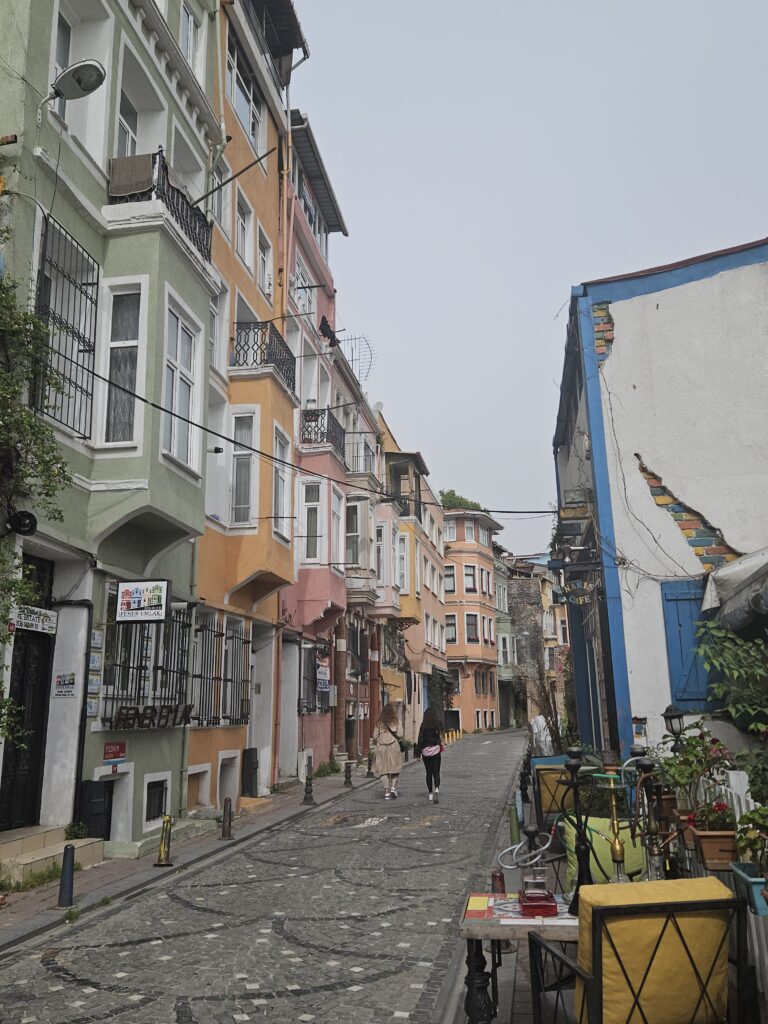
This is where Balat starts to feel different.
Not because of any single landmark, but because of the accumulation of small things.
Laundry hanging between buildings.
Doors that look like they’ve been opened and closed for decades.
People moving through the streets without any awareness that this place has become something people travel across the world to see.
It stops feeling like somewhere you visit.
And starts feeling like somewhere you’re passing through.
A Neighbourhood of Many Histories
At some point, the streets led me into a church.
Then later, another.
Different spaces, different denominations, but all within a short walk.
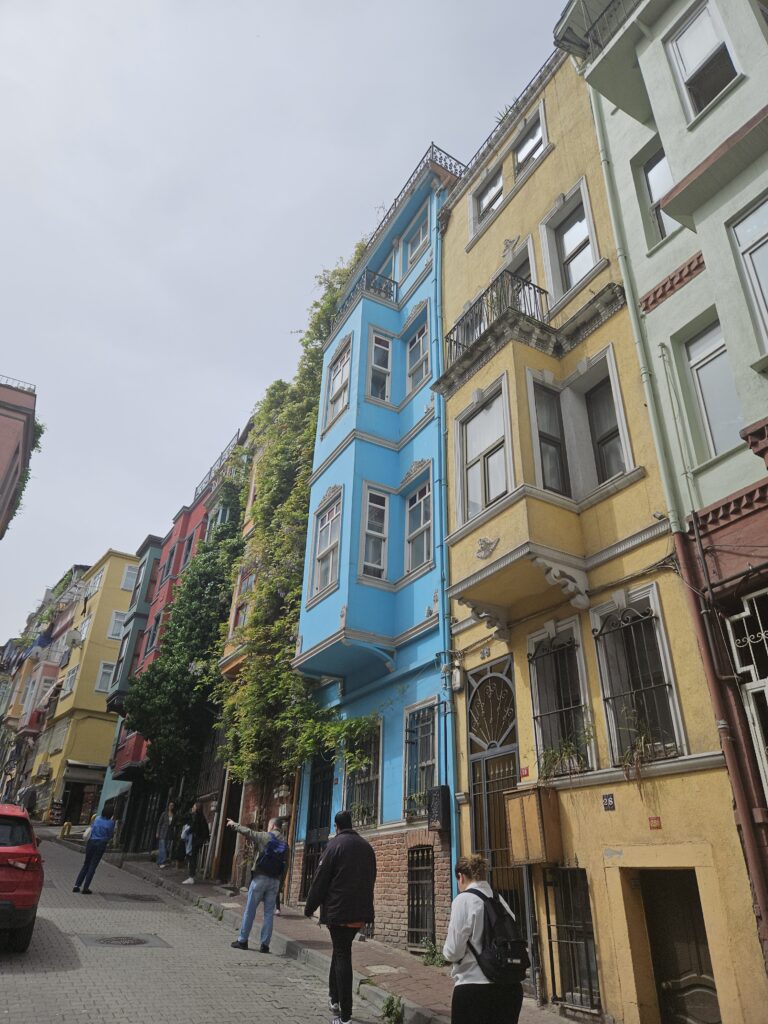
Balat has long been home to Jewish, Greek Orthodox, and Armenian communities.
You don’t need to know the full history to feel that something is layered here.
You notice it in the buildings.
In the way different spaces exist side by side.
In how quickly the atmosphere can shift from street to street.
It’s not something that announces itself.
It’s something you notice gradually.

Street Art, Photos, and Perspective
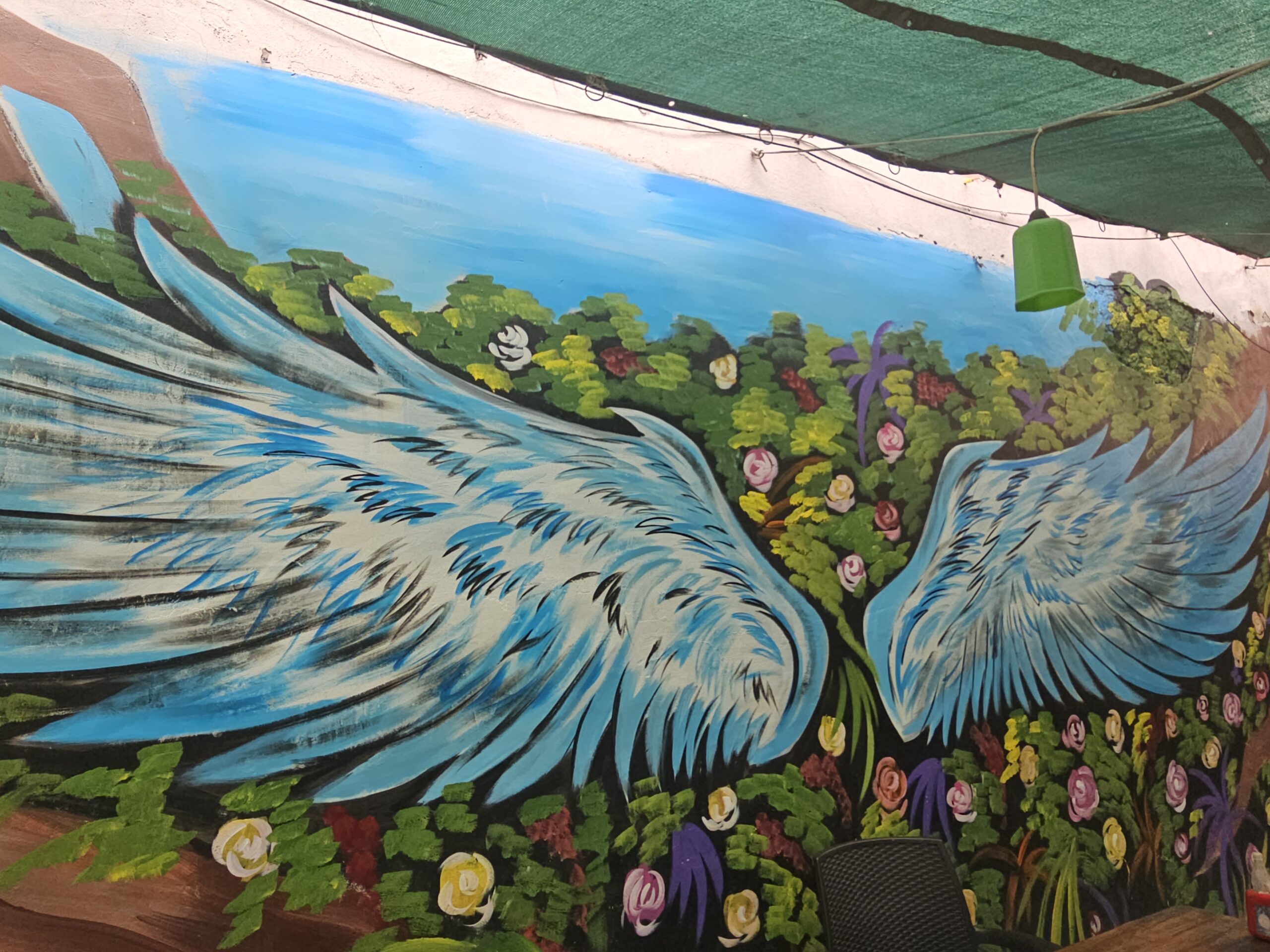
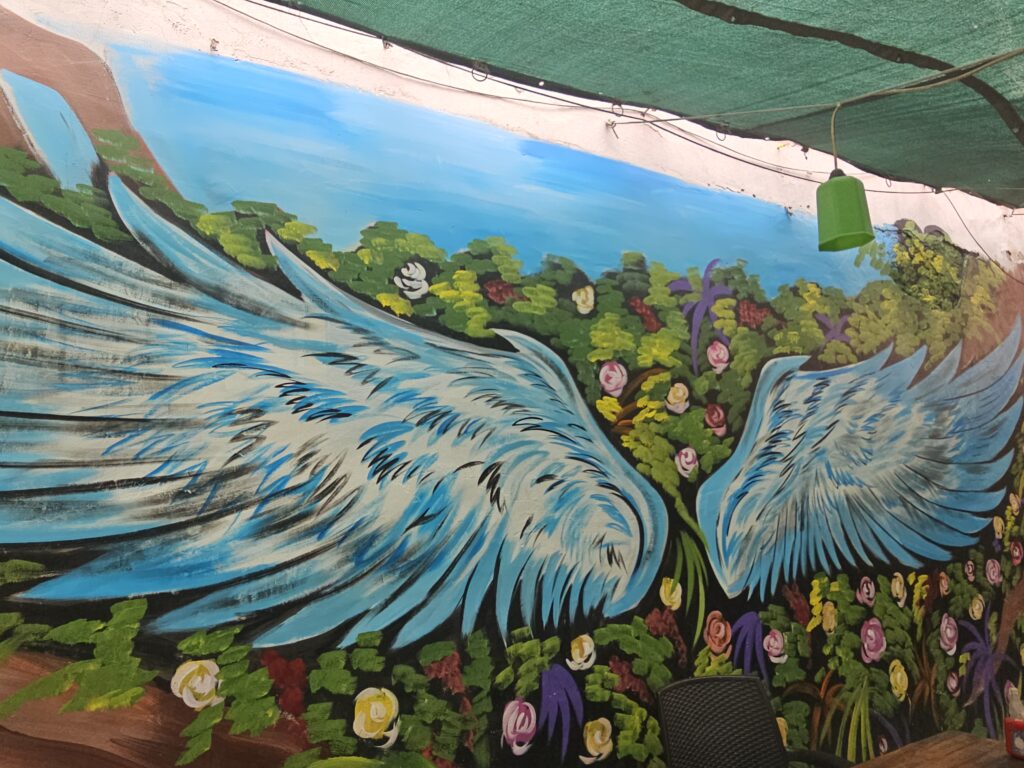
Balat’s murals and painted walls are part of what draw people in.
The angel wings, the bright colours, the small corners designed — intentionally or not — to be photographed.
I had one of those photos in mind before I arrived.
And I still stopped when I found it.
But by that point, it felt different.
Less like I had reached a destination.
More like I had come across something along the way.
That shift changes how you interact with places like this.
You stop trying to capture them.
And start noticing them.
Why Balat Feels Different
Balat doesn’t revolve around a single landmark.
There’s no clear checklist.
No defined route.
It reveals itself slowly.
In moments rather than highlights.
You arrive expecting something specific — a staircase, a photo, a scene you’ve already seen online.
And if you stay a little longer, it becomes something else.
Something quieter.
Something less obvious.
But ultimately, more memorable.
How to Visit Balat Well
If you want to experience Balat beyond the surface, it doesn’t take much:
- Arrive early, before the crowds
- Don’t treat the staircase as the end point
- Walk without a fixed route
- Take the side streets
- Step inside places that are open
- Let the neighbourhood unfold rather than trying to “cover” it
Balat isn’t somewhere to rush.
It’s somewhere to slow down.
TLDR
Balat is often known for its colourful streets and famous staircase, but the real experience begins once you move beyond those photo spots. Walking through the neighbourhood reveals layers of history, everyday life, and quiet moments that make it one of Istanbul’s most rewarding areas to explore slowly.
FAQ
Is Balat worth visiting in Istanbul?
Yes, especially if you enjoy exploring neighbourhoods with character, history, and a more local feel beyond major landmarks.
What is Balat known for?
Balat is known for its colourful houses, painted staircase, street art, and its layered cultural and religious history.
When is the best time to visit Balat?
Early morning is ideal if you want to avoid crowds and experience the neighbourhood at a slower pace.
How long should you spend in Balat?
A few hours is ideal. It’s best explored slowly rather than as a quick stop.