Turkish Breakfast Culture: The Ritual of Kahvaltı in Turkey
Shared Tables, Slow Mornings, and the Space Before Coffee
Introduction: A Meal That Slows the Day
In many places, breakfast is something to move through.
Coffee taken quickly. Something small eaten standing. The day beginning before the meal has properly settled.
In Türkiye, breakfast resists that pace.
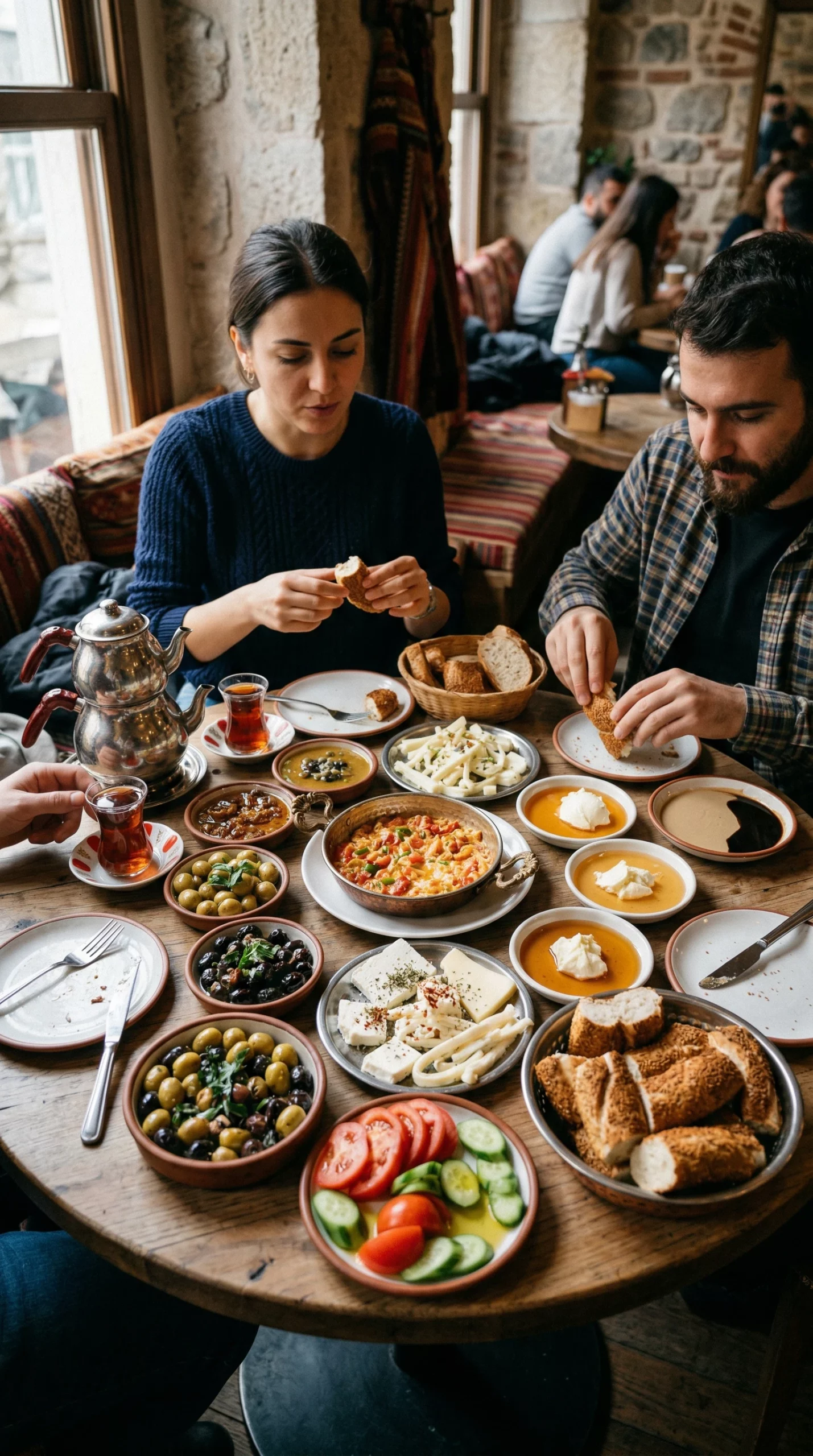
The first time I sat down for kahvaltı, I expected a meal. What arrived was a table — filled gradually, then continuously. Bread, olives, cheeses, eggs, spreads, tea poured and refilled without asking.
Time shifted.
Breakfast was not something to finish. It was something to sit within.
Turkish breakfast culture is not defined by what is eaten alone, but by how the meal unfolds.
1. What Kahvaltı Means
The word kahvaltı translates simply: “before coffee.”
But the meaning extends beyond timing.
Kahvaltı is structured around sharing. Plates are placed in the centre. Bread moves constantly between hands. Nothing belongs to one person.
Cheese, olives, tomatoes, eggs, honey, jams — the table builds outward rather than inward.
There is no single focal dish.
Instead, there is balance.
Turkish breakfast culture is defined less by individual items and more by the structure of the table itself.
2. The Table as Social Space
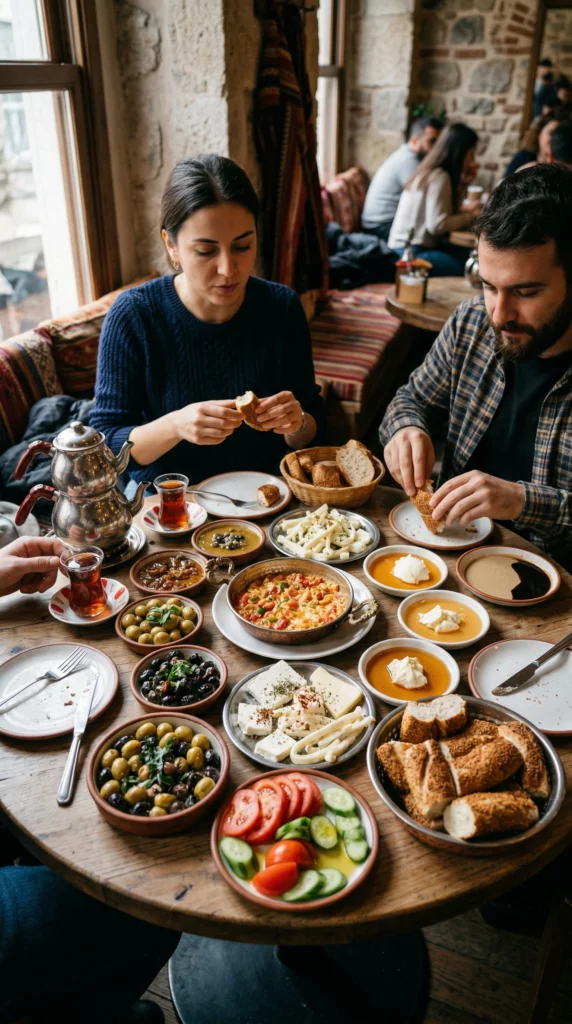
Kahvaltı is rarely solitary.
It is a social meal — designed for conversation, not efficiency.
People sit longer. Plates are revisited. Tea continues to arrive. The meal stretches, not because it is formal, but because it allows for it.
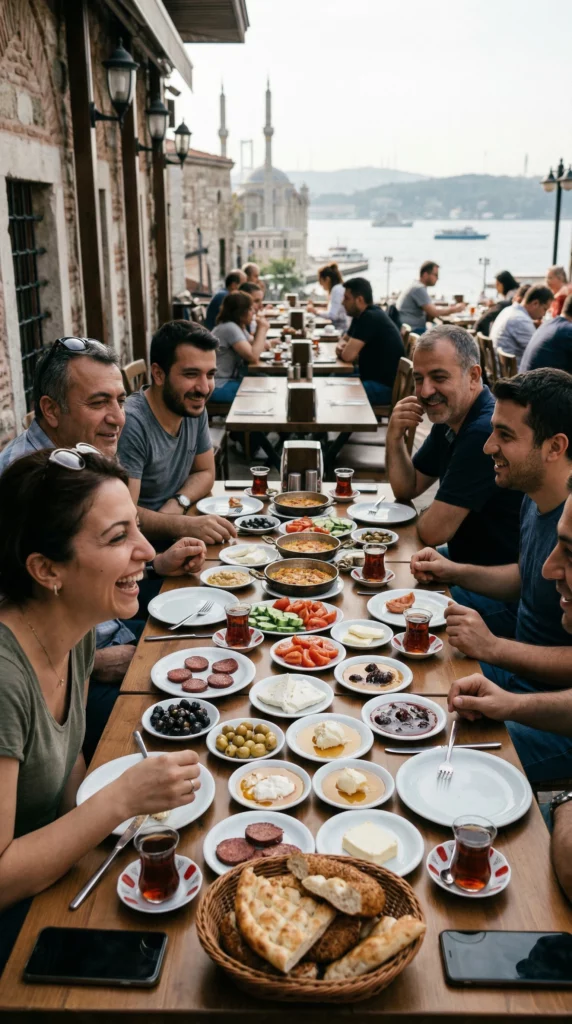
In cities like Istanbul, you see this clearly along the Bosphorus or in neighbourhood cafés. Tables remain occupied long after the food has been eaten.
The purpose of the meal extends beyond nourishment.
It creates space — for conversation, for presence, for beginning the day without urgency.
3. Everyday vs Weekend Kahvaltı
There is, however, a distinction.
On weekdays, kahvaltı may be simple — bread, cheese, olives, tea. Enough to begin the day, but not to slow it significantly.
On weekends, it expands.
More dishes appear. Eggs are prepared differently. Tables fill more completely. Time becomes part of the experience.
Cafés adapt to this rhythm. Some exist almost entirely for extended breakfasts, where the meal becomes the reason to gather rather than something to pass through.
Understanding Turkish breakfast culture means recognising both versions — the functional and the extended.
4. Tea as Structure
If there is one constant, it is tea.
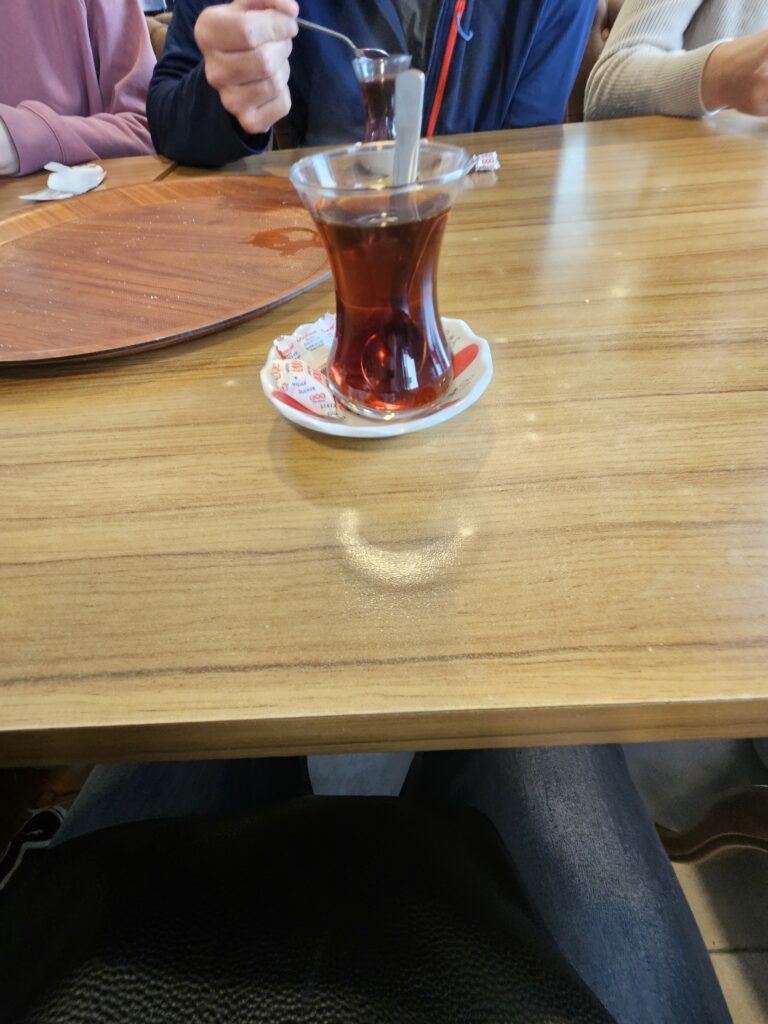
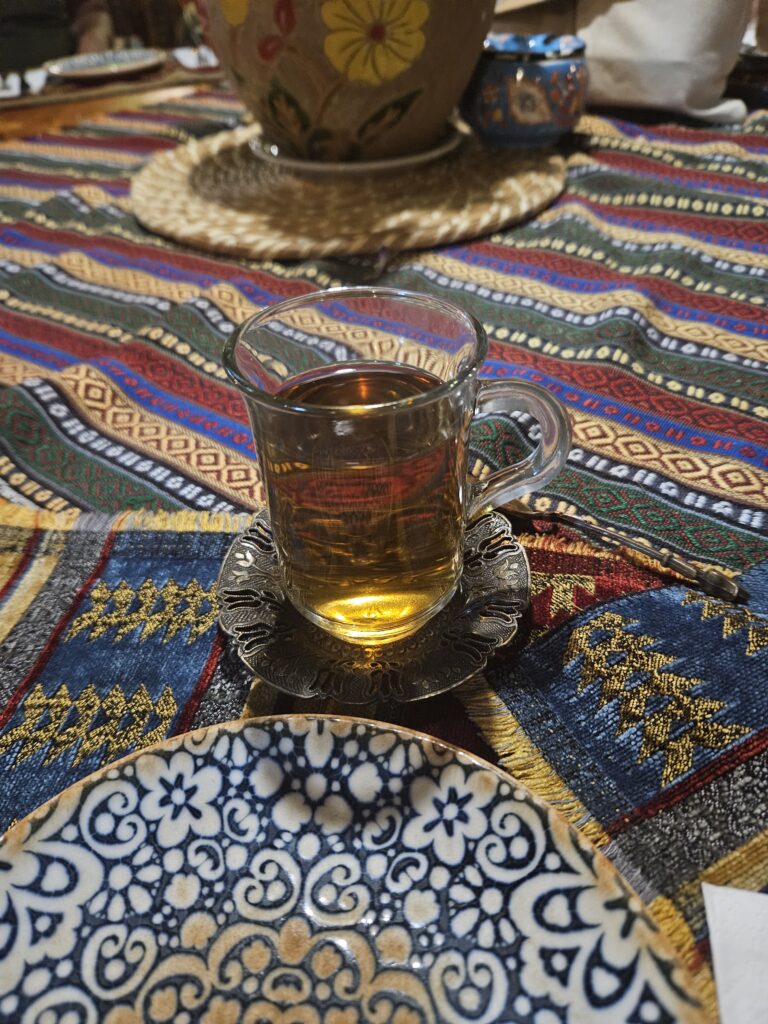
Served in small tulip-shaped glasses, it is poured repeatedly throughout the meal. Rarely asked for. Rarely refused.
Tea structures the pace of kahvaltı.
It creates natural pauses. It extends conversation. It anchors the table.
I found myself drinking more tea here than I normally would — even sweet apple tea at times — not out of habit, but because it was part of the rhythm of sitting there.
Coffee, despite giving the meal its name, comes later.
Tea comes first, and it stays.
5. Abundance Without Excess
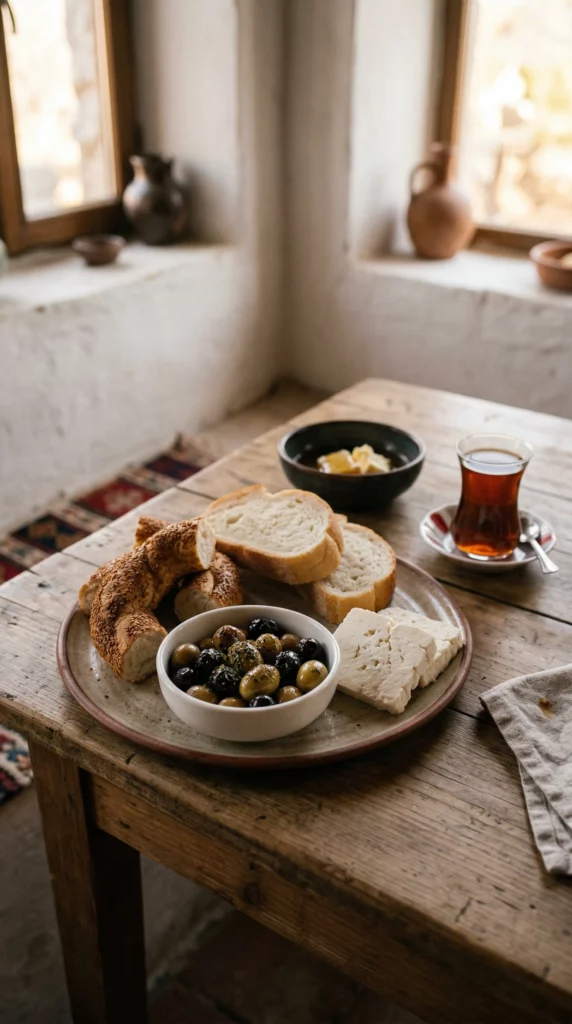
At first glance, a Turkish breakfast table appears abundant.
Multiple dishes. Bread always present. Tea constantly refilled.
But the abundance is controlled.
Portions are small. Plates are shared. Nothing is designed to overwhelm.
There is no single indulgent centrepiece. Instead, the meal balances variety with restraint.
You taste a little of everything, rather than a lot of one thing.
This reflects a broader pattern within Turkish food culture — where variety and moderation exist together.
Reflection: Time, Shared
Kahvaltı is not simply a meal.
It is a way of beginning the day that prioritises presence over speed.
Food is part of it, but not the whole of it.
The table creates space. The tea sustains it. The conversation fills it.
And when the meal ends, it does so gradually — not because it must, but because the day eventually asks for it.
Understanding Turkish breakfast culture is not about listing what appears on the table.
It is about recognising what the table allows.
TLDR
Turkish breakfast culture reflects:
- Shared Structure — central plates, communal eating
- Social Space — meals designed for conversation
- Daily Variation — simple weekdays, extended weekends
- Tea as Anchor — continuous, structuring the meal
- Balanced Abundance — variety without excess
Kahvaltı is less about food alone, and more about how the day begins.
FAQ
What is Turkish breakfast?
Turkish breakfast, or kahvaltı, is a shared meal of bread, cheese, olives, eggs, and spreads, served with tea and eaten slowly.
What does kahvaltı mean?
Kahvaltı literally means “before coffee,” reflecting the traditional order of tea first, coffee later.
Is Turkish breakfast always large?
Not always. Weekday breakfasts are simpler, while weekend kahvaltı is more extended and social.
What do people drink with Turkish breakfast?
Tea is the primary drink, served continuously throughout the meal. Coffee typically comes afterward.
Why is Turkish breakfast important?
It reflects social connection, shared eating, and a slower start to the day — key aspects of Turkish daily life.
Explore Further
|
Ferry Routes to Understand Istanbul |