
Meaningful Travel in Italy: Designing Depth Instead of Distance
Italy is often approached as a checklist.
Rome.
Florence.
Venice.
Amalfi Coast.
Cinque Terre.
The temptation is understandable. The density of cultural heritage is extraordinary.
But meaningful travel in Italy requires restraint.
Not fewer experiences — but fewer relocations.
1. Reduce the Number of Cities
Italy rewards depth.
On my first visit, I spent only a few days in Rome and Venice — enough to encounter the icons but not enough to understand rhythm.
On returning years later, I approached Italy differently.
Fewer cities.
Longer stays.
More repetition.
The experience shifted from highlights to layers.
2. Anchor Regions, Not Landmarks
Rather than building an itinerary around major attractions, design around regions.
Tuscany.
The Amalfi Coast.
Emilia-Romagna.
Sicily.
Staying within a region allows day trips without constant relocation.
Experiences such as region-based small group formats — where you remain in one town and explore surrounding areas — reinforce this depth-first structure.
Movement decreases. Understanding increases.

3. Let History Guide You
Italy is not just beautiful — it is layered.
Roman foundations.
Medieval rivalries.
Renaissance power structures.
Catholic influence.
Modern political shifts.
When you allow historical context to shape your itinerary, architecture becomes narrative.
Churches are not just aesthetic.
Piazzas are not accidental.
City walls are not decorative.
Understanding transforms repetition into discovery.
4. Accept That You Will Return
Italy resists completion.
Trying to “do it all” often creates exhaustion rather than enrichment.
Meaningful travel in Italy often means acknowledging you will come back.
Revisiting is not failure.
It is design.
When you remove the pressure of finality, pacing improves naturally.
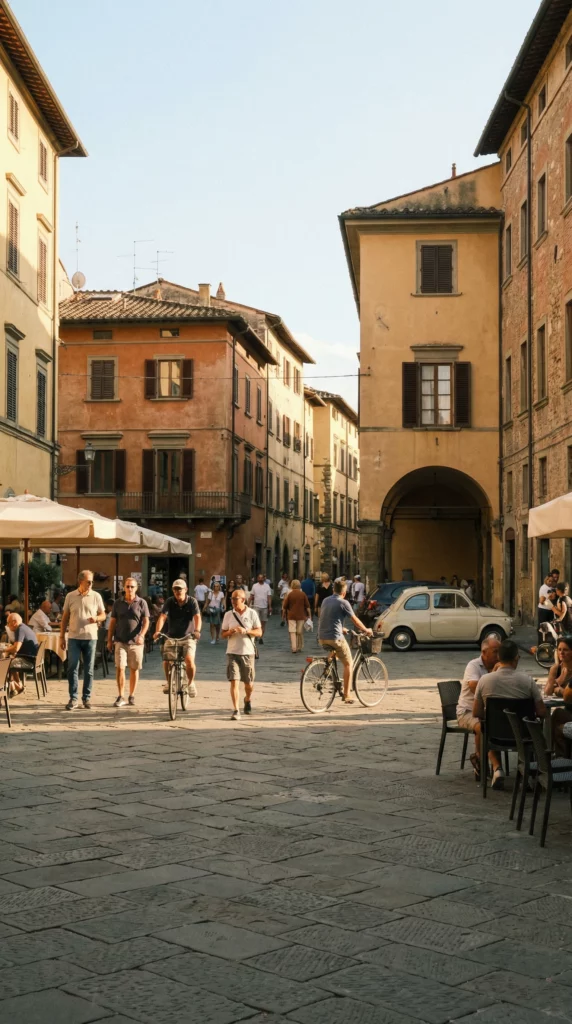
5. Prioritise Daily Life
Meaning does not only reside in cathedrals.
It appears in:
- Morning espresso rituals.
- Evening passeggiata walks.
- Local markets.
- Conversations in small trattorias.
On return visits, I found myself less concerned with iconic photo angles and more attentive to daily rhythms.
That shift marked the difference between sightseeing and immersion.
Designing for Depth
Italy offers abundance.
Meaningful travel requires editing.
Choose regions.
Stay longer.
Return intentionally.
Let history guide movement.
Notice daily life.
Depth does not reduce experience.
It refines it.

TLDR — Meaningful Travel in Italy
- Reduce the number of cities per trip.
- Anchor your itinerary around regions.
- Let historical context shape movement.
- Accept that Italy rewards return visits.
- Pay attention to everyday rhythms.
Italy is best experienced in layers — not in lists.
FAQ
How many cities should I visit in one Italy trip?
Fewer than you think. Longer stays in fewer locations often create a more meaningful experience.
Is slow travel in Italy realistic?
Yes. Italy’s regional structure makes it ideal for depth-focused travel.
Should I revisit Italy instead of choosing somewhere new?
Italy rewards repeat visits due to its historical and cultural density.
Are small group regional tours a good option in Italy?
They can be, particularly when structured around staying in one location and exploring nearby areas.
Does meaningful travel in Italy mean skipping famous landmarks?
No. It means approaching them with context and reducing pressure to see everything at once.