
Experiencing Rome Beyond the Landmarks: A Slower Way to See the City
After the Landmarks, What’s Left?
Most first visits to Rome follow a familiar rhythm.
The Colosseum.
The Vatican.
The Pantheon.
Trevi Fountain.
The landmarks are extraordinary, and they deserve their place in any itinerary. But once you’ve moved through them — or even while you’re moving between them — a different question begins to emerge.
What happens in the space between?
Because Rome doesn’t end at its icons. In many ways, it begins just beyond them.
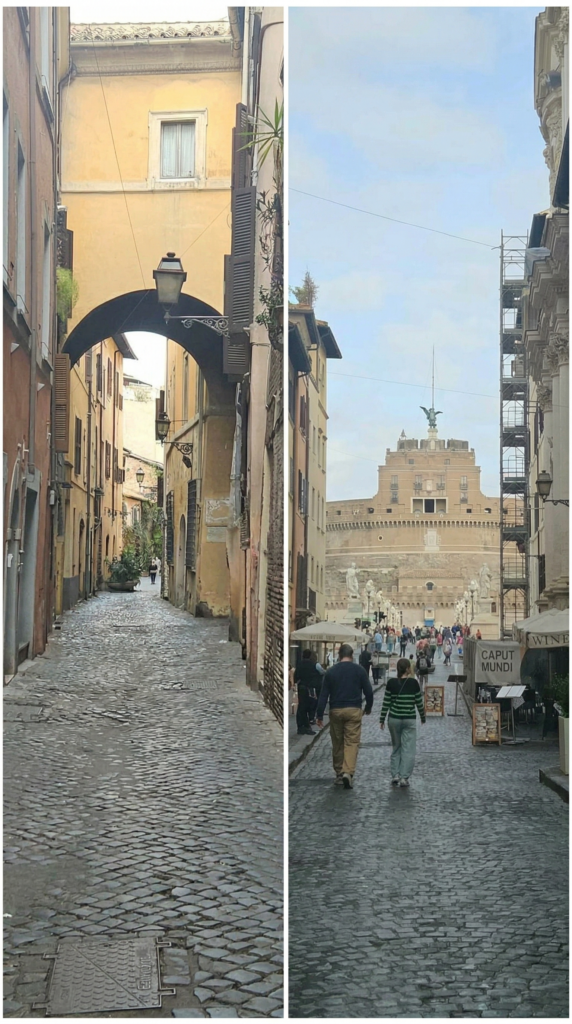
Walking toward Castel Sant’Angelo — one of many moments where the route becomes part of the experience.
1. The Space Between Landmarks
What stands out over time is not just the places themselves, but the movement between them.
Walking in Rome is rarely linear. Streets narrow unexpectedly, open into small piazzas, then close again. A turn that seems obvious on a map can easily lead you somewhere else entirely.
And often, that’s where the experience shifts.
Some of the most memorable moments come from taking a wrong turn and not correcting it immediately — allowing the city to unfold without direction for a while.
You start to notice details you might otherwise miss:
• small shrines embedded into walls
• doorways worn by time
• the way light moves through narrow streets
The journey between landmarks becomes as meaningful as the destinations themselves.
2. Neighbourhood Rhythm
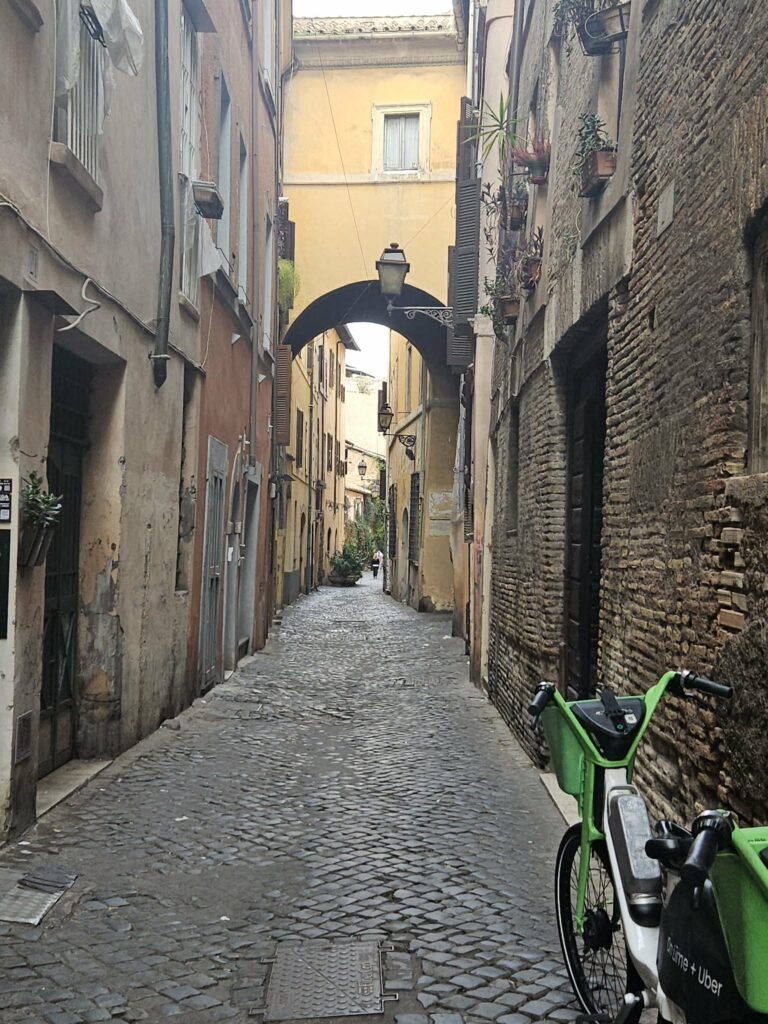
Step slightly away from the main routes, and the pace changes.
In areas like Trastevere or Monti — and in countless unnamed streets nearby — Rome feels less like a destination and more like a place people simply live.
Laundry hangs above narrow lanes. Conversations carry out from open doorways. Cafés fill gradually rather than all at once.
You begin to recognise patterns.
Morning feels different from afternoon.
Evening brings a slower, more social rhythm.
It becomes less about finding something specific, and more about noticing how the city moves through the day.
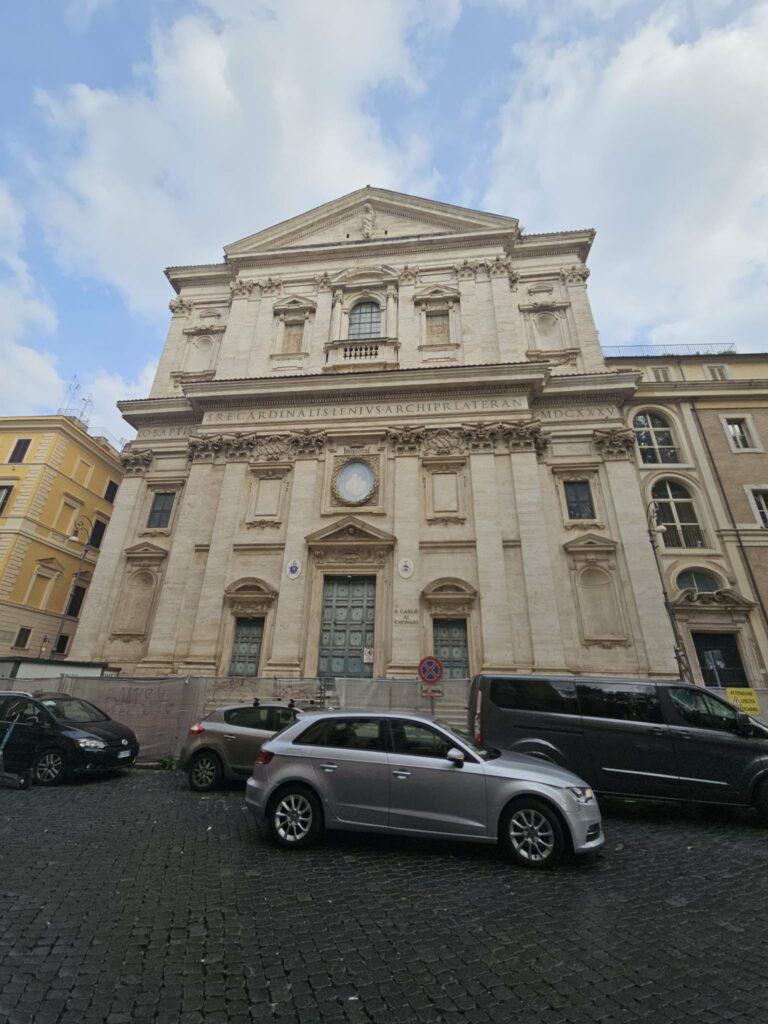
3. Churches Without Crowds
Rome’s major religious sites draw attention for a reason.
But beyond them are hundreds of smaller churches — many of which sit quietly just a few streets away from the busiest areas.
Stepping into one of these spaces creates an immediate shift.
The noise drops.
The pace slows.
The sense of observation changes.
These are not places to “tick off,” but places to pause.
You may not stay long. But even a few minutes can reset the rhythm of the day.
4. Returning to the Same Places
One of the simplest ways to experience Rome differently is to stop moving constantly.
Return to the same places.
The same café.
The same street.
The same square at a different time of day.
On one trip, my first and second-to-last meals were at the same restaurant — Antica Trattoria Al Gallinaccio. Not because it was planned that way, but because returning felt easier than searching again.
Familiarity builds quickly.
A place that felt new on the first visit becomes grounded on the second. You notice different things. You move with more confidence. The experience deepens without needing anything new.
The same was true of spaces like Piazza Navona — visited more than once, each time slightly different depending on the hour and the flow of people.
Repetition, rather than reducing the experience, strengthens it.

5. Letting Rome Unfold
Rome does not always reward strict planning.
Some of its most memorable moments appear when you stop trying to control where you’re going.
Getting slightly lost is part of the process.
It’s how I found the Jewish Quarter — not through intention, but through observation. At some point, the surroundings began to shift subtly, and the repeated presence of menorahs in shop windows made it clear I had moved into a different part of the city.
That kind of discovery doesn’t happen when you move too quickly or too precisely.
Allowing time to wander — even briefly — changes how the city reveals itself.
Rome Beyond the Checklist
The landmarks will always be there.
They are part of what makes Rome what it is.
But beyond them is something less defined and often more lasting — a sense of how the city feels when you are not trying to see everything at once.
It’s found in repetition.
In small streets.
In unplanned turns.
Rome is not just a place you visit.
It’s a place you learn to move through.
TLDR — Rome Beyond the Landmarks
• The most meaningful experiences often happen between major sites
• Neighbourhoods reveal the rhythm of daily life
• Smaller churches offer quiet moments away from crowds
• Returning to the same places deepens familiarity
• Getting slightly lost can lead to unexpected discoveries
FAQ
Is it worth exploring Rome beyond the main landmarks?
Yes. Many of Rome’s most memorable experiences come from its streets, neighbourhoods, and everyday rhythm rather than its major sites.
Which neighbourhoods are best for exploring beyond landmarks?
Areas like Trastevere and Monti are good starting points, but smaller streets across the city often offer similar experiences.
Do you need a plan to explore Rome this way?
Not necessarily. Allowing some unstructured time often leads to better discoveries.
Is it safe to wander in Rome?
Yes, in most central areas. Basic awareness is still important, but wandering is generally safe and common.
How much time should you allow for slower exploration?
Even a few hours without a strict plan can change how you experience the city.