Taking the Ferry Alone in Istanbul: What to Expect (and Why It’s More Than Just Transport)
In a city that spans two continents, movement is part of the experience.
In Istanbul, that movement often happens on the water.
Ferries cross the Bosphorus throughout the day, connecting neighbourhoods that feel distinct from one another — not just geographically, but culturally.
For solo travellers, taking the ferry can feel like a simple practical decision.
It rarely stays that way.

More Than a Way to Get Across
At first, the ferry seems like transport.
A way to move between the European and Asian sides. A practical solution in a city that doesn’t always move easily in straight lines.
But once you’re on board, the experience shifts.
The pace changes. The noise of the streets fades. The city becomes something you observe rather than move through.
Landmarks pass slowly. Skylines stretch out. The density of Istanbul becomes more legible from the water.
It’s no longer just about getting somewhere.
What to Expect Before You Board
Ferries are part of daily life in Istanbul.
They are used by commuters, not just visitors.
That means the process is straightforward, but not staged for tourists.
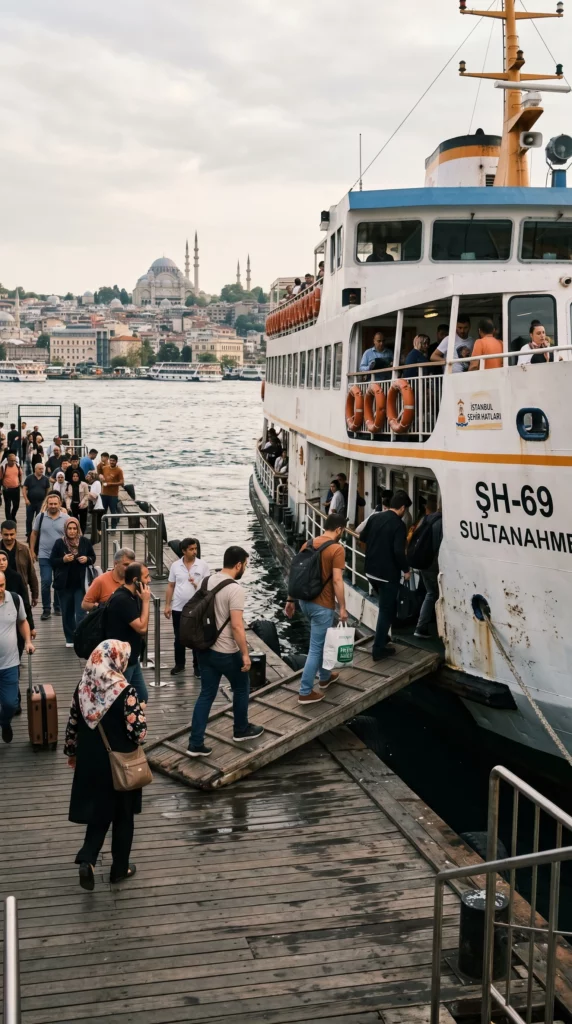
You arrive at the terminal, move with the flow, and board when the ferry is ready.
There are no complicated steps, but there is a rhythm.
Watching how people move — where they wait, how they queue, when they step forward — makes the process feel intuitive quickly.
You don’t need to know everything in advance.
You just need to observe.

Finding Your Place Onboard
Once on the ferry, the experience opens up.
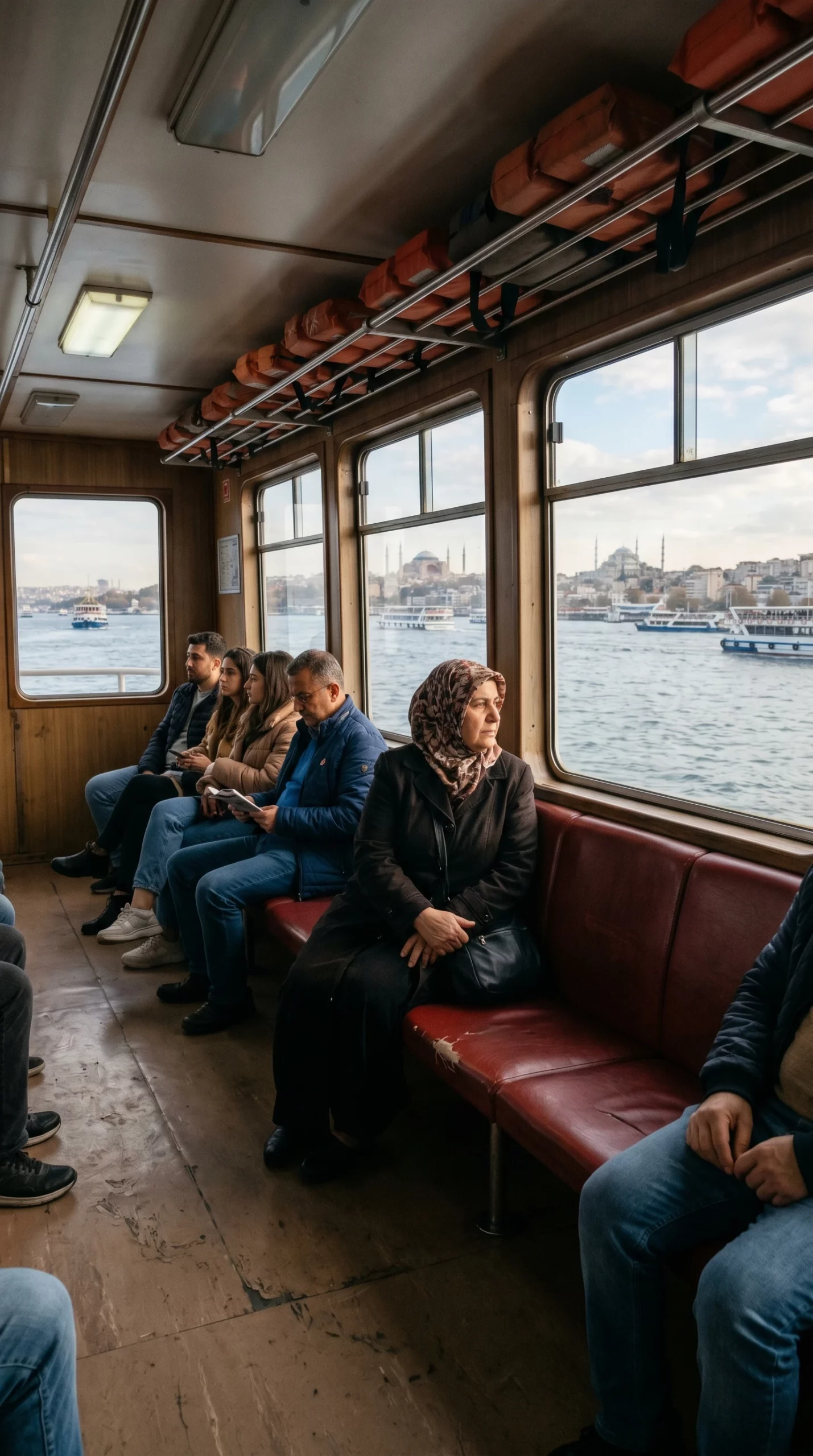
You can sit inside, where the atmosphere is quieter and more enclosed.
Or you can step outside, where the movement of the water, the wind, and the changing view become part of the journey.
For solo travellers, this choice matters.
Outside feels more immersive. Inside feels more reflective.
Neither is better.
But both offer something different.
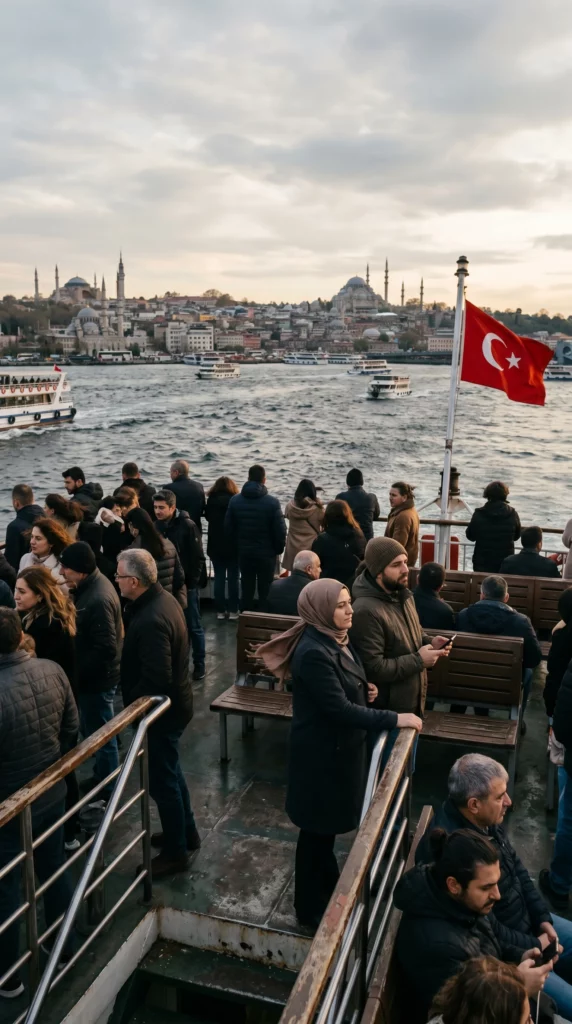
The Rhythm of the Crossing
The ferry doesn’t rush.
It moves steadily, creating space to notice what is usually passed quickly.
Mosques appear and recede along the shoreline. Neighbourhoods shift from dense to open. The city’s scale becomes easier to understand.
There is no need to fill the time.
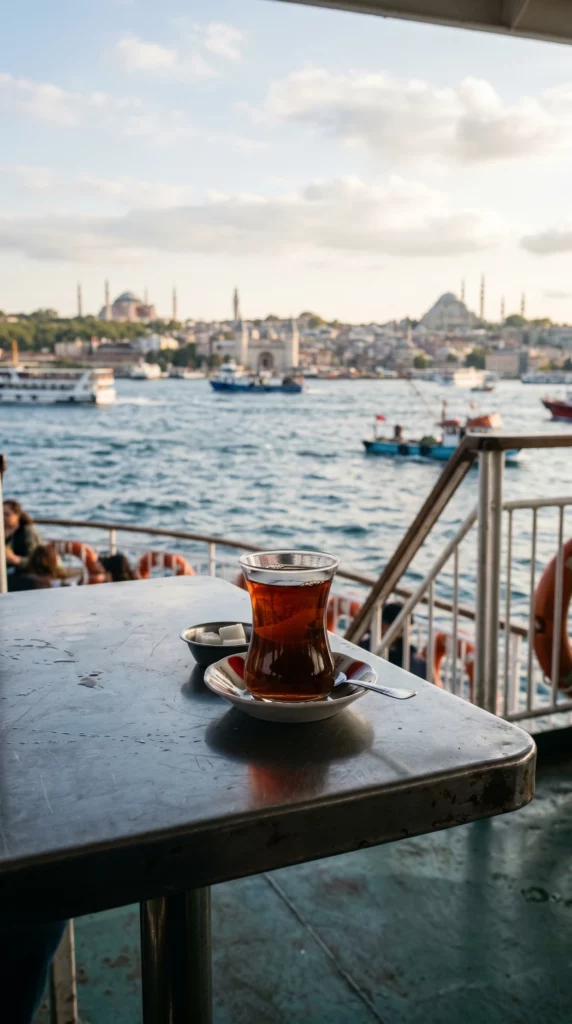
You can stand at the rail. Sit with a tea. Watch the movement of other passengers.
This is where the experience becomes more than transport.
You’re not navigating the city.
You’re watching it.
Small Details That Stay With You
Some of the most memorable parts of the ferry are small.
The sound of seagulls following the boat. The clink of tea glasses being carried between passengers. The quiet conversations happening around you.
Nothing is staged.
Nothing is directed at you as a visitor.
And that’s what makes it feel real.
For solo travellers, these moments are easier to notice.
There’s no conversation to maintain, no shared pace to follow.
Just observation.
Why It Feels Different Alone
Taking the ferry alone changes the experience.
Without distraction, the crossing becomes more than movement.
It becomes a pause.
A moment between places where you’re not trying to get somewhere quickly, and you’re not trying to see anything specific.
You’re simply in transit — and aware of it.
That awareness is what makes it memorable.
Even If You Don’t Take One
Not every experience needs to be completed to be understood.
It’s entirely possible to watch the ferries from the shoreline and recognise their place in the city.
To see how they connect neighbourhoods. To notice the rhythm they create.
But if you do take one, even just once, it offers a perspective that is difficult to find elsewhere.
Not a highlight.
Just a shift.
TLDR
Taking the ferry in Istanbul is more than just transport.
- It connects different parts of the city
- It offers a slower, more observational perspective
- It allows space to pause between destinations
- It reveals the city’s scale more clearly
For solo travellers, it becomes a moment of stillness within movement.
Frequently Asked Questions
Is taking the ferry in Istanbul easy for solo travellers?
Yes. Ferries are part of daily life and are simple to use once you follow the flow of passengers.
Do I need to plan ferry routes in advance?
Basic awareness helps, but most routes are straightforward and well-used.
Is it better to sit inside or outside?
Both offer different experiences. Outside is more immersive, while inside is quieter and more reflective.
How long are ferry rides in Istanbul?
Most crossings are relatively short, often between 15 and 30 minutes depending on the route.
Is taking the ferry worth it in Istanbul?
Yes. It offers a different perspective of the city and a slower pace compared to street-level movement.
Explore Further
|
Experiencing Istanbul Alone Respectfully |