A Slower Rome Walking Route: Exploring the City Gradually
When I arrive somewhere new, the first thing I usually do is walk.
Not to reach anything specific. Not to follow a route. Just to move through the streets and let the place begin to make sense.
Rome rewards that instinct.
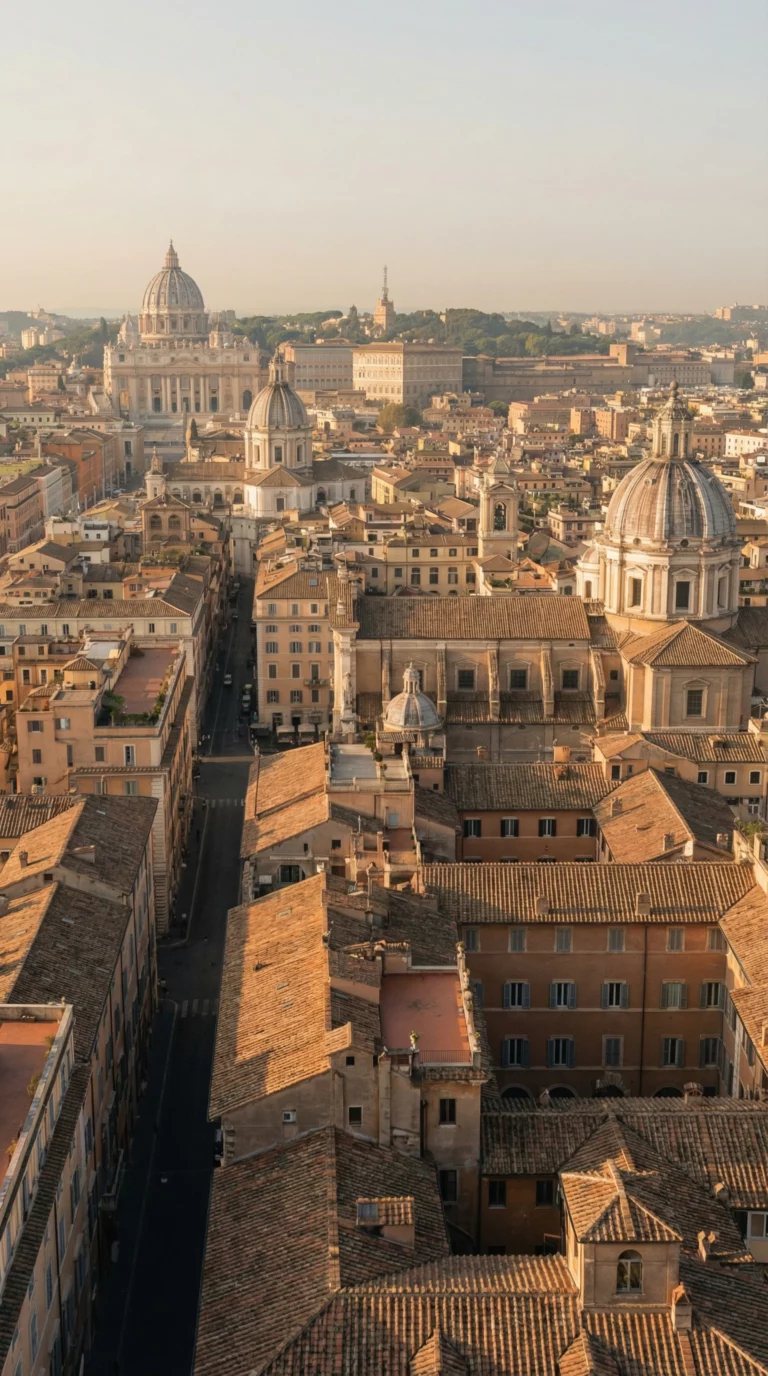
It is a city best understood gradually — not through a checklist of landmarks, but through the space between them. Walking connects fragments. It reveals how layers of history sit beside one another, often on the same street.
A slower walking route through Rome is not about efficiency. It is about allowing the city to accumulate.
Begin Near the Colosseum
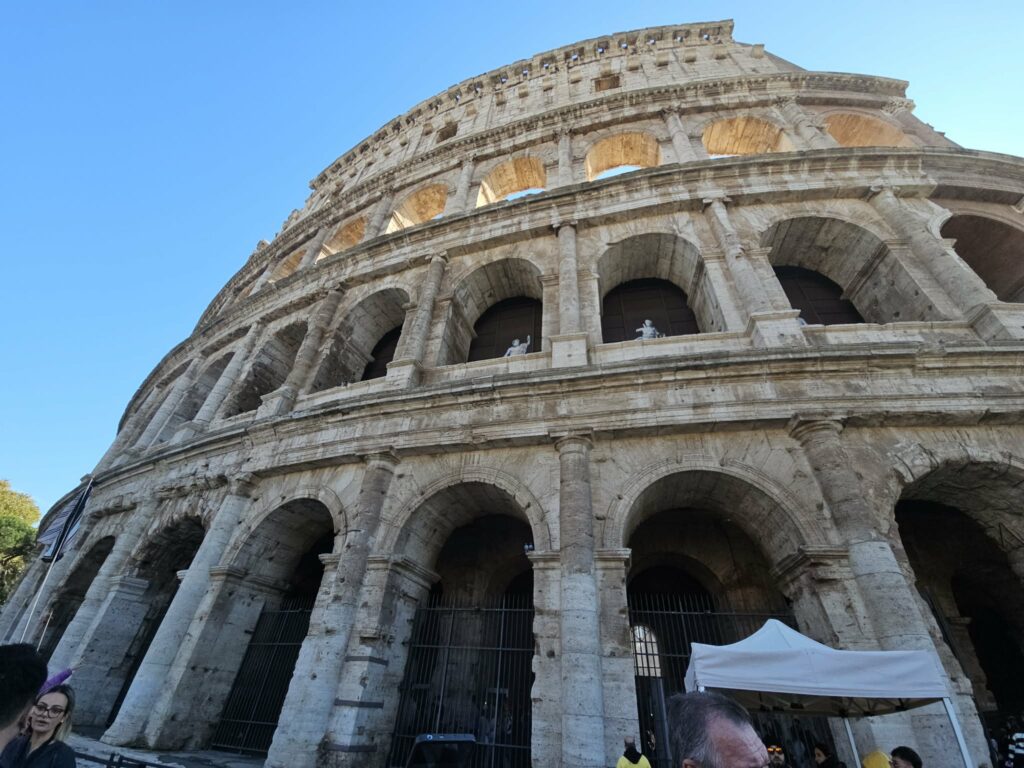
Starting near the Colosseum provides a clear anchor.
In the early morning, before the area fills, there is space to take in the scale of ancient Rome. The surrounding ruins, open ground, and wide pathways give a sense of how expansive the city once was.
But the goal is not to stay here too long.
Instead, begin moving away from the monument. Let it recede behind you. Rome becomes more interesting as you leave its most recognisable points.
Move Toward Circo Massimo and the Aventine
Walking toward Circo Massimo shifts the atmosphere.
The crowds thin. The streets open slightly. The pace changes.
Staying nearby on my own visit, this area felt like a natural buffer between the intensity of the ancient sites and the quieter rhythm of residential Rome. It was close enough to remain connected, but removed enough to breathe.
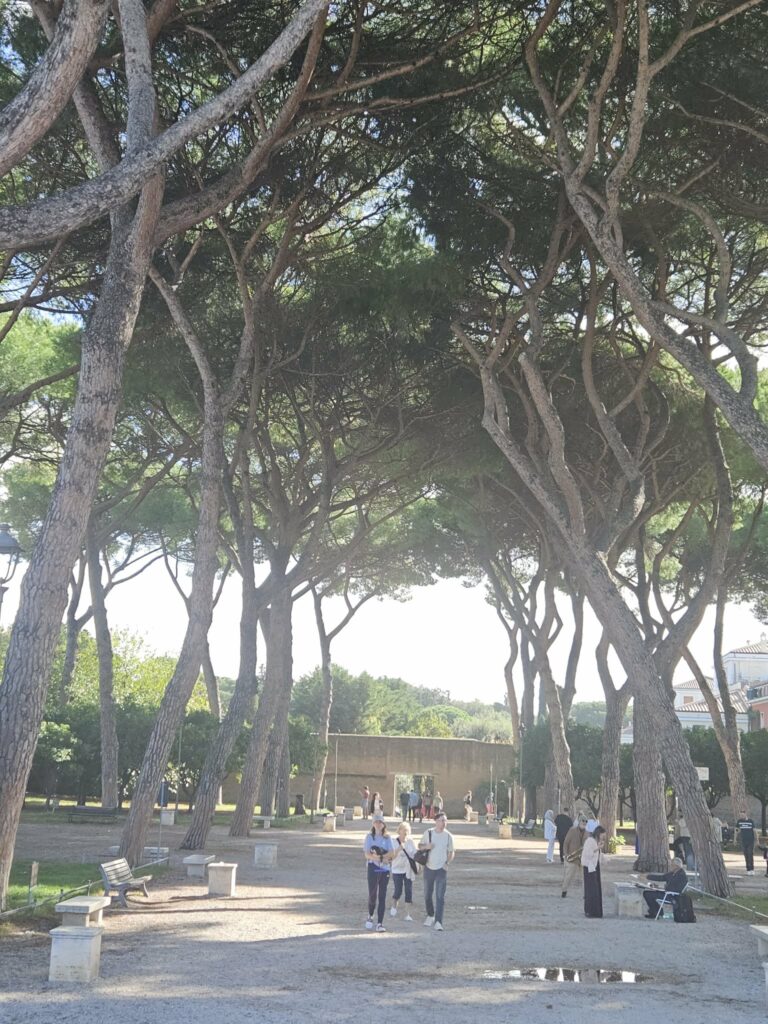
From here, the Aventine offers a quieter perspective — tree-lined streets, less noise, and small moments that are easy to overlook when moving too quickly.
This part of the walk is less about landmarks and more about transition.
Let the City Draw You Into the Historic Centre
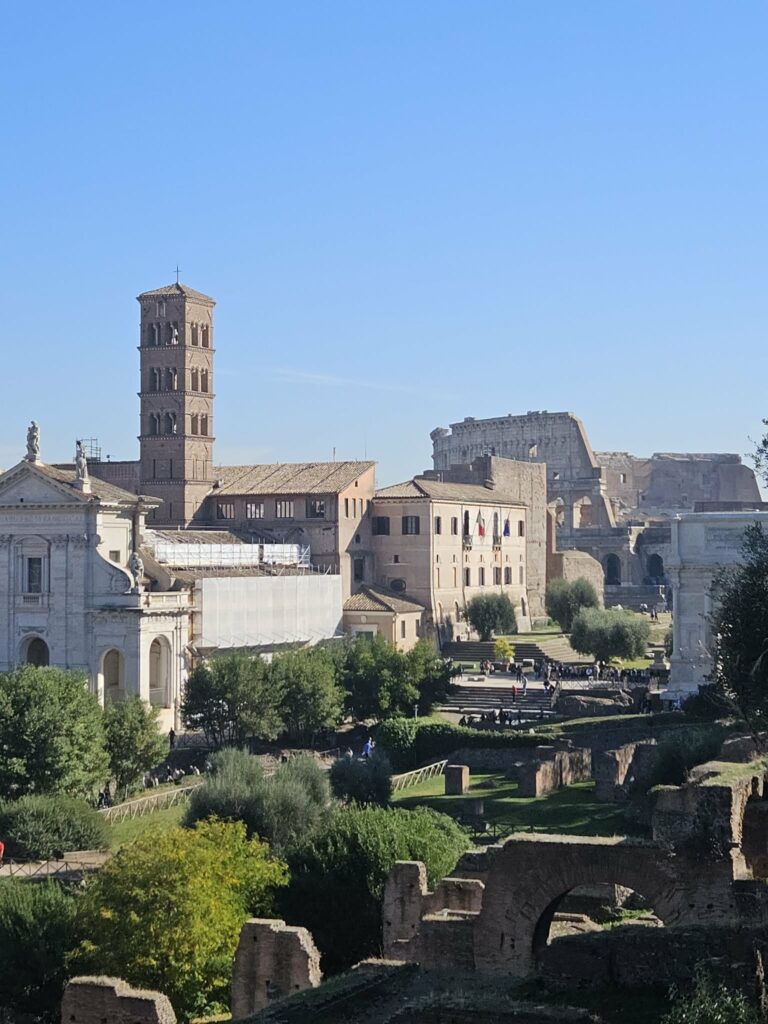
As you move back toward the historic centre, the density builds gradually.
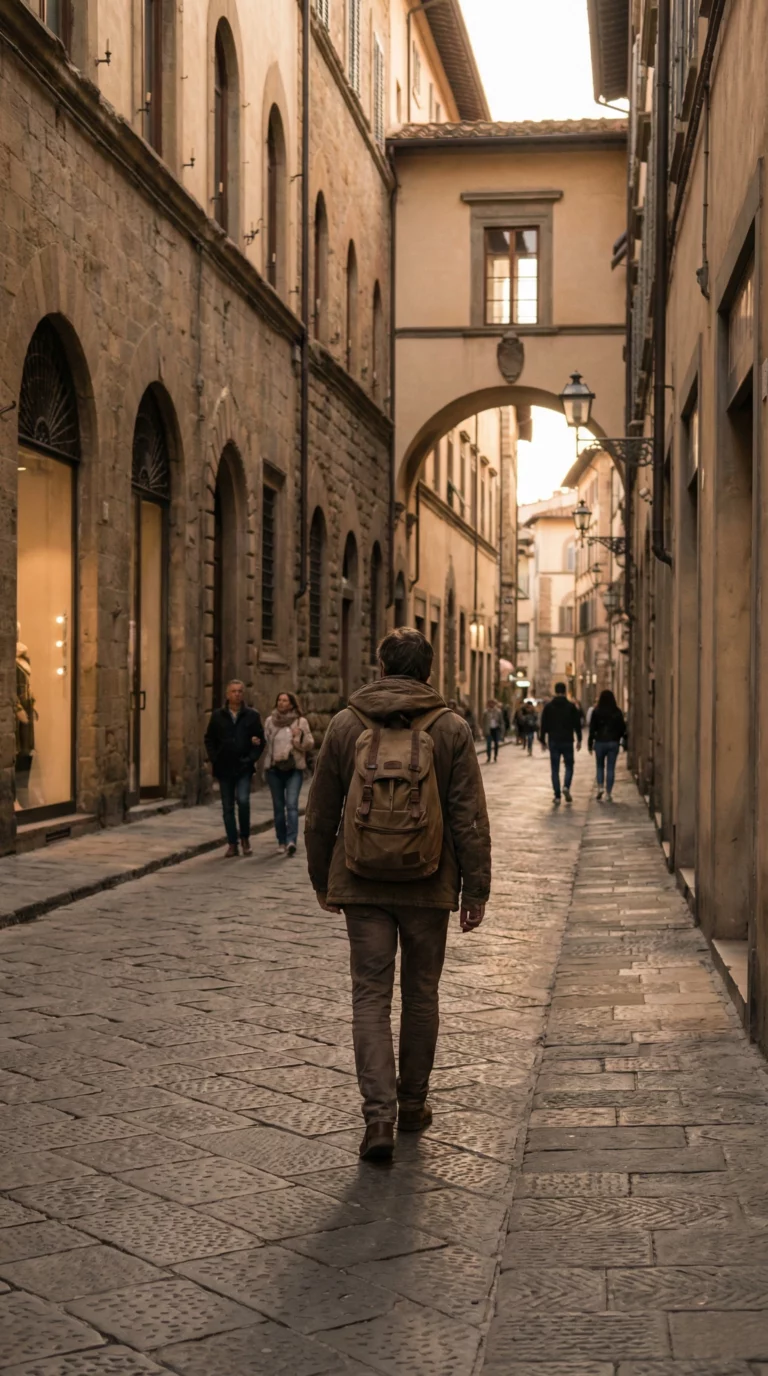
Streets narrow. Foot traffic increases. Architectural details become more concentrated.
This is where Rome begins to reveal itself in fragments:
A small church between cafés.
A courtyard glimpsed through an open doorway.
A fountain appearing at the end of a street.
Rather than navigating directly between major sites, allow slight deviations. Turn where something catches your attention. Pause when a space feels different.
The route matters less than the movement.
Pause Around the Pantheon
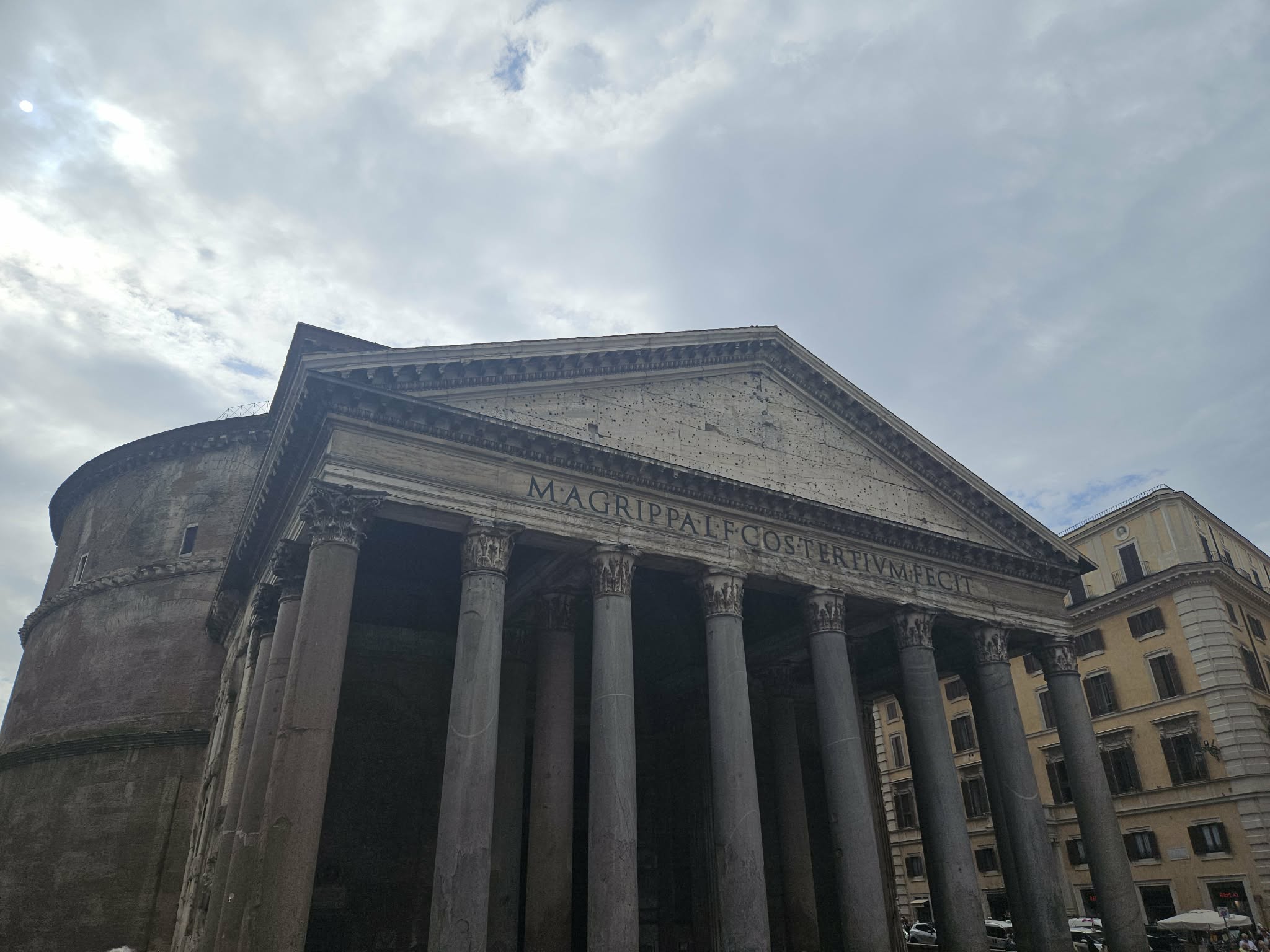
By the time you reach the area around the Pantheon, the city is at full pace.
This is a natural point to stop.
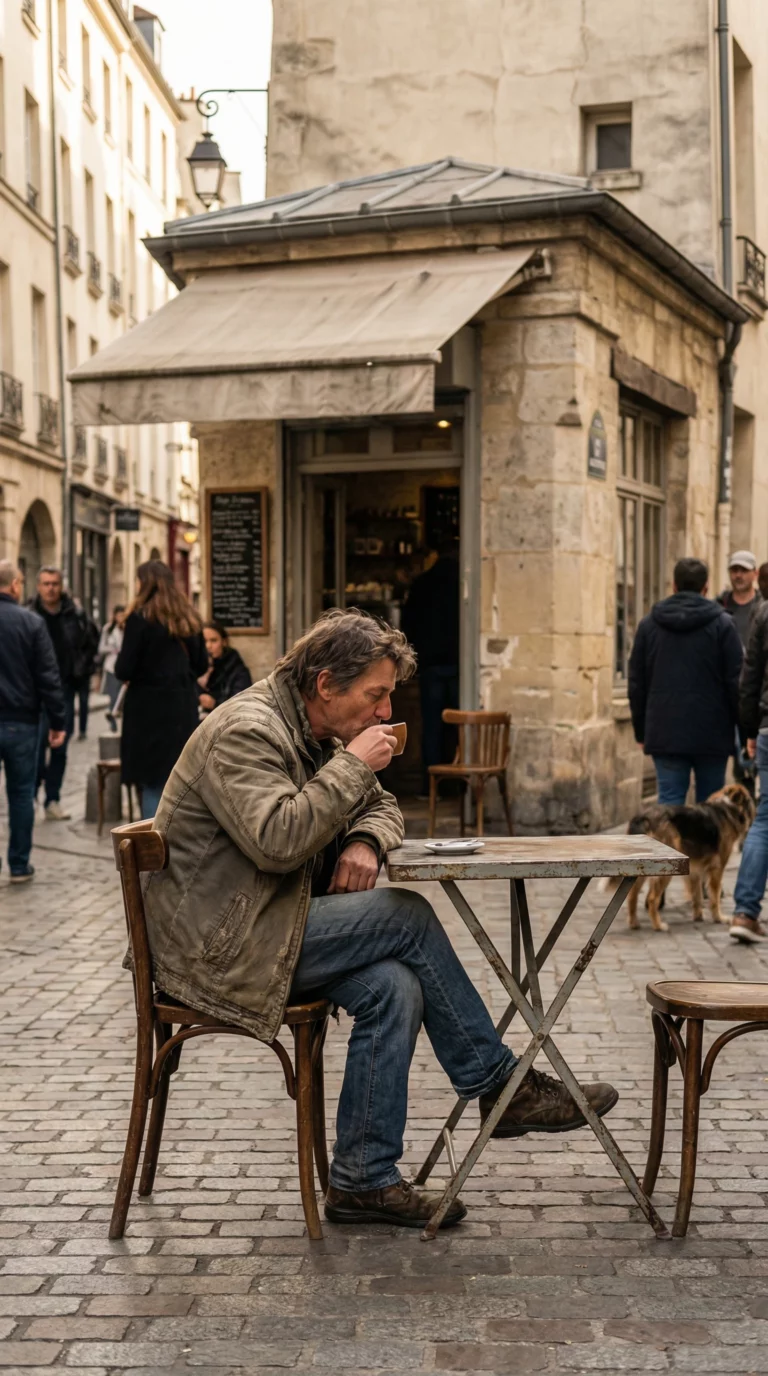
Find a place to sit — a café, a bench, even just a step along the edge of a square — and let the movement continue around you.
Rome is not only experienced by walking through it, but by sitting within it.
The Pantheon itself is often crowded, but stepping just slightly away from it can create space again.
Midday is not the time to rush. It is the time to absorb.

Cross Toward Trastevere as the Light Changes
Later in the day, begin moving toward Trastevere.
Crossing the river marks another shift.
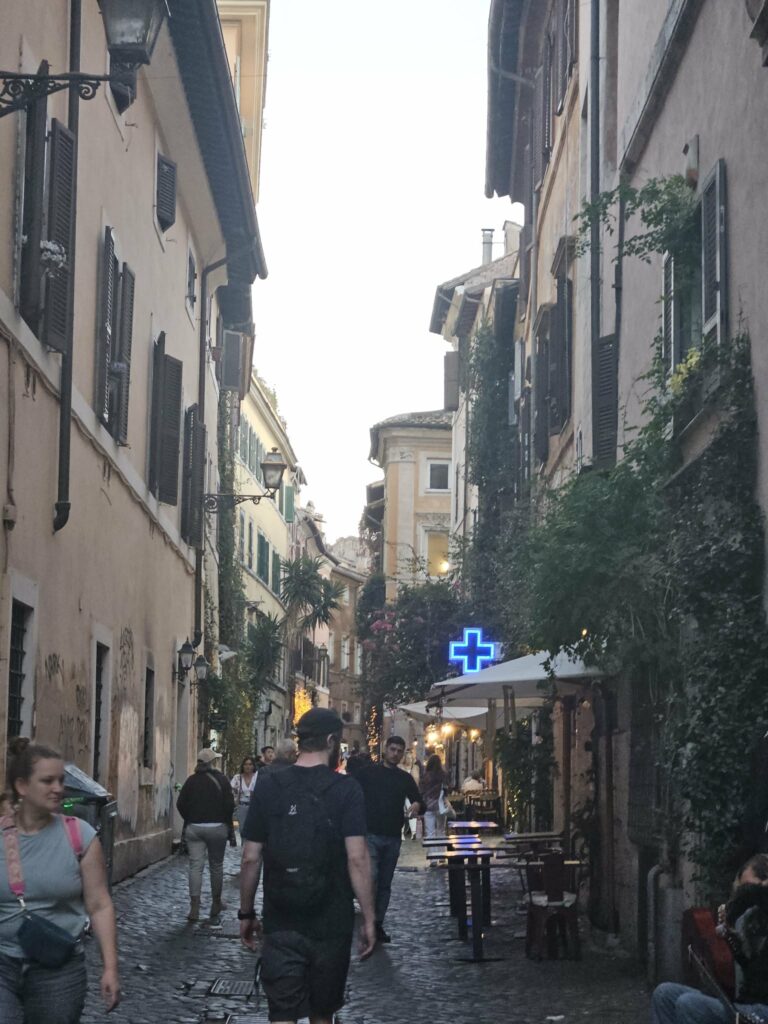
The streets become more intimate. The light softens. The pace becomes more social, particularly as evening approaches.
Trastevere is often described as lively, but arriving on foot — gradually, rather than directly — changes how it feels. It becomes part of a longer movement rather than a destination in itself.
This is where the day settles.
Rome Is Understood Between Places
A slower walking route through Rome is not defined by the number of landmarks you pass.
It is defined by how you move between them.
On my visit, most of the city unfolded on foot. Not because it was the most efficient way to get around, but because it allowed connections to form — between districts, between eras, between small details that would have been missed otherwise.
You will not see everything.
But if you move slowly, you will understand more.
TLDR
- Begin near the Colosseum but move away early.
- Walk toward quieter areas like Circo Massimo and the Aventine.
- Let the historic centre draw you in gradually.
- Pause around the Pantheon rather than rushing through.
- Cross into Trastevere later in the day as the atmosphere shifts.
Rome reveals itself between destinations, not just at them.
FAQ
Is Rome good for walking?
Yes, though it can be physically demanding. Uneven streets, heat, and distances require pacing, but walking is one of the best ways to experience the city.
Do I need a set walking route in Rome?
Not necessarily. Having a general direction helps, but allowing flexibility leads to more meaningful discoveries.
How long should I spend walking each day in Rome?
This depends on energy levels, but structuring your day around one main area with time for wandering works well.
Is it better to walk or use public transport in Rome?
Walking is often more immersive. Public transport is useful for longer distances or when fatigue sets in.
What is the best time of day to walk in Rome?
Early morning and late afternoon are ideal. Midday can be crowded and hot, making it better suited for slower pacing and rest.
Explore Further
|
Link |
Link |
Link |