Architectural Details in Rome Most Travellers Walk Past
Rome doesn’t just preserve history.
It accumulates it.
Not in neat museum cases or behind velvet ropes — but in walls, doorways, corners, and cobblestones. The kind of details you almost miss unless you slow down.
If you’ve already explored Rome beyond the Colosseum, this is where those layers become visible up close.
Because in Rome, history isn’t always monumental.
Sometimes it’s embedded in the pavement.

1. The Patchwork Walls of the Eternal City
Walk through almost any Roman neighbourhood and you’ll start to notice it — walls that don’t quite match.
Bricks interrupted by marble fragments.
Ancient inscriptions embedded beside medieval stone.
Repairs layered over repairs.
This is not decorative.
It’s practical history.
For centuries, Rome reused materials from earlier buildings — a practice known as spolia. Instead of discarding fragments from older structures, they were incorporated into newer ones.
A local guide once described Rome to me as a literal lasagne — built layer upon layer, each era resting directly on top of the last. Standing in front of one of these patchwork façades, it’s hard to argue with the comparison.
The city wasn’t rebuilt.
It was revised.
2. Latin Inscriptions, Softened by Time
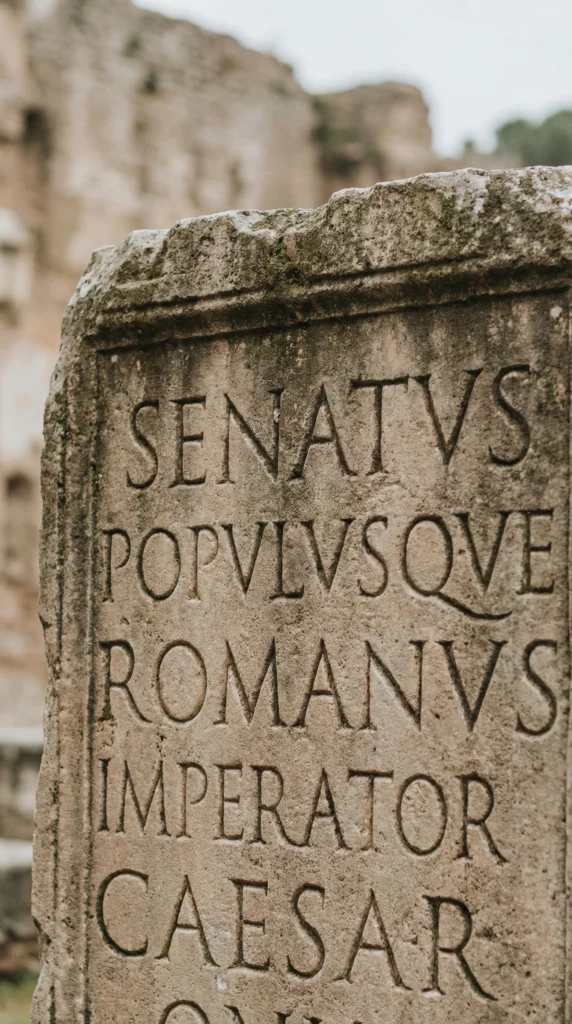
You’ll find them carved into stone blocks, tucked into church walls, resting quietly in courtyards.
Latin inscriptions marking dedications, commemorations, or declarations of power. Many are worn — edges softened, letters fading.
They are rarely translated on-site.
You’re meant to encounter them as texture first, meaning second.
Even without reading them, you feel their age.
The stone has held those letters for centuries.
And it shows.
3. Columns That Don’t Match
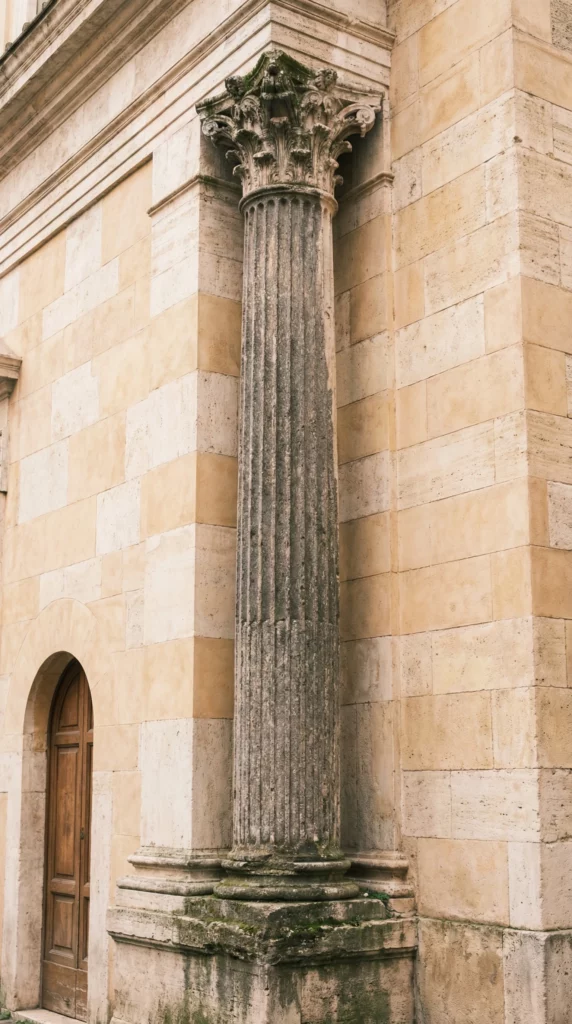
Look closely at Roman churches and you’ll often notice something subtle but deliberate: the columns don’t match.
Different heights.
Different capitals.
Different stone.
These weren’t mistakes.
Many churches incorporated columns salvaged from earlier Roman temples or public buildings. Rather than crafting uniform replacements, builders reused what already existed.
The result is a kind of architectural collage — centuries of belief systems quite literally standing side by side.
4. Street Shrines at Eye Level
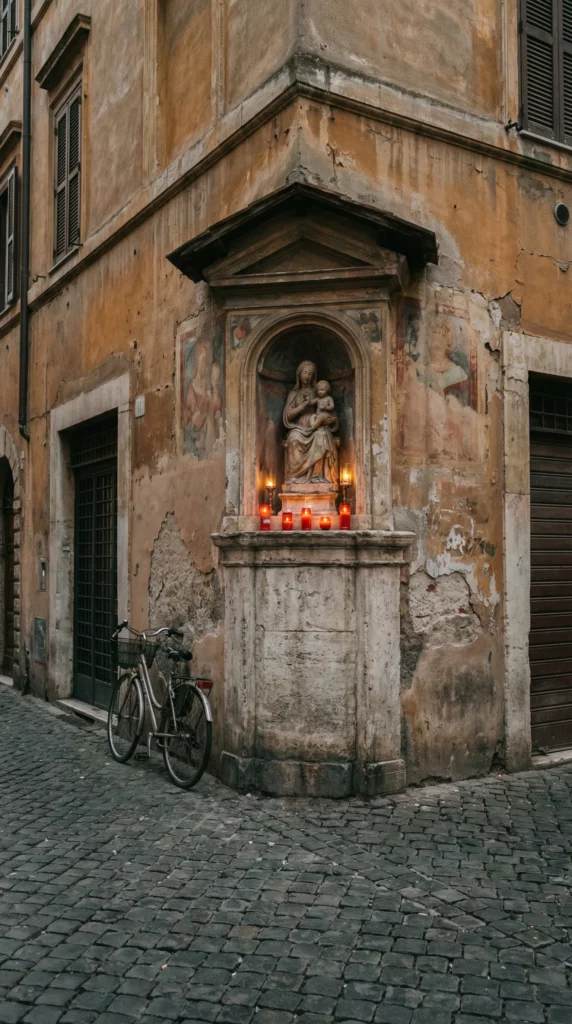
In quieter corners of the city, you’ll find small devotional shrines embedded into building façades.
A painted Madonna.
A small statue sheltered in an alcove.
Candles flickering below.
These are not museum pieces.
They’re part of daily life.
Some date back centuries. Others are more recent restorations. But they remain — tended, noticed, integrated into neighbourhood rhythm.
They aren’t grand.
They’re intimate.
And they’re easy to walk past.
5. Door Knockers and Worn Thresholds
Rome reveals itself in repetition.
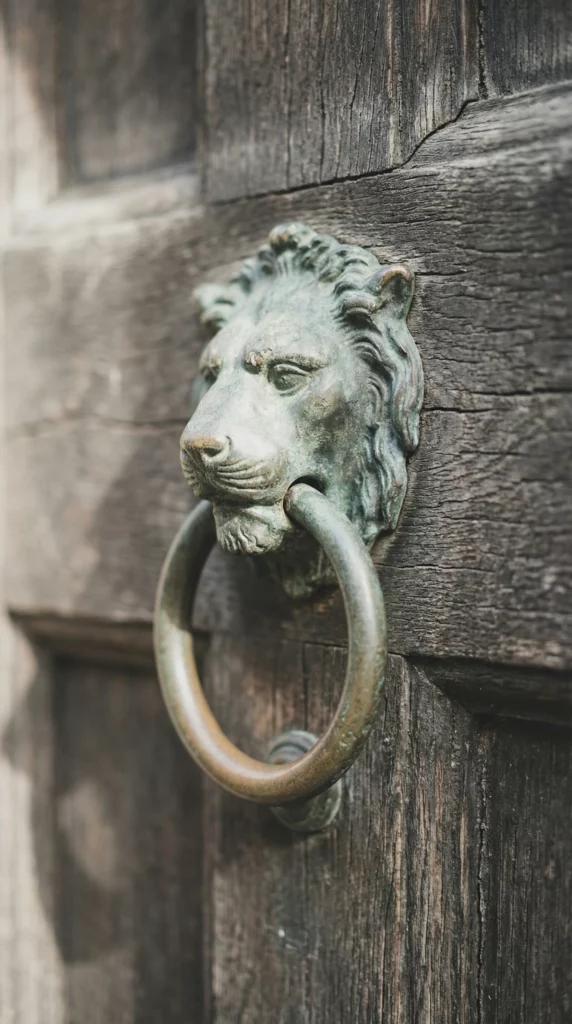
Bronze door knockers polished by thousands of hands.
Stone steps gently hollowed by centuries of footsteps.
Thresholds smoothed into curves by daily crossings.
You don’t notice them until you do.
And once you start looking, you realise how much human contact architecture remembers.
Not everything enduring is monumental.
Some things are simply touched often enough to survive.
6. Obelisks That Travelled Further Than You Did
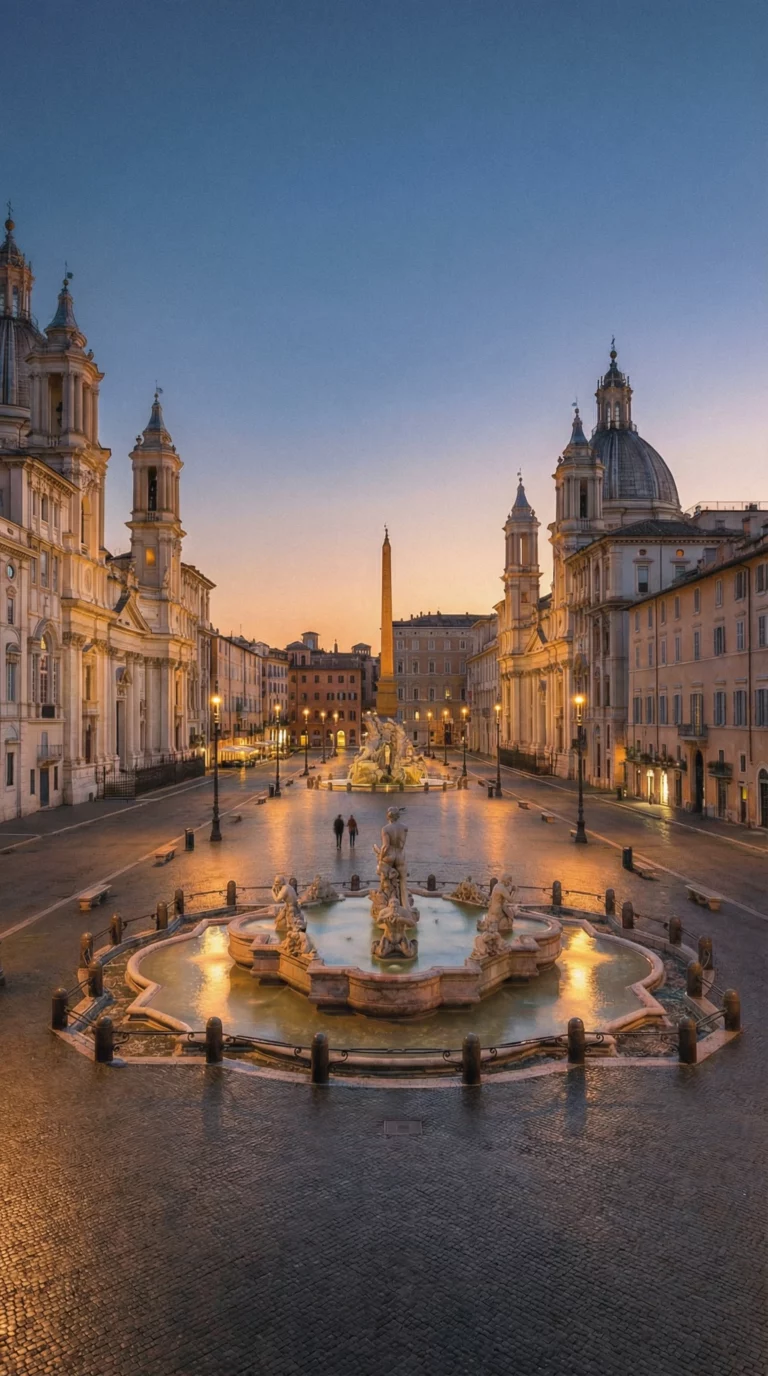
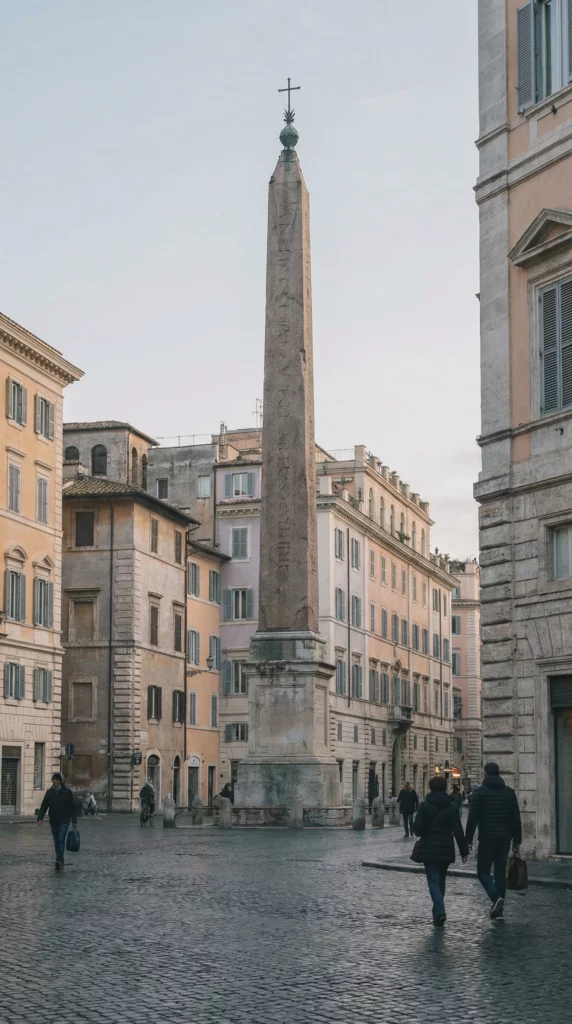
Scattered across Rome are ancient Egyptian obelisks — brought to the city during the Roman Empire and later re-erected in Christian piazzas.
Originally carved in Egypt.
Later claimed by Rome.
Then reframed by the Church.
They stand as reminders that Rome’s layers are not just vertical — they’re geographic.
The city absorbed influences long before globalisation was a word.
7. Stolpersteine: Memory in the Pavement
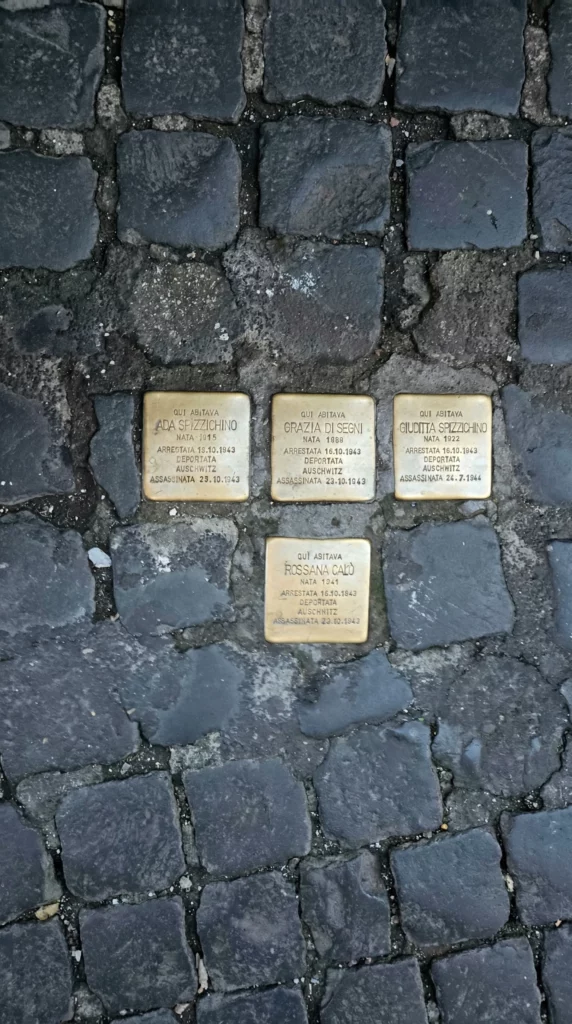
In certain neighbourhoods, you may notice small brass plaques embedded directly into the cobblestones outside residential buildings.
These are Stolpersteine — “stumbling stones.”
Each plaque records the name and key dates of a person deported during the Nazi occupation of Rome. They are installed outside the last chosen residence of the victim.
They are small.
Deliberately so.
There are no barriers, no signage explaining what to feel.
You simply encounter them — at ground level, where daily life continues around them.
Rome’s layers are not only ancient.
Some are painfully recent.
And they, too, are part of the city’s architecture.
Seeing Rome Differently
Rome rewards attention.
Not the rushed checklist kind.
The observational kind.
When you start looking beyond landmarks, the city shifts.
Walls become timelines.
Doorways become archives.
Pavement becomes memorial.
The Eternal City isn’t just something you visit.
It’s something you read.
And most of its stories are written small.
TL;DR
Rome’s most revealing stories aren’t always found in its grand landmarks.
Look for:
- Patchwork walls showing centuries of repairs
- Worn Latin inscriptions embedded in stone
- Reused columns from earlier structures
- Street shrines woven into daily life
- Door knockers and thresholds shaped by repetition
- Egyptian obelisks reinterpreted over time
- Stolpersteine plaques quietly marking WWII memory
Slow down, and the city becomes readable.
FAQ
What are the small brass plaques in the streets of Rome?
They are called Stolpersteine, or “stumbling stones.” These small brass plaques are installed outside the former homes of people deported during the Nazi occupation. Each plaque records a name and key dates as a form of public remembrance.
Why does Roman architecture look layered?
Rome has been continuously inhabited for over two millennia. Rather than demolishing entirely, many structures were adapted, reused, or built directly on top of earlier foundations, creating visible material layering.
What is spolia in Roman architecture?
Spolia refers to the reuse of architectural fragments from older buildings in newer constructions. In Rome, ancient columns and stone elements were often incorporated into medieval and Renaissance churches.
How can I see Rome beyond the main landmarks?
Slow down. Look at walls, doorways, street corners, and pavement details. Many of Rome’s most meaningful architectural stories are embedded in everyday spaces rather than major attractions.