The Cultural History of Mexico City’s Centro Histórico (Layers You Can Still Feel Today)
A City Built on Layers That Never Disappeared
In Mexico City’s Centro Histórico, history doesn’t sit quietly in the background.
It isn’t confined to museums or marked by clear boundaries.
Instead, it exists all at once — visible, overlapping, and still part of daily life.
You walk past it without always realising.
A busy street sits over the remains of an ancient city. A cathedral rises where something else once stood. A market unfolds beside buildings that have been there for centuries.
Nothing feels fully separated.
And that’s what makes it different.
This isn’t a place where history was replaced.
It’s a place where it was built upon.
Before the Streets You See
Long before the city took its current form, this was Tenochtitlán — the capital of the Aztec Empire.
Built on a lake, it was a carefully planned city of canals, temples, and causeways.
Today, very little of it exists in its original form.
But it hasn’t disappeared entirely.
In the centre of the city, the remains of Templo Mayor still sit exposed — a reminder of what came before everything else.
You can stand beside them, while traffic moves nearby and people pass without stopping.
It’s not hidden.
It’s just part of the landscape.

The Colonial Layer
When the Spanish arrived, they didn’t build somewhere new.
They built over what was already there.
The city was reshaped, restructured, and redefined — but not entirely erased.
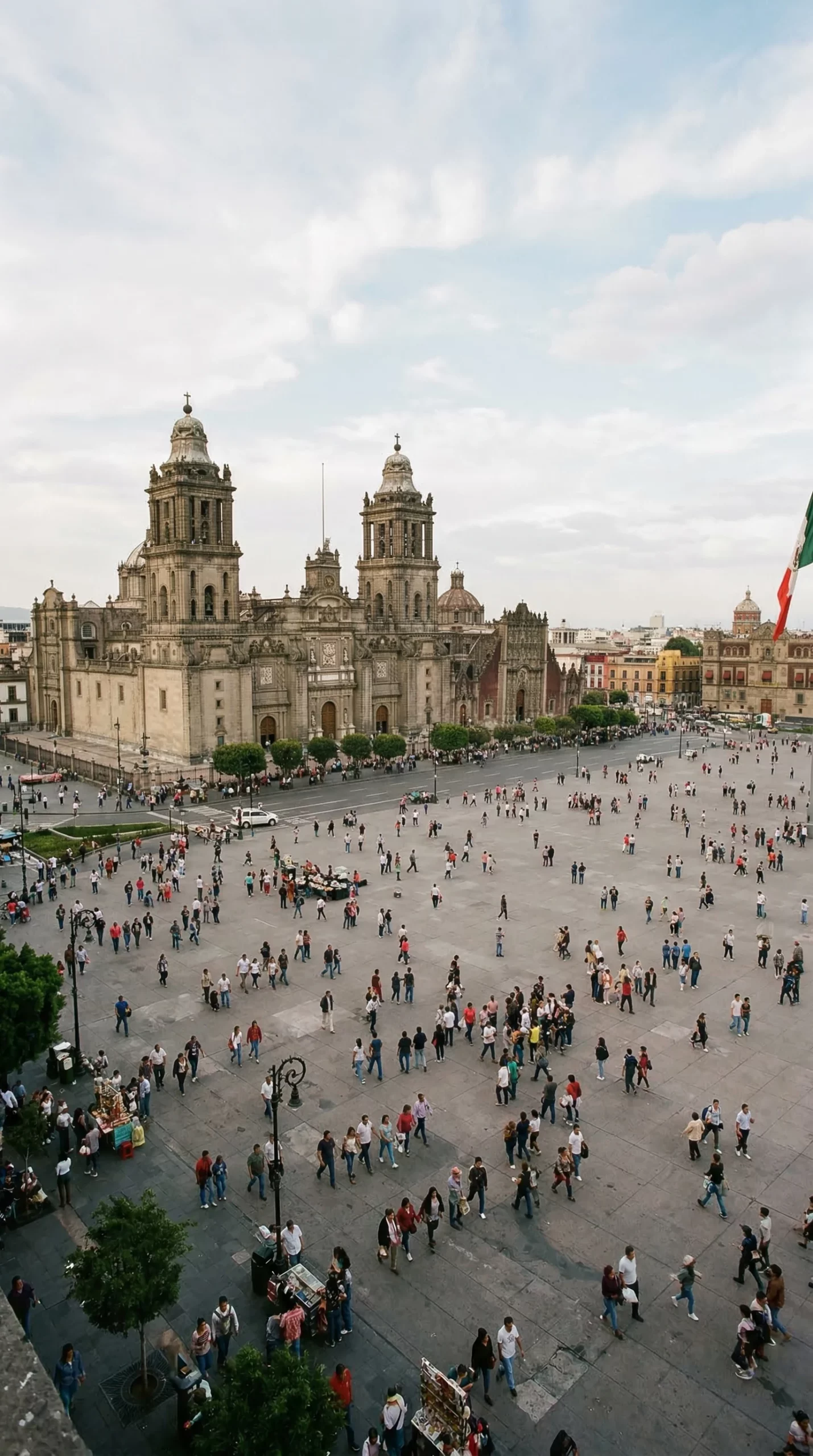
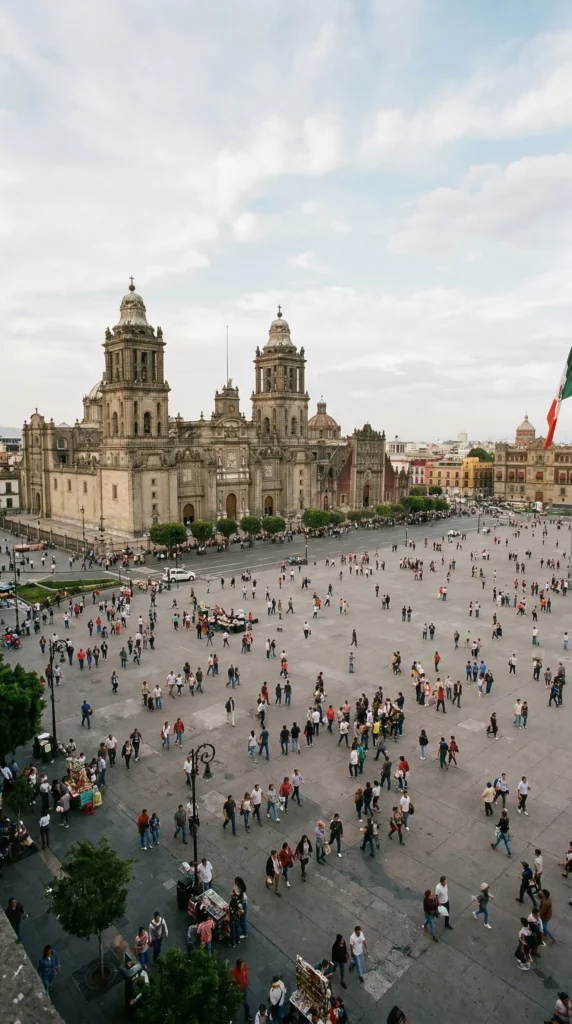
At the centre sits the Zócalo, one of the largest public squares in the world.
Facing it is the Mexico City Metropolitan Cathedral, a structure that dominates the space with its scale and presence.
Around it, government buildings and colonial facades establish a sense of order and symmetry.
This layer feels more formal, more structured.
But it doesn’t stand alone.
What Exists Side by Side
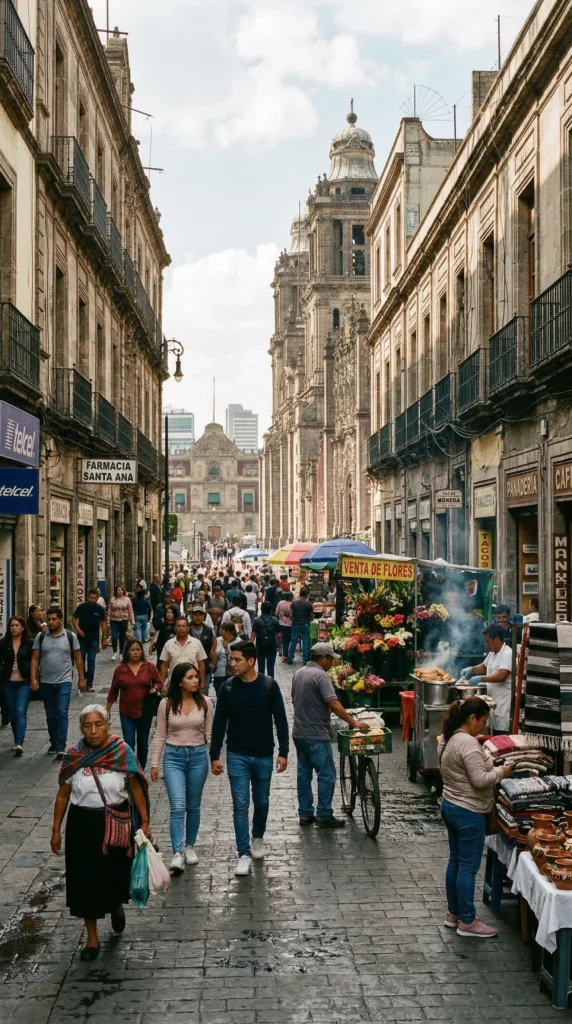
One of the most striking things about Centro Histórico is how these layers don’t stay separate.
They exist next to each other.
You might see ancient stone ruins beside a colonial building. Walk past a centuries-old façade while vendors set up for the day. Move through a space that has changed purpose many times, but never lost its place in the city.
Nothing is preserved in isolation.
Everything continues to function.
And because of that, history doesn’t feel distant.
It feels present.
The Feeling of the Streets
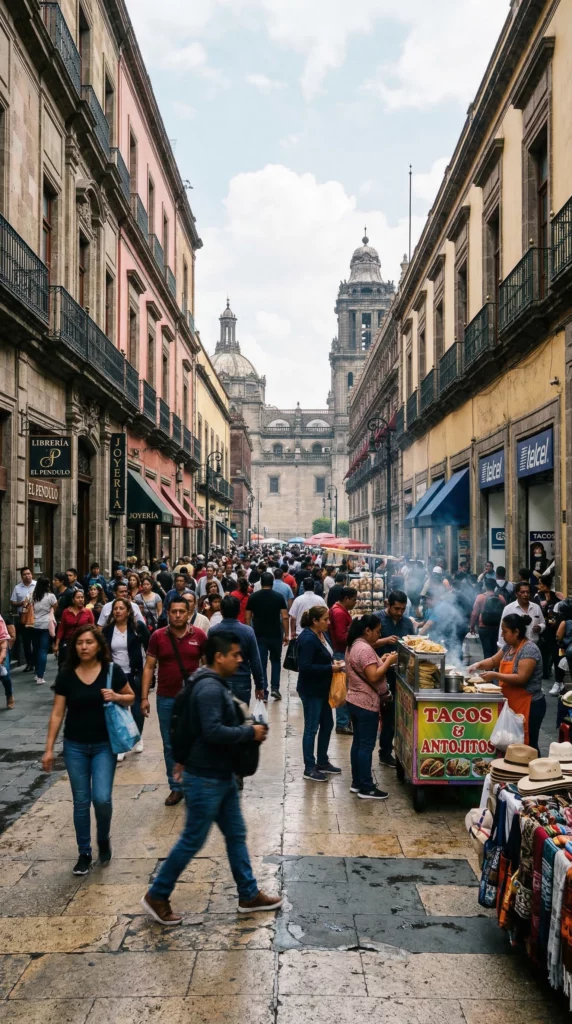
Centro Histórico isn’t quiet.
It’s active, crowded, and constantly moving.
Street vendors line the sidewalks. Music drifts through the air. Conversations overlap with the sound of traffic and footsteps.
There’s colour, movement, and density everywhere you look.
And yet, beneath all of it, the structure of the city remains.
The same streets, the same spaces, the same foundations.
You’re not just walking through a historic area.
You’re walking through a place where history and daily life are happening at the same time.

Why It Still Feels Connected
In many cities, history is separated from the present.
Preserved, protected, and often removed from everyday use.
But here, it was never meant to be separate.
The city continued to grow, adapt, and evolve — without losing its earlier layers entirely.
Buildings changed purpose. Spaces were reused. Streets remained part of daily routines.
Because of that, everything still feels connected.
Not because it looks the same.
But because it’s still being used.
You’re Not Looking at History — You’re Inside It
Centro Histórico isn’t something you observe from a distance.
It’s something you move through.
You don’t need to seek out specific sites to understand it.
You just need to pay attention to what’s around you.
The layers reveal themselves gradually — in the spaces between places, in the contrasts you weren’t expecting, in the way different eras sit side by side without explanation.
It’s not a timeline.
It’s a living city.
And once you start to see it that way, it changes how you experience everything else.
TLDR
Mexico City’s Centro Histórico is shaped by layers of history that still exist together today. From the remains of the Aztec city of Tenochtitlán to colonial structures like the cathedral and Zócalo, the area is not separated into past and present. Instead, these layers overlap within everyday life, creating a city where history is still active and visible.
FAQ
What is Centro Histórico in Mexico City?
Centro Histórico is the historic centre of Mexico City, where many of the city’s most important cultural, historical, and architectural landmarks are located.
What was Tenochtitlán?
Tenochtitlán was the capital of the Aztec Empire, built on a lake in the area that is now Mexico City. It forms the foundation of the modern city.
Can you still see Aztec ruins in Mexico City?
Yes. The remains of Templo Mayor, located in Centro Histórico, are one of the most visible examples of the Aztec city that once stood there.
Why is the Zócalo important?
The Zócalo is the main square of Mexico City and has been a central gathering place since the colonial period. It remains an important cultural and political space today.
What makes Centro Histórico different from other historic areas?
Unlike many historic districts, Centro Histórico is not separated from modern life. Its historical layers are still part of the city’s everyday activity, making it feel active rather than preserved.