Listening to Istanbul: Five Layers Beneath the Skyline
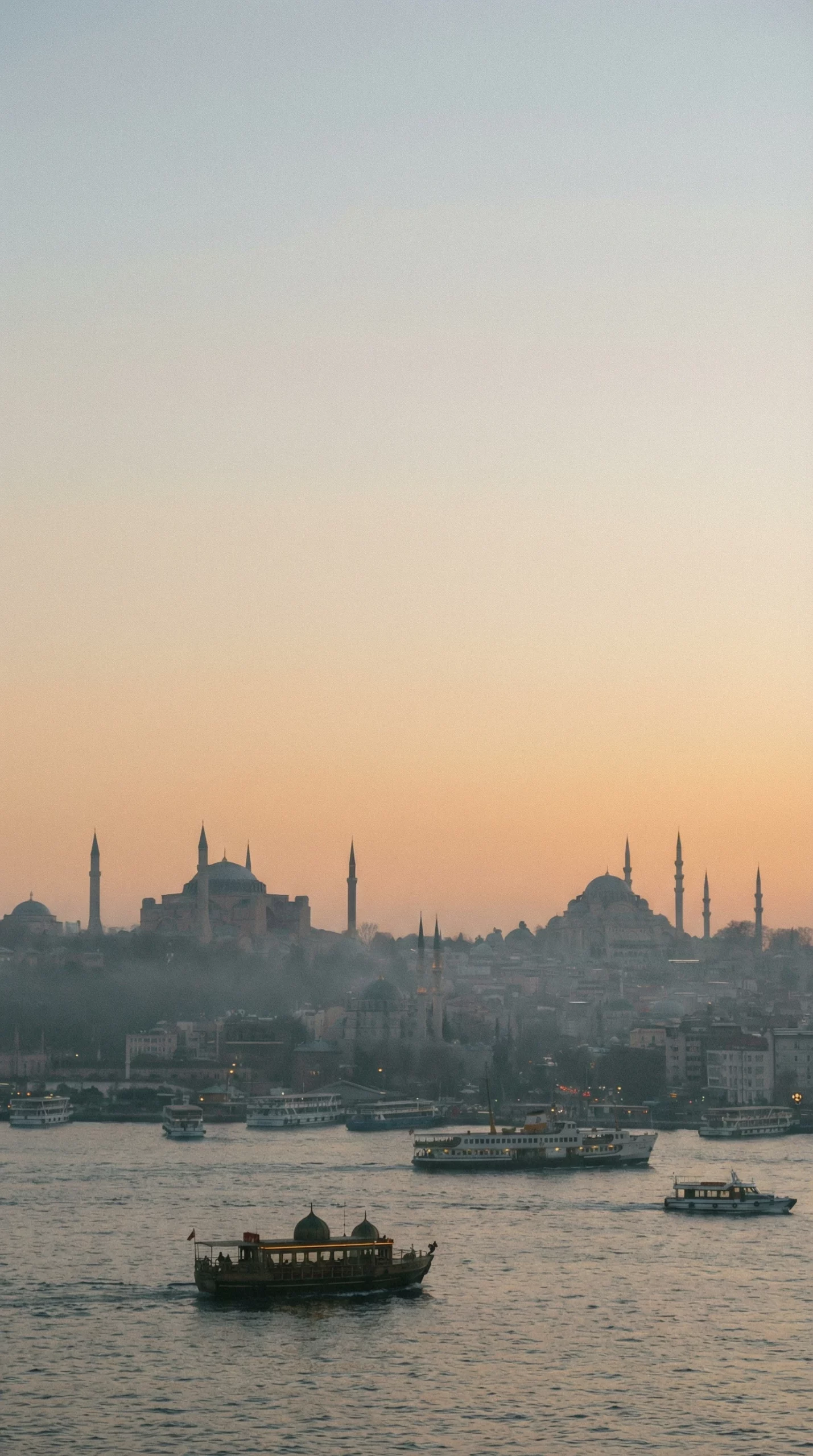
The sound reaches me before the skyline does.
A single voice rising — then another answering it. Then another. The call to prayer threads across water and rooftops, carried by wind and distance. It overlaps with ferry engines, the cry of gulls, the low hum of evening traffic.
Before I learn anything about Istanbul, I hear it.
And once I begin listening, I realise the city isn’t built in straight lines or neat chapters. It’s built in layers — of empire, of faith, of trade, of geography, of everyday life — each resting directly on top of the last.
To understand Istanbul, I don’t start with monuments.
I start with what settles into the air.

1. The Vertical Layer: Faith Reshaping the Skyline
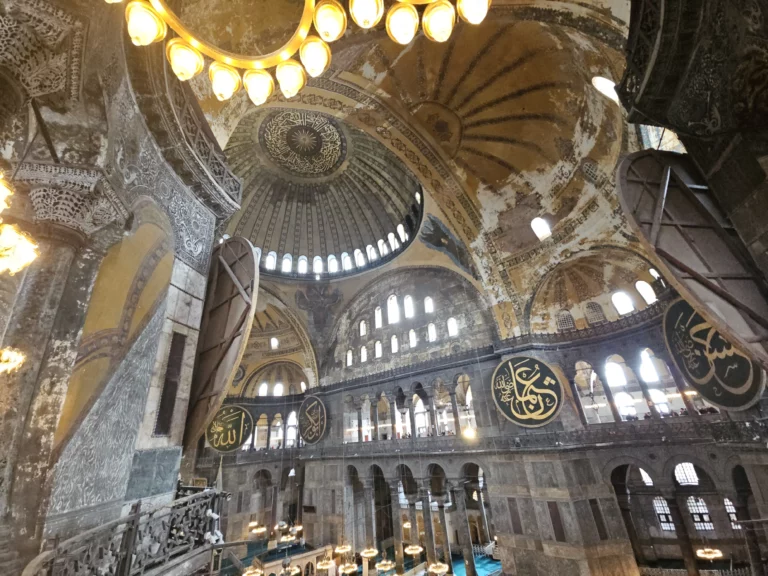
When I step inside Hagia Sophia, the scale is almost disorienting.
Light filters down from high windows beneath the dome. Arabic calligraphy hangs beside Christian mosaics. Stone columns from one era support arches from another. The building doesn’t feel replaced; it feels revised.
Hagia Sophia was a Byzantine cathedral, then an Ottoman mosque, later a museum, and now a mosque again. Each transformation added something without fully erasing what came before.
The skyline reflects this layering.
Domes rise. Minarets pierce the sky. One architectural language answers another. Much like the call to prayer echoing from different corners of the city, faith in Istanbul doesn’t silence its past. It builds upon it.

2. The Political Layer: Empire Settled on Empire
It’s tempting to think of cities as being conquered and replaced.
Istanbul doesn’t quite work that way.
Roman foundations became Byzantine Constantinople. Byzantine Constantinople became Ottoman Istanbul. Ottoman palaces later gave way to a modern republic. But the architecture rarely vanished entirely. It shifted in purpose. It was adapted. It was layered.
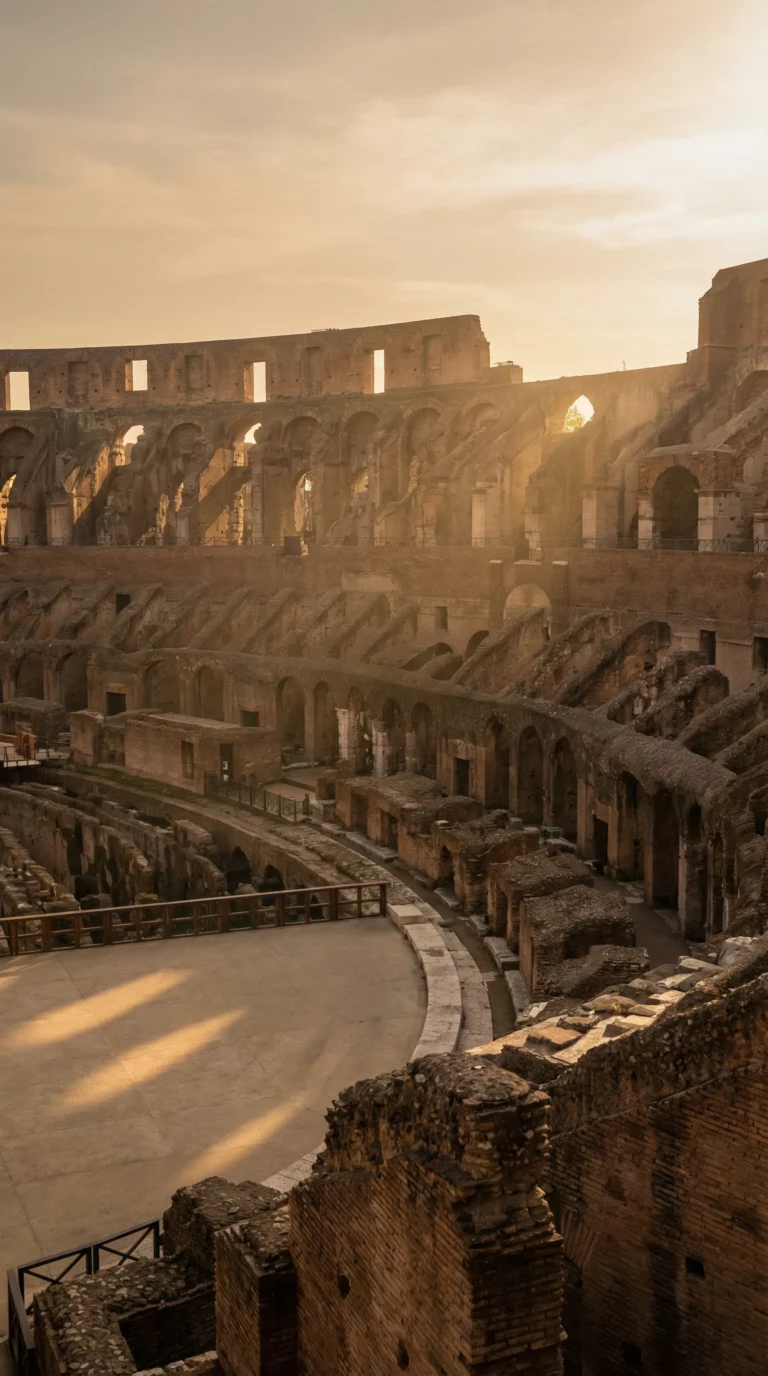
Standing in front of a façade where columns don’t quite match, where marble meets brick meets stone from another century, I’m reminded of something a local guide once said: Istanbul — like Rome — is a kind of lasagne. Each era laid carefully on top of the one before.
The metaphor sounds light, almost humorous. But in front of these structures, it feels accurate.
Nothing here is single-layered.
3. The Sensory Layer: Trade in Motion
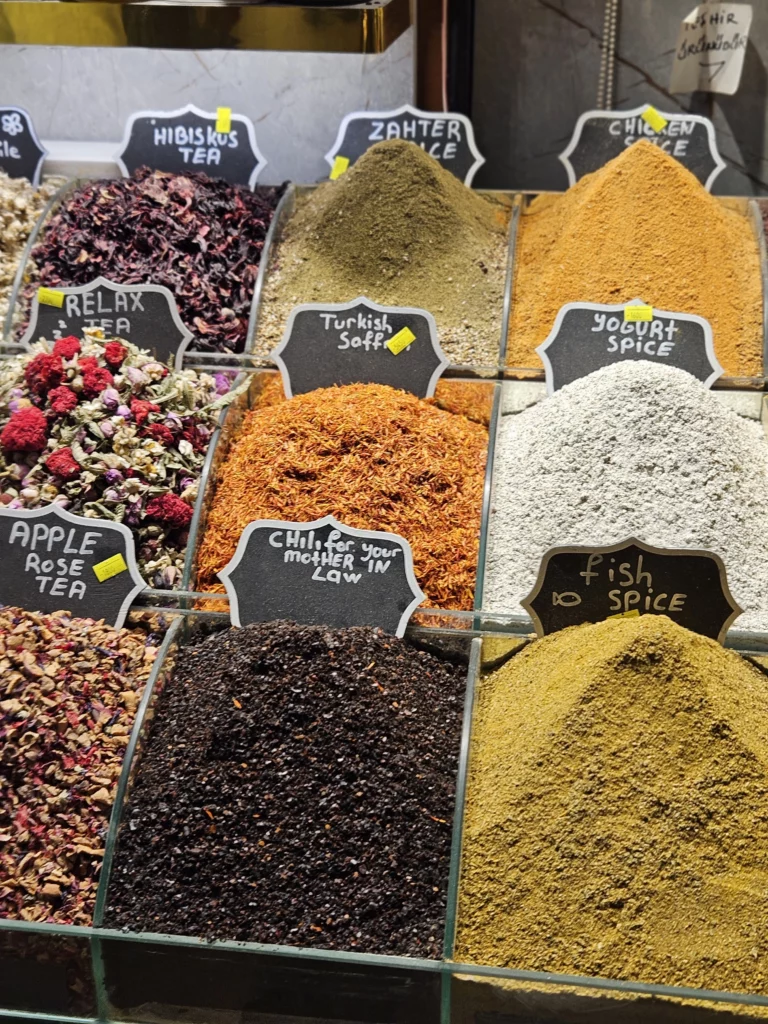
In the Spice Bazaar, the air changes.
The scent of saffron, sumac, dried fruit, and roasted nuts presses into the space between stalls. Vendors call out prices. Handwritten signs add personality — one reads “Chili for your mother in law,” half joke, half marketing.
The Grand Bazaar, not far away, hums with the same centuries-old instinct to trade — but that’s a story that deserves its own space.
Istanbul has always been a crossroads. Goods moved through it long before tourists did. Silk, spices, ceramics, textiles — the city’s architecture grew around exchange.
Trade is not an addition to Istanbul’s identity.
It’s one of its foundations.

4. The Geographic Layer: A City in Circulation
From the ferry, the city rearranges itself.
Minarets shrink. Bridges stretch. Continents sit across from one another, separated by a ribbon of moving water.
Europe and Asia are divided by the Bosphorus — but the divide feels less like a border and more like circulation. Ferries run constantly. Commuters cross between continents as part of ordinary routine.
Geography here doesn’t isolate.
It connects.
The city’s position between seas and continents shaped its history, its trade routes, its strategic importance. But from the deck of a ferry, what I notice most is how fluid it feels.
The water isn’t a line.
It’s a link.
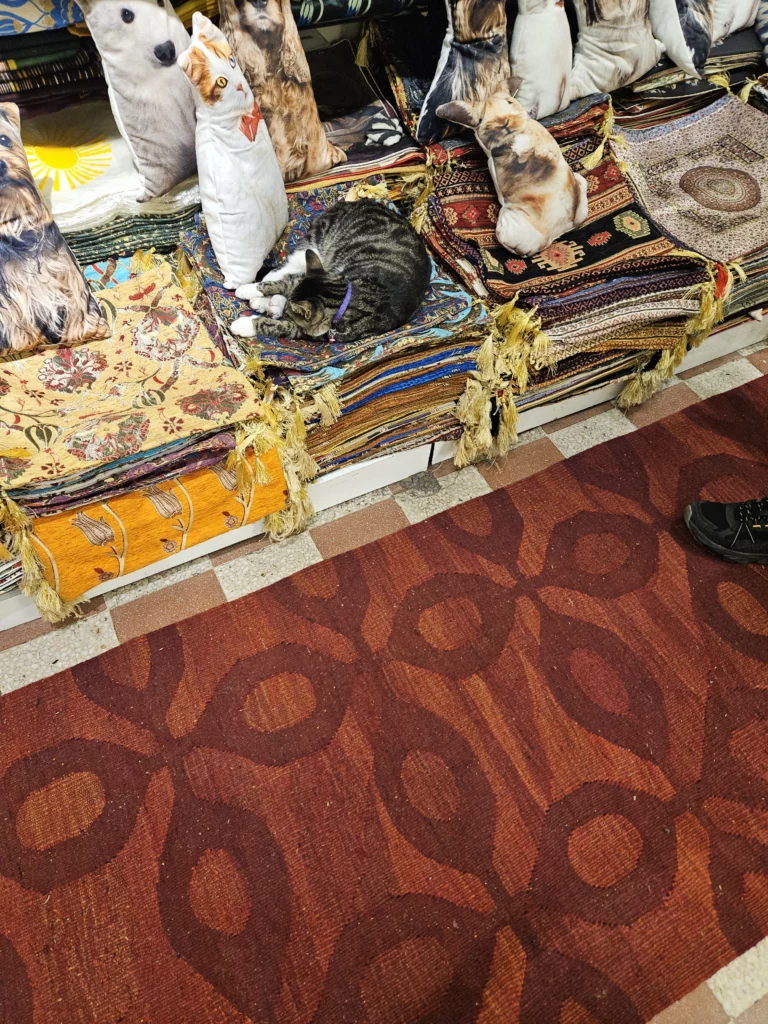
5. The Everyday Layer: Life Beneath the Domes
For all its empires and skylines, Istanbul feels most revealing at street level.
Cats stretch across carpet displays as if they own the shop. Shopkeepers pour tea. Neighbours pause on benches beneath buildings older than their family histories.
The monumental coexists with the ordinary.
It would be easy to reduce Istanbul to Hagia Sophia, to Blue Mosque, to skyline silhouettes at sunset. But the city is also doorways, textiles, ferry tickets, small conversations, shared space.
The layers aren’t only historical.
They’re daily.
Listening Again
As evening settles, the call to prayer begins again.
This time, I recognise the pattern. One voice begins. Others follow. The sound moves across the Bosphorus, drifting between domes and apartment blocks.
Istanbul doesn’t ask to be summarised.
It asks to be listened to.
Faith shapes its skyline. Empire reshapes its structures. Trade sustains its rhythm. Geography circulates its movement. Everyday life anchors it all.
And beneath it, the layers remain — not hidden, just waiting for attention.
TL;DR
Istanbul reveals itself in layers:
- Faith reshaping architecture across centuries
- Empires building on top of one another rather than erasing
- Trade sustaining the city’s rhythm through markets and movement
- Geography linking continents through the Bosphorus
- Everyday life grounding history in ordinary moments
To understand Istanbul, don’t just look at it.
Listen to it.
Frequently Asked Questions
Why is Istanbul considered a city between continents?
Istanbul spans both Europe and Asia, separated by the Bosphorus Strait. Ferries and bridges connect the two sides, making cross-continental travel part of daily life.
What makes Hagia Sophia historically significant?
Hagia Sophia has served as a Byzantine cathedral, an Ottoman mosque, a museum, and again a mosque. Its layered architecture reflects shifts in political and religious power over centuries.
Is Istanbul more European or Asian?
Istanbul’s identity is shaped by both. Its geography, trade routes, architecture, and cultural influences reflect centuries of interaction between Europe and Asia.
How often does the call to prayer happen in Istanbul?
The call to prayer is heard five times a day from mosques across the city, marking the rhythm of daily life.