How to Get Around Istanbul A Practical Guide to Continents and Crossings
Istanbul is not one city.
It stretches across two continents, divided by water and layered with centuries of empire. Movement here is shaped as much by geography as by roads. You do not simply cross streets — you cross districts, bridges, and, if you choose to, continents.
Understanding how to get around Istanbul begins with accepting that it cannot be fully covered in a single visit.
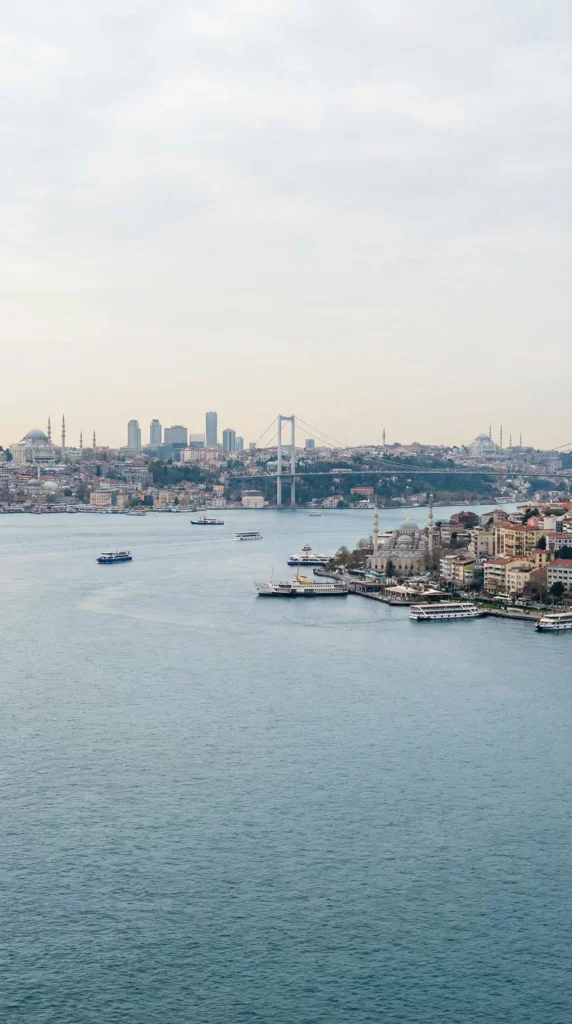
Understand the Geography Before You Move
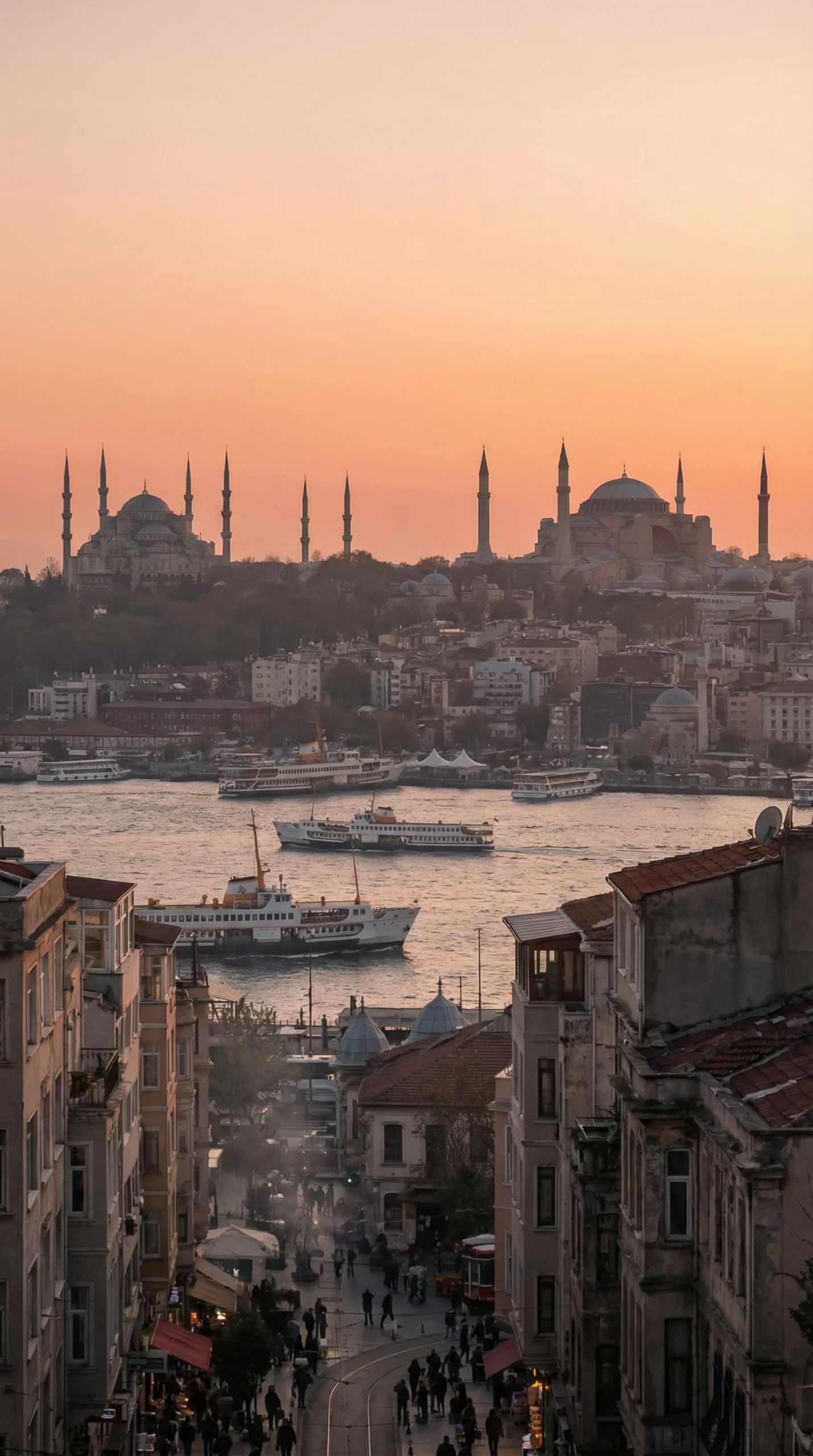
Istanbul’s layout is defined by the Bosphorus and the Golden Horn.
On the European side, visitors often move between:
- Sultanahmet
- Eminönü
- Galata
- Karaköy
Across the water, the Asian side offers neighbourhoods such as Kadıköy and Üsküdar, each with a distinct rhythm.
Think in sides first. Then think in neighbourhood clusters.
Crossing between them is not difficult — but it does require intention.

Walking Reveals Texture — and Hills
The historic peninsula is compact enough to walk, but it is not flat.
Streets rise and fall gradually. Cobbled surfaces and stairways are common. The density of mosques, markets, and monuments encourages slow exploration.
On my visit, most movement unfolded on foot. Walking allowed layers to reveal themselves — small courtyards, call to prayer echoing between buildings, narrow lanes leading away from main arteries.
But walking in Istanbul requires energy management. Hills accumulate quietly.
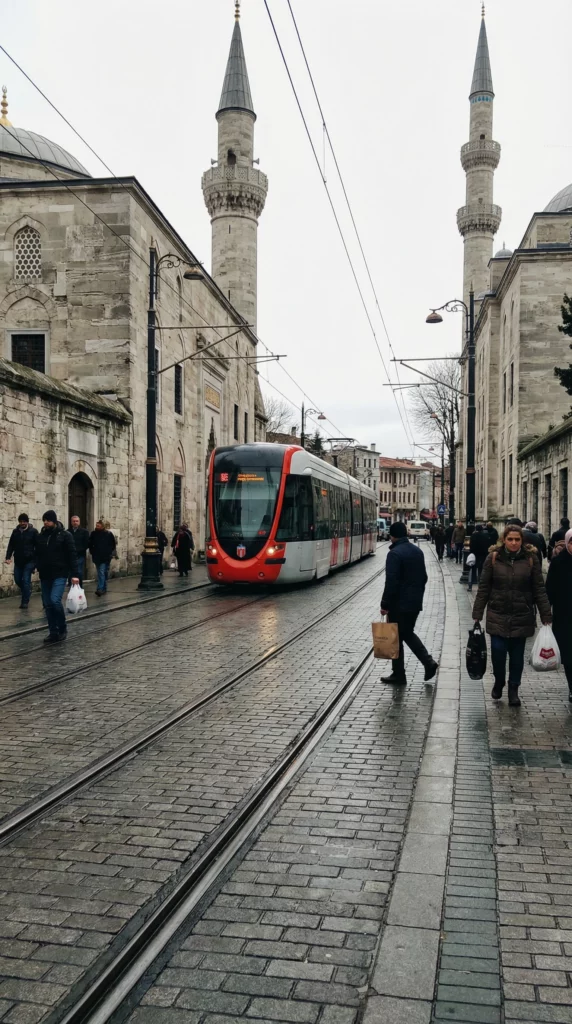
The Tram Is Straightforward — Until It Isn’t
Istanbul’s tram system is practical and efficient, particularly along the historic corridor connecting Sultanahmet, Eminönü and beyond.
For the most part, it is simple to use.
Where some travellers may hesitate is during line changes. In certain places, switching requires exiting one platform, following signage through underground walkways, and entering another station entirely. Without attention, this can feel disorienting.
Clear signage helps, but allowing extra time for transfers reduces stress.
The tram works best when used to extend your walking range rather than replace it entirely.
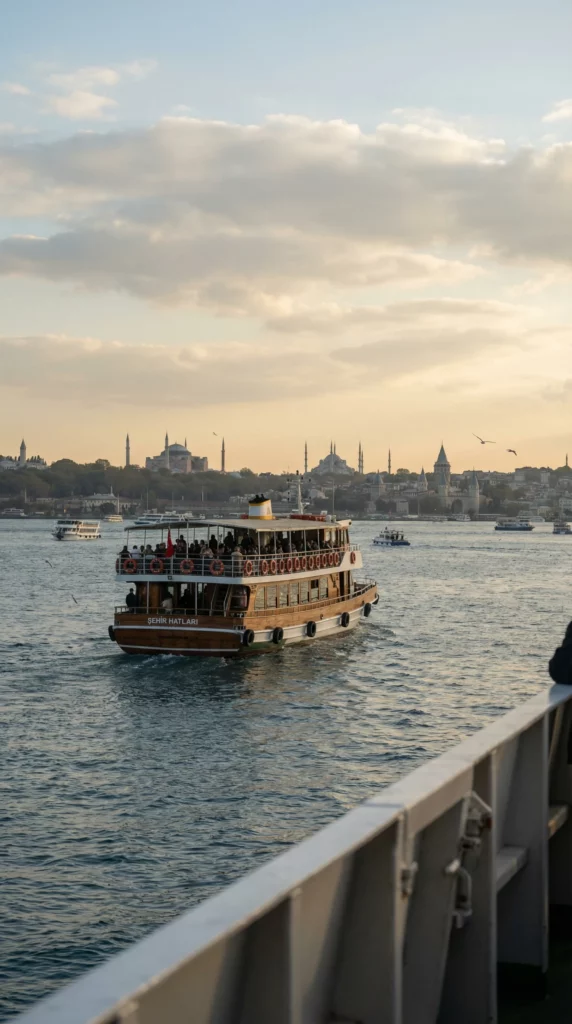
Ferries Are Movement as Experience
Crossing the Bosphorus by ferry is not just transport — it is perspective.
Though I did not take the ferry on my visit, it remains one of my small regrets. Watching boats move between Europe and Asia made it clear that the crossing itself is part of Istanbul’s rhythm.
Ferries connect districts efficiently, but they also offer something else: distance from the city’s density and a reminder of its geographic complexity.
If time allows, crossing by water deepens understanding of scale.
Respect the Rhythm of Faith
Istanbul’s skyline is shaped by mosques, and daily life is marked by the call to prayer.
Five times a day, sound carries across districts.
When entering mosques:
- Dress modestly.
- Remove shoes.
- Move quietly and respectfully.
These spaces are active places of worship, not solely architectural landmarks.
Allowing time within them — rather than rushing between sites — changes how the city feels.
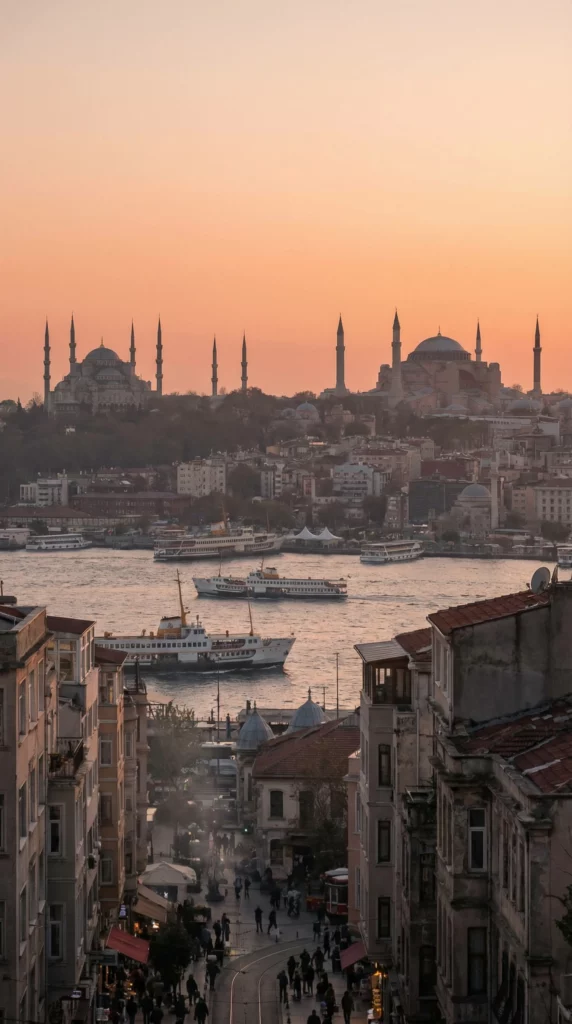
Accept That You Will Not See Everything
Istanbul is vast.
Even with days of walking and tram use, there will be districts left unexplored. Markets unseen. Neighbourhoods untouched.
This is not a failure of planning.
It is a characteristic of the city.
Understanding how to get around Istanbul means accepting that movement is selective. You choose clusters. You choose crossings. You allow some areas to remain for another visit.
Measured movement creates coherence.
Safety Without Tension
As with any major metropolis, awareness matters.
Stay in well-trafficked areas. Be attentive at night. Keep belongings secure in crowded trams and markets.
But do not move with suspicion at every corner.
Common sense and instinct remain the most reliable guides. A city this active and layered rewards engagement more than fear.
TLDR
- Think in sides first — European and Asian — then neighbourhood clusters.
- Expect hills and plan walking energy accordingly.
- Use the tram to extend walking range and allow time for transfers.
- Take the ferry if possible — it offers perspective as well as transport.
- Move with awareness, not paranoia.
Istanbul is shaped by crossings. Accept them, and the city becomes navigable.
FAQ
Is Istanbul easy to get around?
Yes, with planning. Walking and trams cover much of the historic centre, while ferries connect districts across the Bosphorus.
Is the tram system in Istanbul confusing?
Generally no, though some line changes require exiting one station and using underground walkways to reach another.
Should I take the ferry in Istanbul?
Yes, if time allows. Ferries provide both practical transport and valuable geographic perspective.
How much walking should I expect in Istanbul?
Quite a lot, particularly in the historic peninsula. Hills and uneven streets require pacing.
Is Istanbul safe for travellers?
Central districts are generally manageable with common-sense precautions and awareness of surroundings.