Visiting Day of the Dead in Mexico: A Cultural Guide to Doing It Respectfully
Images of Day of the Dead travel widely.
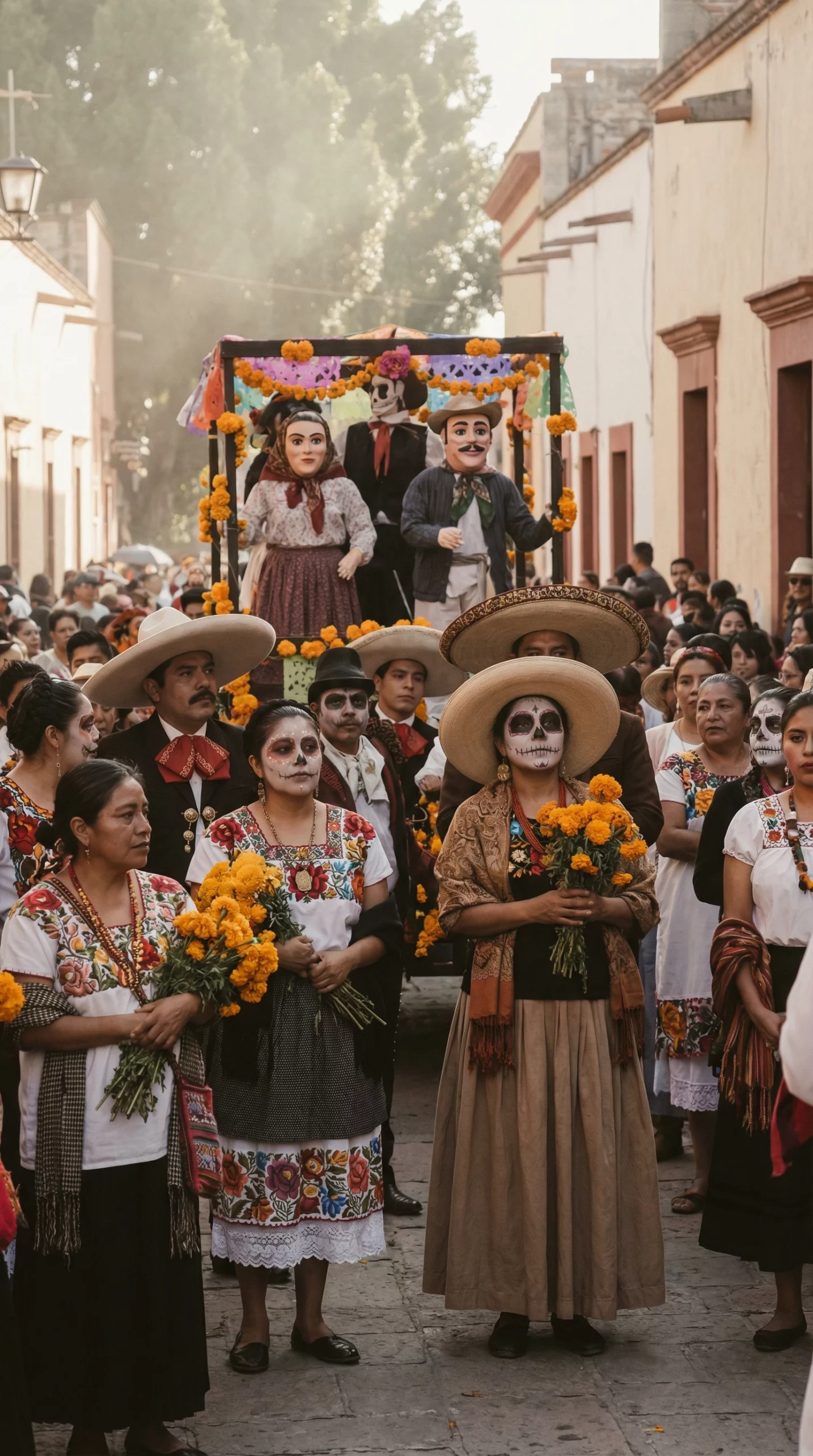
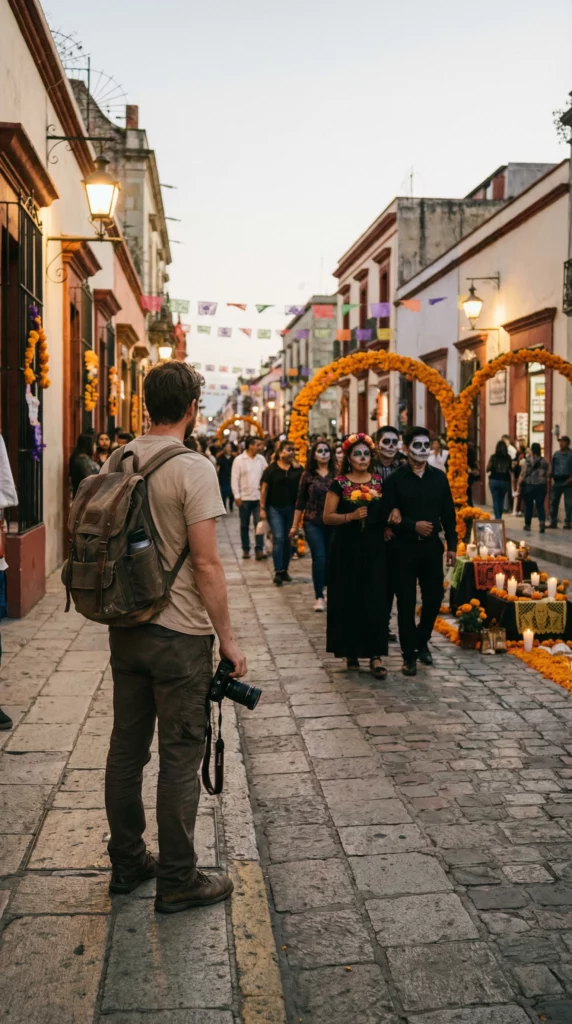
Painted faces.
Marigold-lined streets.
Candlelit cemeteries.
Processions filled with colour.
It’s visually compelling — which is precisely why it attracts global attention.
But Día de los Muertos is not a performance staged for visitors. It is a deeply rooted cultural tradition centred on remembrance, family, and continuity.
If you are considering visiting Day of the Dead in Mexico, the most important preparation is not logistical — it is cultural.
1. Understanding the Cultural Foundations
Day of the Dead blends Indigenous Mesoamerican traditions with Catholic influences introduced during Spanish colonisation.
At its core, it is about honouring loved ones who have passed.
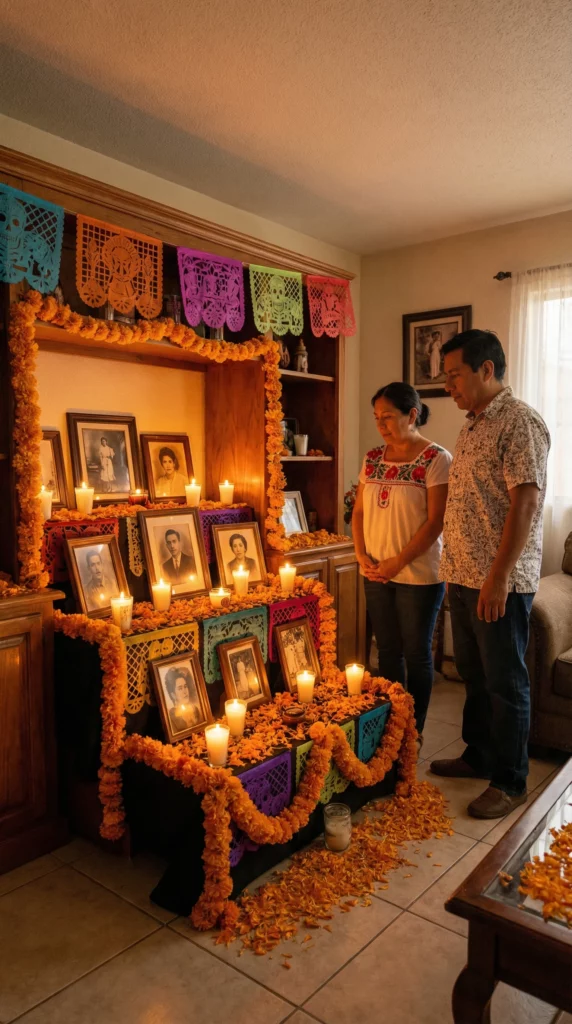
Families build ofrendas (altars) in homes and cemeteries. These often include:
- Photographs of the deceased
- Marigolds (cempasúchil)
- Favourite foods and drinks
- Candles
- Personal objects
The belief is not that the dead are mourned in sorrow, but welcomed in remembrance.
This context matters.
Without it, the public-facing aspects — face paint, parades, decorative skull imagery — can be misunderstood as costume or spectacle rather than symbolic expression.
Before arriving, take time to understand the tradition’s roots. It transforms what you see.
2. Recognising Commercialisation Without Losing Perspective
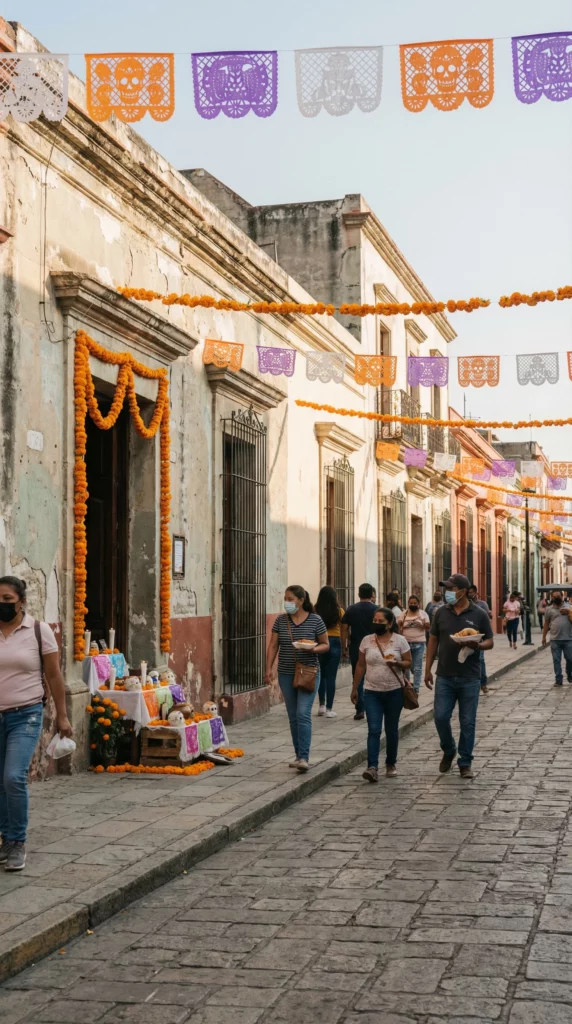
Day of the Dead has grown significantly in global visibility over the past decade. Media exposure and film portrayals have amplified its imagery, particularly in cities like Mexico City.
When I attended, I was struck by the level of commercialisation compared to what I had imagined. There were branded events, curated parades, and crowds far larger than I expected. It left me with the sense that experiencing it a decade earlier may have felt different — perhaps quieter, more localised.
That doesn’t invalidate the tradition.
It does mean you should arrive prepared for layers:
- Deeply personal family rituals.
- Community-level observances.
- Public parades designed for broader audiences.
- Tourist-driven events with commercial overlay.
Part of visiting Day of the Dead in Mexico respectfully is recognising that not everything you see exists for you.
Some spaces are intimate. Others are performative. Understanding the difference is essential.
3. Etiquette: Presence Over Performance
Respect is not abstract. It is behavioural.
Photography, in particular, requires awareness.
Our guide — travelling with a small group — reminded us repeatedly to ask before taking photos of individuals or private altars. It seemed obvious. Yet I was disappointed to see how many visitors photographed people and offerings without permission.
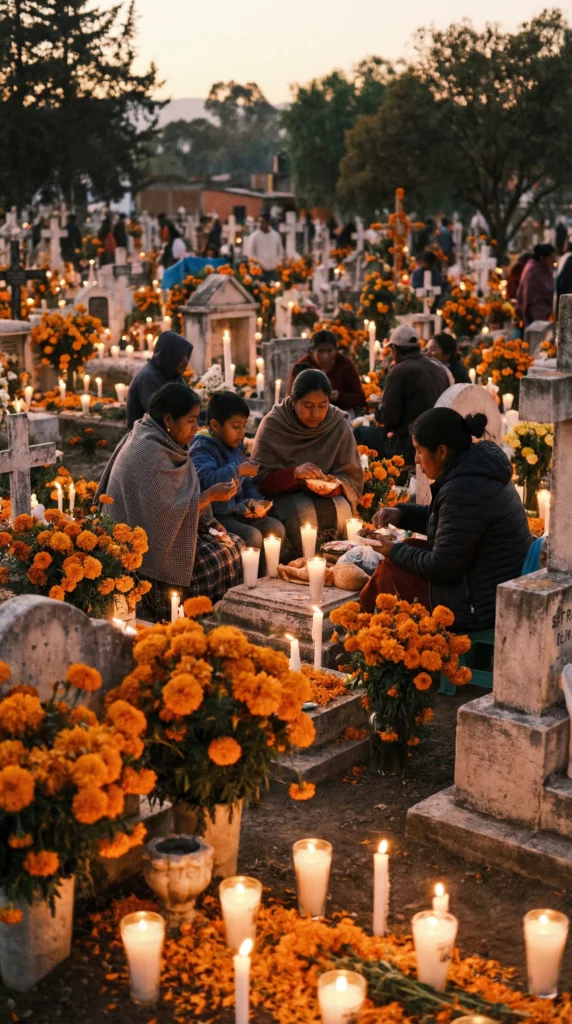
Cemeteries during Day of the Dead are not tourist attractions. They are places where families gather to remember loved ones.
If you choose to visit:
- Ask before photographing people.
- Avoid close-ups of private altars unless invited.
- Dress modestly.
- Keep volume low in cemetery spaces.
- Observe first. Participate second.
A structured small-group tour can help provide context and behavioural guidance. The key is choosing experiences that prioritise cultural understanding rather than rapid spectacle.
Respectful presence often means stepping back.
4. Choosing Where to Experience It
Not all Day of the Dead experiences are the same.
- Oaxaca is often associated with strong traditional practices and cemetery vigils.
- Mexico City hosts large-scale public parades and exhibitions.
- Smaller towns may offer quieter, community-led observances.
Each has a different tone.
When planning your trip, decide what you’re seeking:
- Intimate remembrance?
- Public celebration?
- Educational context?
- Structured guidance?
Crowds are inevitable in popular areas. That doesn’t mean depth is impossible — but it does mean you may need to move intentionally and avoid the most congested spaces.
5. Participation vs Observation
Visitors are often unsure how much to engage.
Some activities are clearly open:
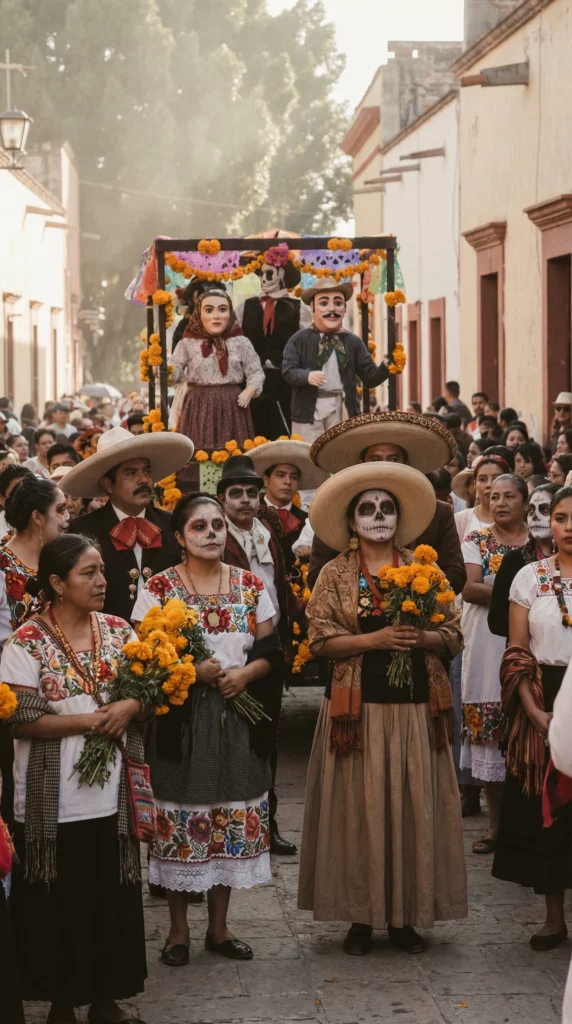
- Public parades.
- Community workshops.
- Educational events.
- Public altar displays.
Other moments are not invitations.
Participation should never override humility.
Face painting, for example, may be appropriate in certain public contexts, but it should not feel like costume appropriation detached from meaning.
When in doubt, observe.
Meaningful travel does not require centre stage.
A Different Way to Approach Cultural Events
Visiting Day of the Dead in Mexico can be powerful. It can also be overwhelming.
The experience depends less on what you attend and more on how you attend it.
Arrive informed.
Move respectfully.
Understand what is public and what is private.
Accept that some moments are not yours to document.
Cultural traditions are not attractions. They are living practices.
The goal is not to consume them.
It is to witness them carefully.
TLDR — Visiting Day of the Dead in Mexico
- Learn the historical and cultural foundations before arriving.
- Expect some commercialisation, especially in larger cities.
- Ask permission before photographing people or private altars.
- Choose your location intentionally based on tone and scale.
- Prioritise respectful observation over performance.
Day of the Dead is about remembrance, not spectacle. Approach it with humility.
FAQ
Is Day of the Dead a tourist event?
No. It is a longstanding cultural tradition centred on remembrance. While tourism has grown, especially in larger cities, the foundation remains familial and communal.
Can visitors attend cemetery gatherings?
In some locations, yes — but behaviour should remain quiet and respectful. Always observe local norms.
Is it appropriate to wear face paint as a visitor?
It depends on context. Public celebrations may welcome it, but it should be approached with cultural awareness and not treated as costume.
Where is the best place to experience Day of the Dead in Mexico?
Oaxaca, Mexico City, and smaller towns each offer different atmospheres. Choose based on the type of experience you’re seeking.
How can I avoid contributing to over-tourism?
Travel with awareness, avoid intrusive behaviour, support local businesses, and prioritise education over spectacle.