5 Layers of Mexico City Most Travellers Walk Past
I went to Mexico City for Day of the Dead.
For years, I had wanted to experience it — not as a spectacle, but as something lived. I imagined colour. Music. Marigolds. I expected energy.
What I didn’t expect was structure.
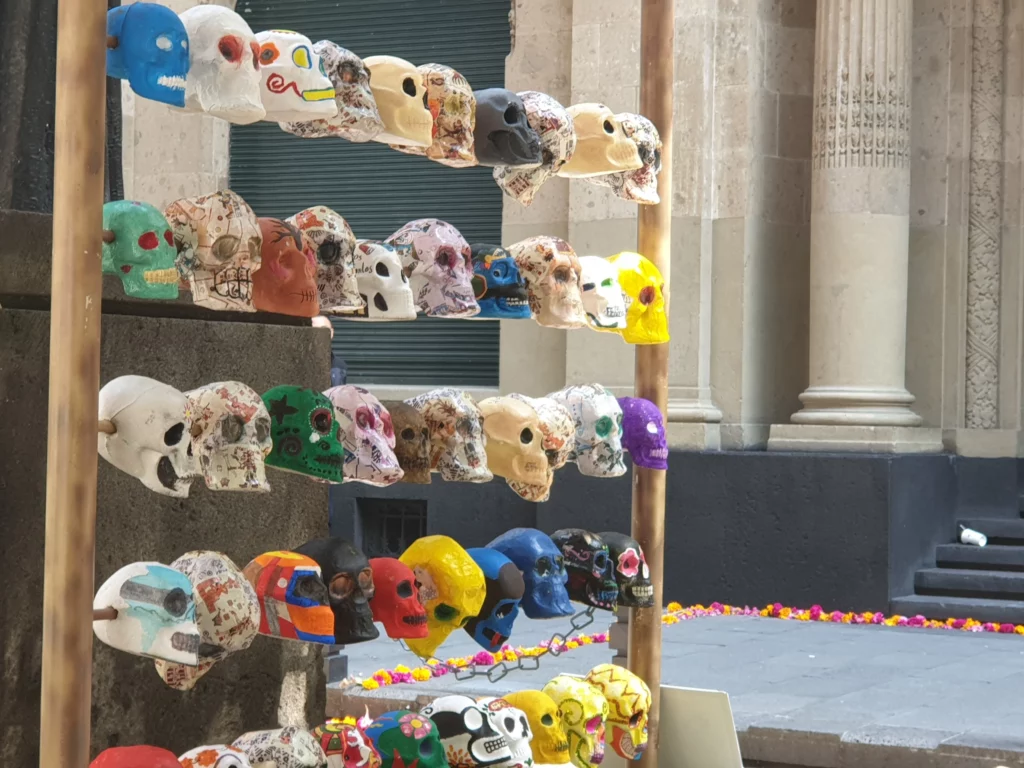
Walking through Jamaica Market in the days leading up to the festival, marigolds spilled from stalls in impossible quantities. Papel picado fluttered overhead. Sugar skulls lined tables beside candles and framed photographs. But nothing felt chaotic. Everything had intention.
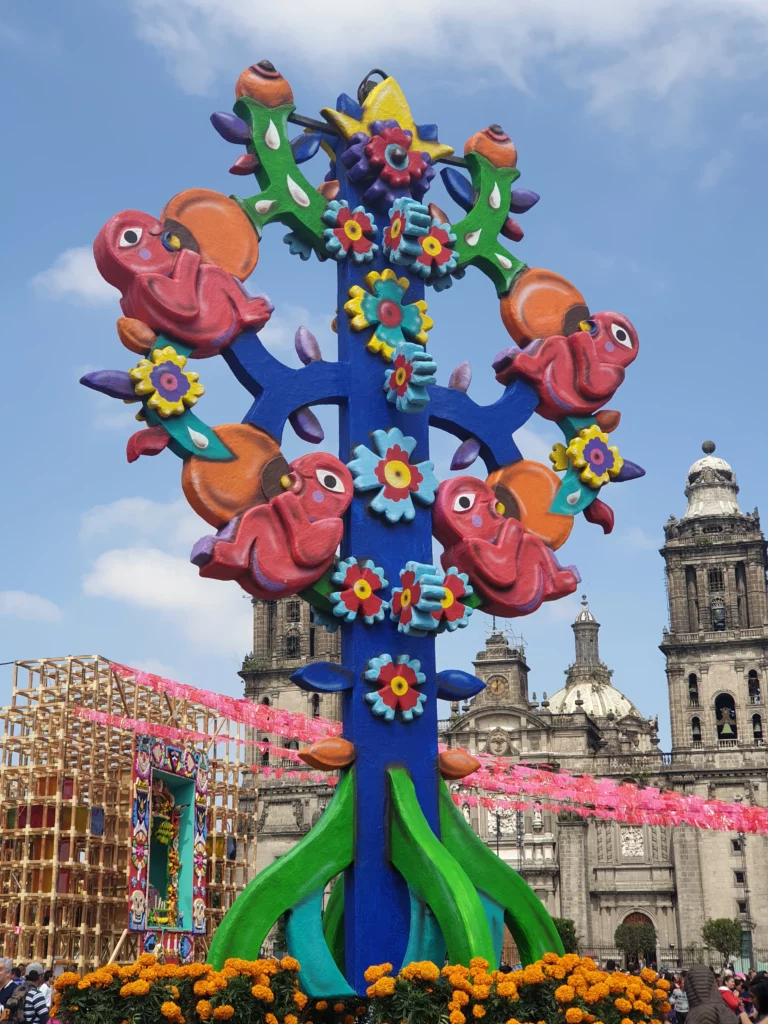
Later, standing in the Zócalo in front of towering altar displays — each one built with precision and care — I realised that Day of the Dead isn’t spontaneous celebration. It’s layered remembrance.
Different days honour different loved ones. One day for children. Another for adults. Altars built not for spectacle, but for continuity.
And slowly, I began to understand that Mexico City itself works the same way.
It doesn’t erase.
It layers.
1. Memory in Public
In many places, grief is private.
In Mexico City during Day of the Dead, it is communal.
The Zócalo becomes a gallery of remembrance. Giant ofrendas line the square — some playful, some solemn, some deeply personal. The main parade moves along Paseo de la Reforma, past the Angel of Independence, music and dancers transforming the city’s grand avenues into procession.
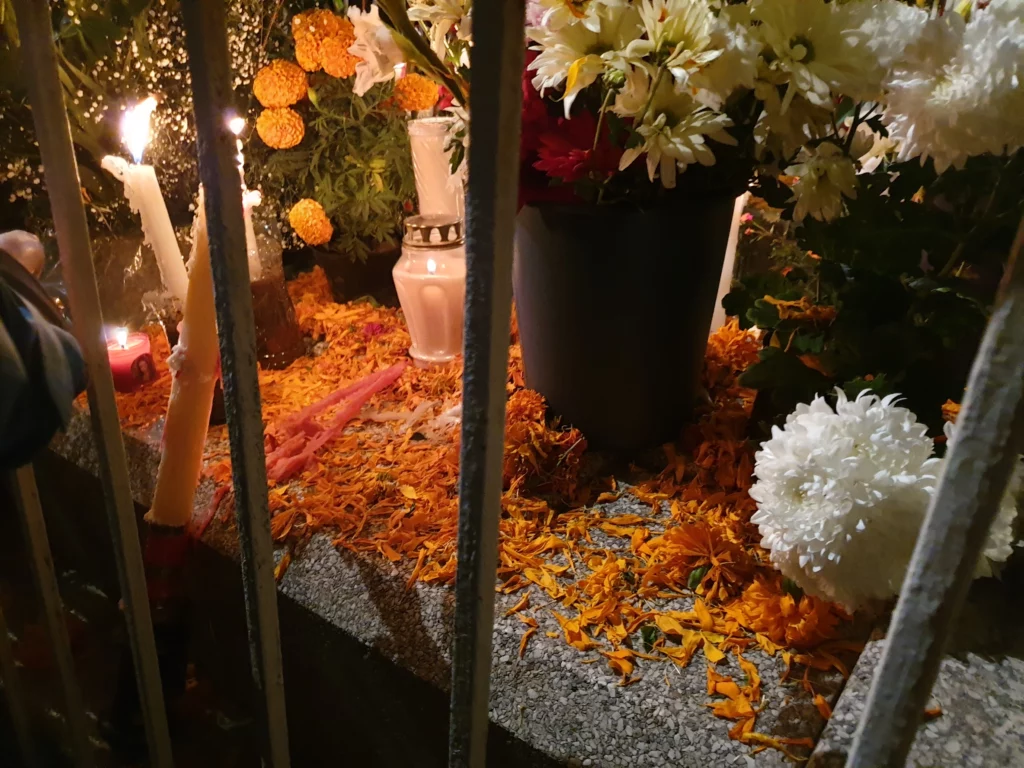
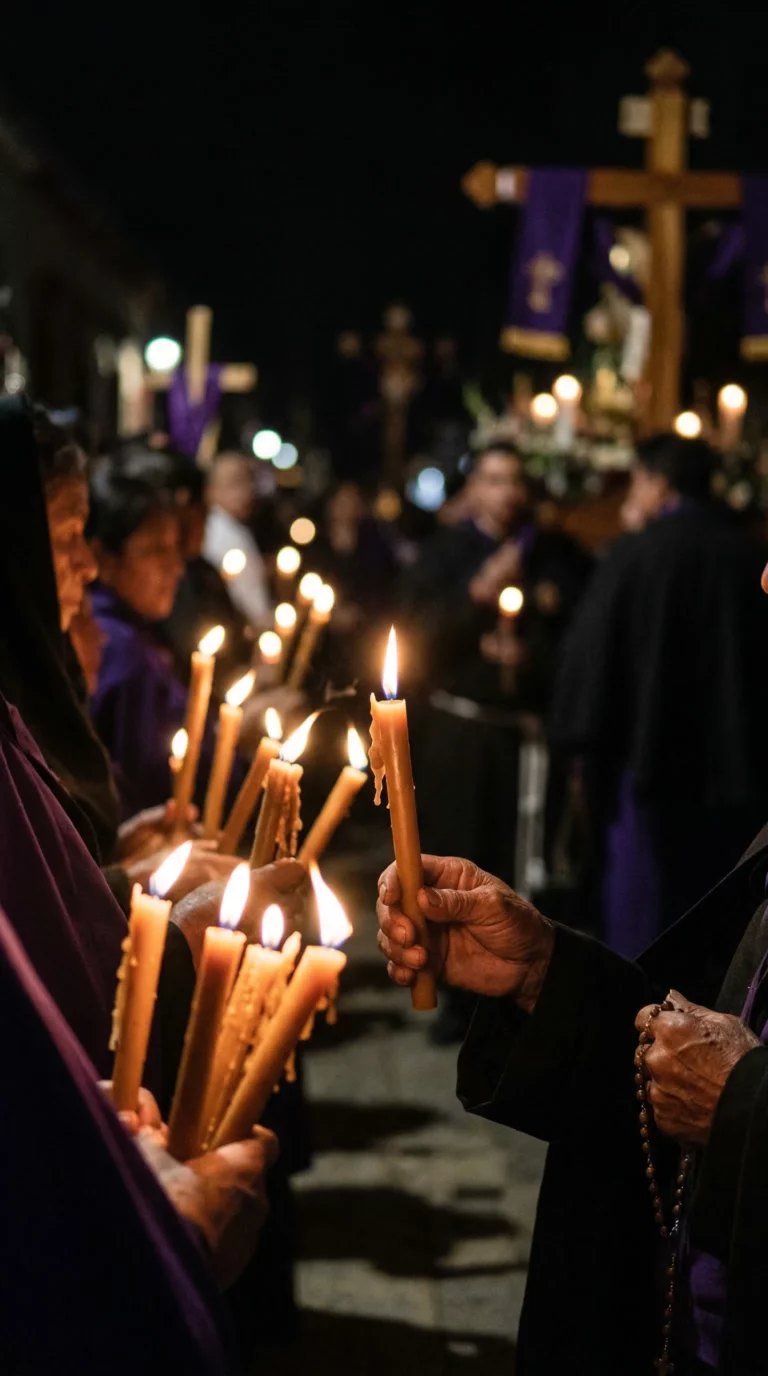
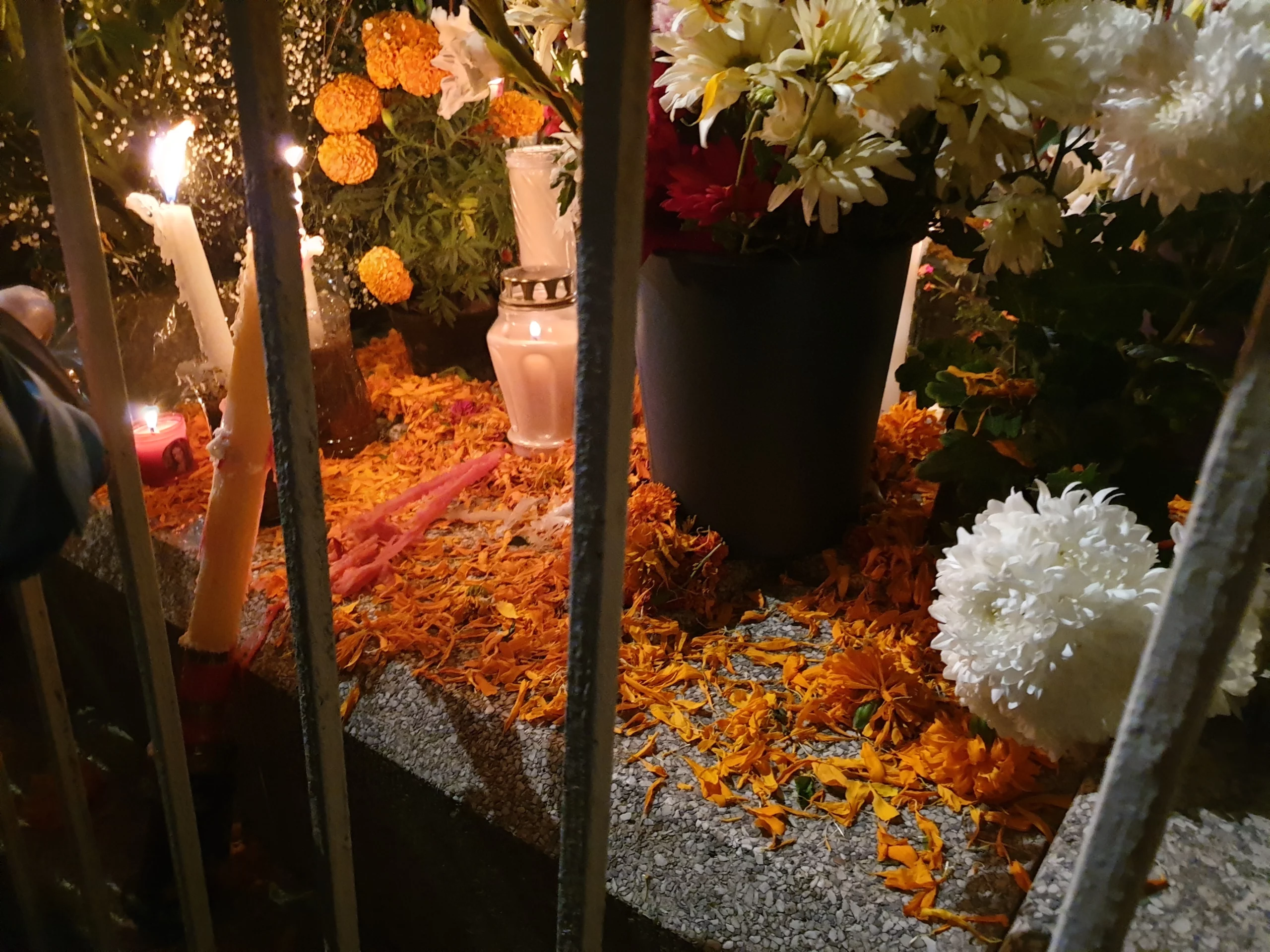
Even at Xochimilco cemetery, where families gather to sit beside graves, the mood is not heavy. It is reverent, yes — but also alive. Candles flicker. Conversations continue. Food is shared.
Memory here is not hidden indoors.
It stands in the centre of the square.
2. The Colonial Frame
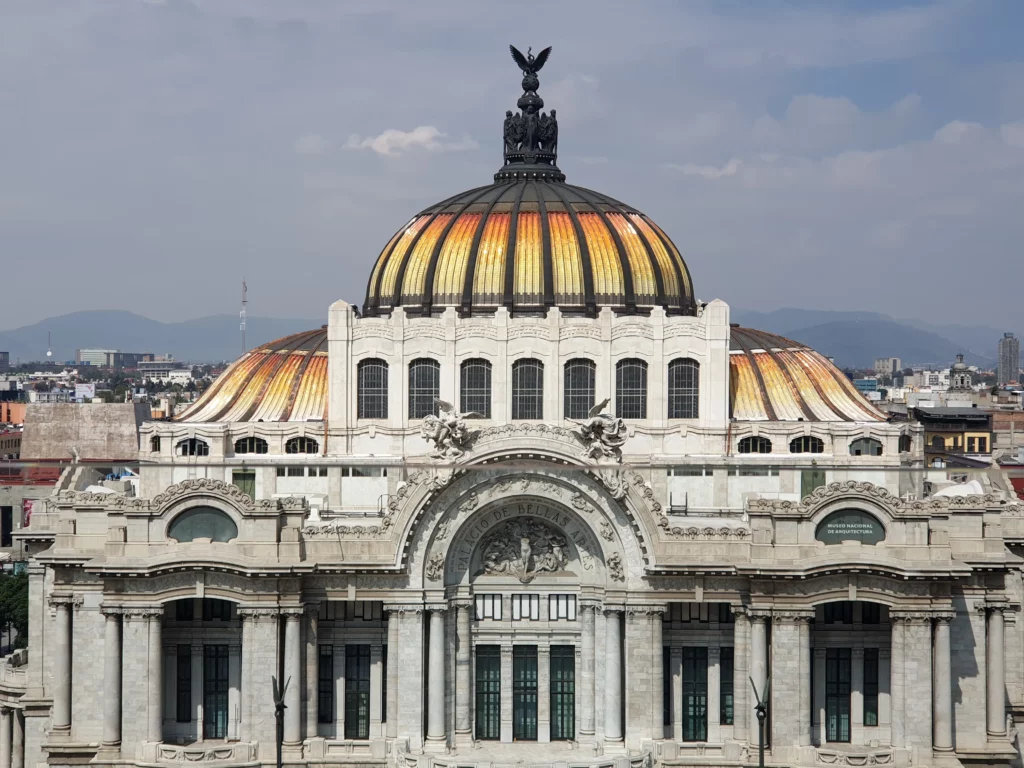
Standing in the Zócalo, it’s impossible to ignore the scale of the surrounding architecture. The Catedral Metropolitana dominates one side. The Palacio Nacional anchors another. Spanish colonial influence defines the skyline.
But beneath that frame lies something older.
Mexico City was built on the ruins of Tenochtitlan, the Aztec capital. The square that now hosts Day of the Dead altars once held ceremonial spaces of its own.
The layering is not metaphorical.
It is physical.
Catholic feast days intersect with pre-Hispanic ritual. The calendar itself carries both histories at once. Day of the Dead does not belong entirely to one tradition. It evolved — absorbing, adapting, continuing.
Just like the city.
3. History Painted Openly
In Mexico City, history is not confined to museums.
It is painted on walls.
Inside the Palacio Nacional, Diego Rivera’s murals stretch across staircases and corridors, telling stories of revolution, resistance, colonisation, and identity. They are bold, unapologetic, and impossible to ignore.
The city does not hide its contradictions.
It places them in public view.
Empire, revolution, resilience — they exist side by side in pigment and plaster.
Where other cities smooth their edges, Mexico City outlines them.
4. Markets and Movement
If the Zócalo feels monumental, the markets feel immediate.
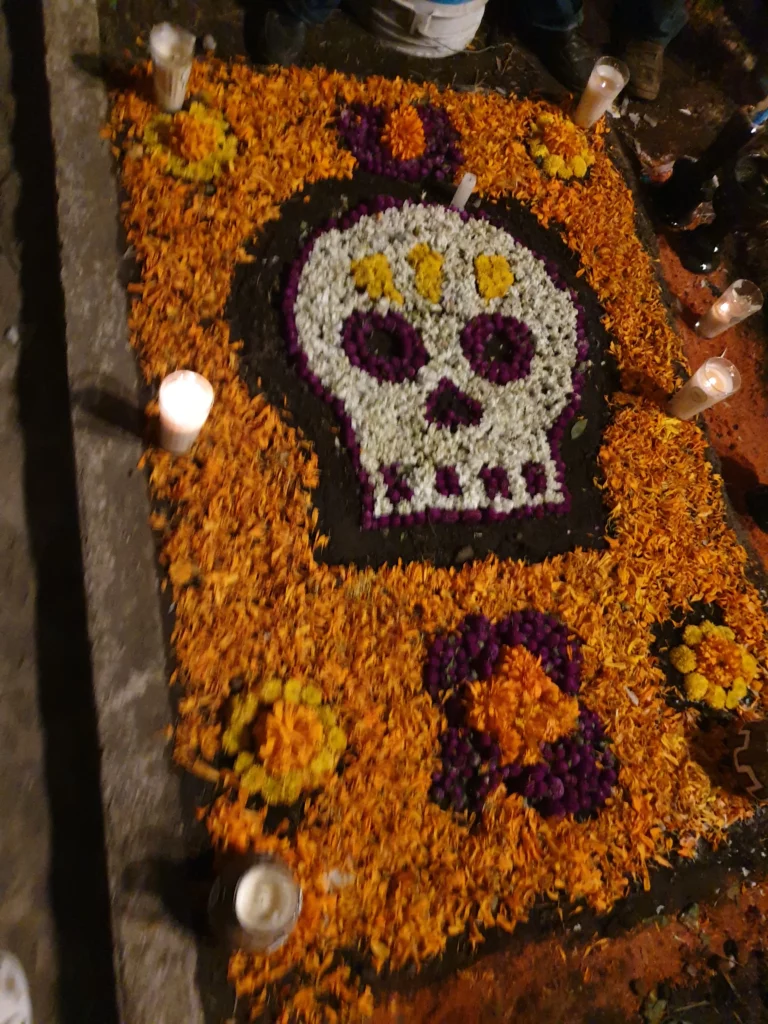
In Jamaica Market, marigolds form entire landscapes of orange. Vendors trim stems, arrange bouquets, stack papel picado in precise bundles. The scent of flowers mixes with street food and incense.
Movement here feels different from the European cities I’d visited before. It’s more rhythmic. More percussive. There is colour in every direction.
Markets aren’t a side attraction.
They are infrastructure.
They carry tradition forward one transaction at a time.
5. Spectacle and Survival
Mexico City doesn’t shy away from performance.
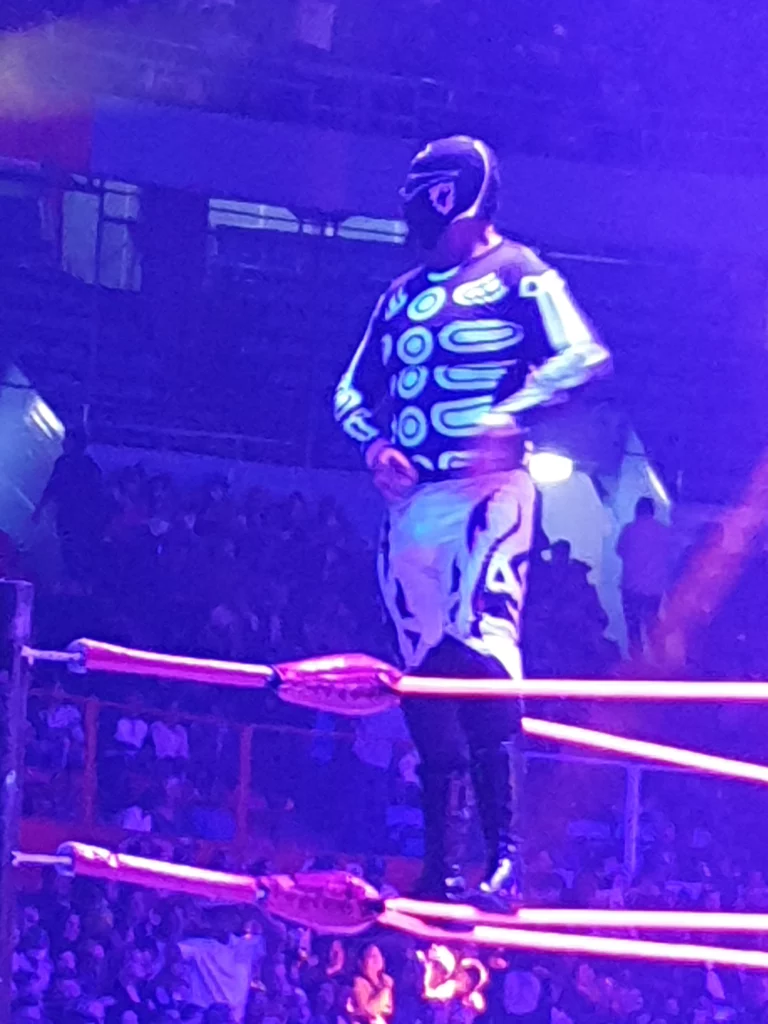
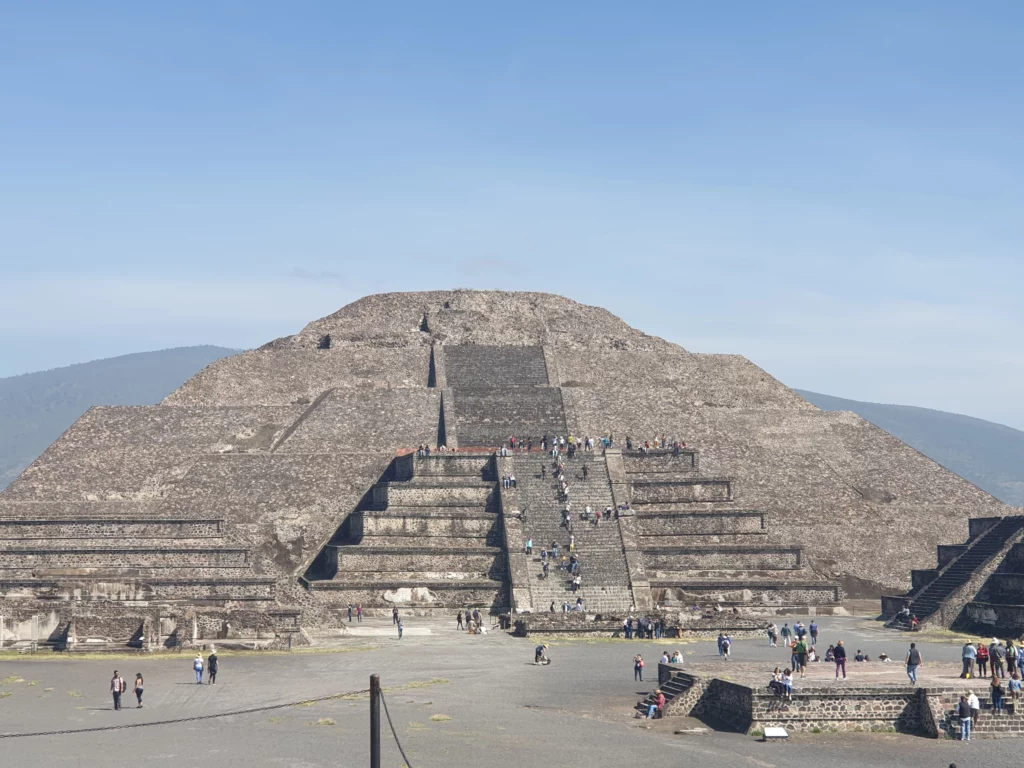
Lucha libre arenas erupt with cheers. Masks and theatrics turn wrestling into folklore. Teotihuacan’s pyramids rise just beyond the city, older than the colonial architecture at its centre.
Ancient civilisations. Spanish conquest. Revolutionary politics. Modern megacity.
They coexist.
None fully replacing the other.
You can stand on a pyramid built centuries before the Spanish arrived — and later that evening watch masked wrestlers perform under bright arena lights.
It shouldn’t work.
And yet, it does.
You Come for the Festival
I travelled to Mexico City for Day of the Dead.
But I stayed because I realised the festival wasn’t an event layered onto the city.
It was a reflection of it.
Day of the Dead does not separate joy from remembrance. It does not divide the living from the dead. It allows them to sit at the same table.
Mexico City does the same with its history.
It invites every layer to remain visible.
And once you see that, you stop looking for a single story.
You start noticing the stack.
TLDR
Mexico City reveals itself in layers. From Day of the Dead celebrations in the Zócalo to colonial architecture built over Aztec foundations, from Diego Rivera’s revolutionary murals to the colour and movement of Jamaica Market, the city carries multiple histories at once. Festivals, faith, public memory, and everyday life coexist — not in competition, but in accumulation. Mexico City isn’t a single narrative. It’s a stack of them.
FAQ
What is Day of the Dead in Mexico City?
Day of the Dead (Día de los Muertos) is a multi-day celebration honouring deceased loved ones. Families create altars (ofrendas), visit cemeteries, and gather in public spaces. In Mexico City, large public displays and parades complement neighbourhood and family traditions.
Is Day of the Dead a religious holiday?
Day of the Dead blends pre-Hispanic indigenous traditions with Catholic observances. It coincides with All Saints’ Day and All Souls’ Day, but its rituals reflect both Indigenous and Catholic influences.
Where can you experience Day of the Dead in Mexico City?
Major locations include the Zócalo (main square), Paseo de la Reforma for the parade, neighbourhood altars across the city, and cemeteries such as those in Xochimilco. Markets like Jamaica Market also become central hubs for festival preparation.
What makes Mexico City culturally unique?
Mexico City stands out for its visible layering of history. Indigenous foundations, colonial architecture, revolutionary murals, modern urban life, and ongoing cultural traditions all coexist within the same physical and civic spaces.